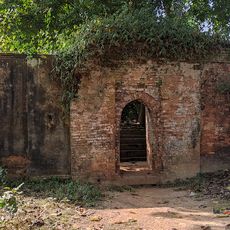
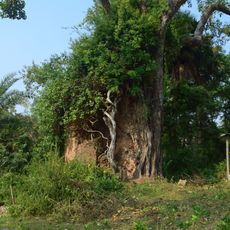
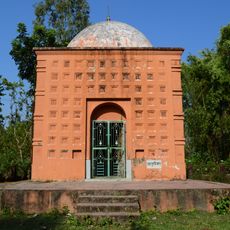
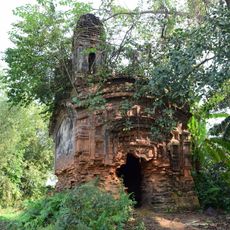
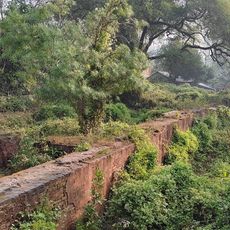
Nayabad Mosque, Religious structure in Nayabad village, Dinajpur District, Bangladesh
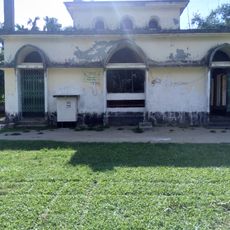
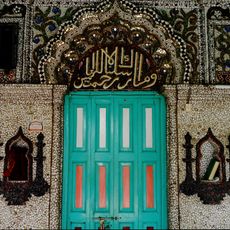
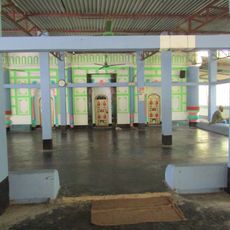
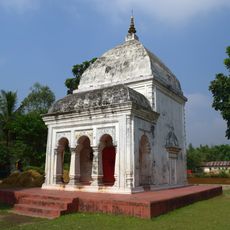
The Nayabad Mosque is a rectangular building measuring 12.45 meters by 5.5 meters, fitted with three domes, octagonal corner towers, and three arched entrances positioned on one side. The structure displays architectural features typical of mosque design from this era.
The mosque was built in 1793 during the reign of Mughal Emperor Shah Alam II, when Raja Baidyanath governed the region as a local Zamindar. This construction period coincided with a phase of active building in Bengal.
Beside the mosque stands a grave that carries no inscription or identifying information. Local accounts say it belongs to one of the workers who built the mosque. The building itself was raised for the Muslim architects and craftsmen who came from Persia to work on the Kantajew Temple and settled at Nayabad.
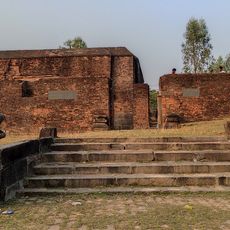
The mosque stands in Nayabad village, about 20 km from Dinajpur town, beside the Dhepa River. It is a listed archaeological site under the Department of Archaeology. The building is oblong with three entrances on one side; two of the four corner cupolas are missing. The walls are 1.1 m thick.
Of the terracotta plaques that once decorated the mosque, 104 survive, each rectangular and about 0.40 by 0.30 m; most of the original ornament is gone and even the survivors are not fully intact. A grave stands beside the building, with no inscription identifying it; locals say it belongs to one of the mosque's builders.
The community of curious travelers
AroundUs brings together thousands of curated places, local tips, and hidden gems, enriched daily by 93,743 contributors worldwide.