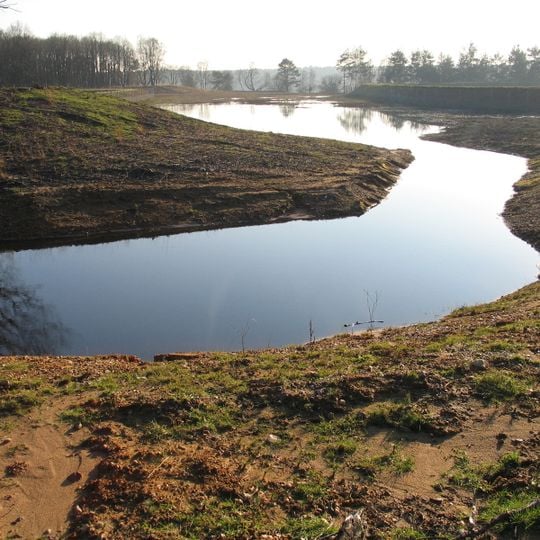
Hoge Kempen National Park, National park and Tentative World Heritage Site in Limburg, Belgium.
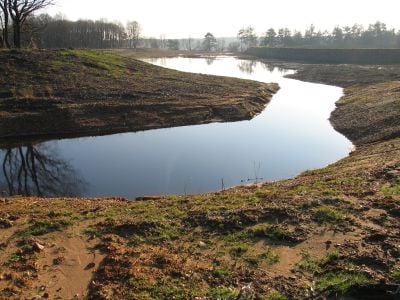
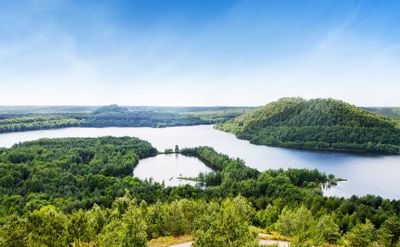
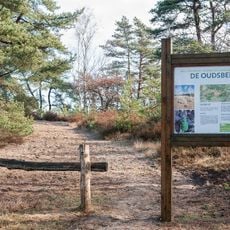
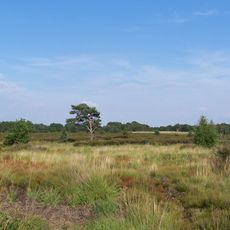
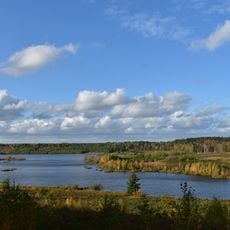
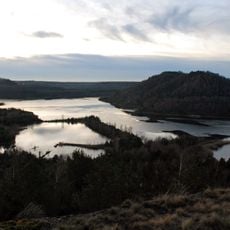
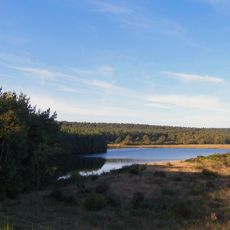
Hoge Kempen National Park is a protected area of about 12,000 hectares in Limburg with pine forests, heathland, and large ponds created by gravel extraction. The landscape shows a varied mix of dry and wet areas with distinctive elevation changes across different sections.
The Kempens Plateau was formed as a scree cone of Ardennes rocks deposited by the Meuse during the last Ice Age and later covered by wind-blown sand. The park was first established in 1990 within the Regional Landschap Kempen en Maasland and opened to the public on 29 March 2006 as Flanders' first national park, covering 67 square kilometres. It doubled in size to 12,742 hectares in 2020 with the addition of Duinengordel, Bergerven and Munsterbos.
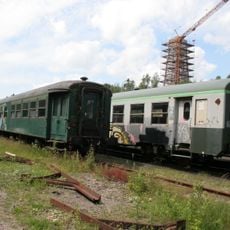
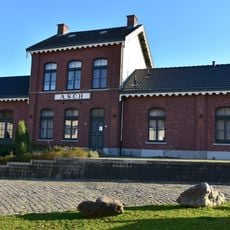
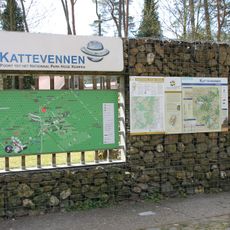
The numbered-node cycle network still used across Flanders and beyond was devised here in the 1990s; designer Hugo Bollen wanted short, sparse signage. The regional landscape estimates it brings 16.5 million euros a year to Kempen and Maasland. Six entrance gates carry themes: cosmos at Kattevennen, insects at De Lieteberg, the mining past at Station As.
The area offers around 200 kilometers of hiking paths and 140 kilometers of cycling routes for visitors of different abilities. Rangers lead regular tours to help explain the site's natural features.
The numbered-node cycle network, now used across Europe, was devised here in the 1990s; designer Hugo Bollen wanted short signs with little text. The regional landscape estimates it brings 16.5 million euros a year to Kempen and Maasland. Project manager Ignace Schops received the Goldman Environmental Prize in April 2008.
The community of curious travelers
AroundUs brings together thousands of curated places, local tips, and hidden gems, enriched daily by 93,765 contributors worldwide.