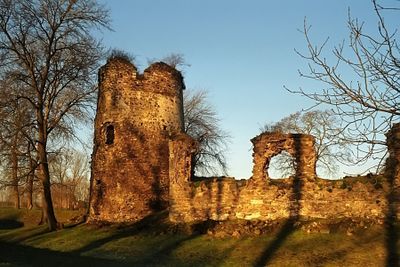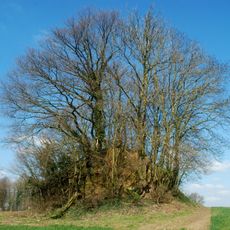
Château de Walhain, Medieval castle ruins in Walhain, Belgium.
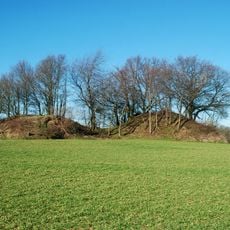
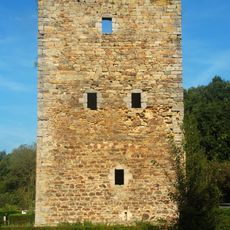
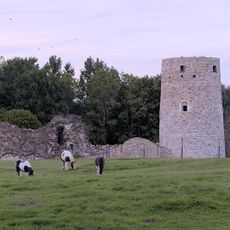
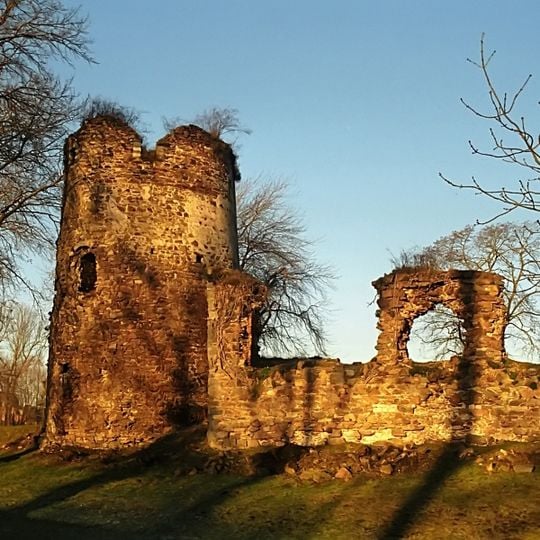
Château de Walhain is a ruined medieval castle in Walhain-Saint-Paul, Walloon Brabant. Its oldest and best-preserved element is a cylindrical keep of rubble stone with a first-floor opening, standing at one corner of the enceinte. Of the walls, only the lower level of the corner towers, the postern and the curtain walls remain, surrounded by dry moats.
The castle was built in the late 1100s under Duke Henry I of Brabant to defend against claims from Namur County. It served as part of a network of fortifications that reflected power struggles in the region for centuries.
The castle gave its name to the seigneurie of Walhain, which in 1440 under Antoine de Glymes covered Walhain, Saint-Paul, Thorembais-Saint-Trond and Oprebais, plus parts of Perbais and Tourinnes-Saint-Lambert. The site is the only lowland castle in the region, and excavations since 1998 by UCLouvain and Eastern Illinois University have uncovered traces of occupation older than the Romanesque castle, possibly linked to the villa Walaham recorded in 10th-century charters.
The ruins stand on flat grass in Walhain-Saint-Paul, surrounded by dried-up moats; the ground can be uneven and slippery after rain, so sturdy footwear helps. The site is managed by the non-profit Les amis du château de Walhain, which organises visits and guided tours; check its website for opening times. There are no facilities on site, so bring your own food and drinks.
The castle is the only lowland castle in the region, and its dry moats still trace the defences around the ruins. Excavations by UCLouvain and Eastern Illinois University have run here since 1998; the July 2022 campaign checked the layout and siting of the site.
The community of curious travelers
AroundUs brings together thousands of curated places, local tips, and hidden gems, enriched daily by 95,547 contributors worldwide.