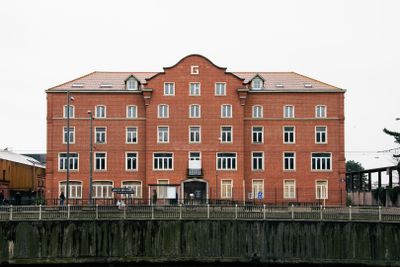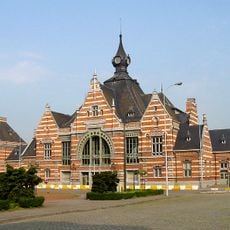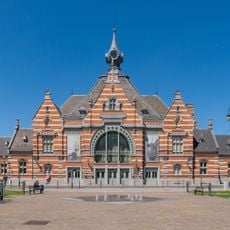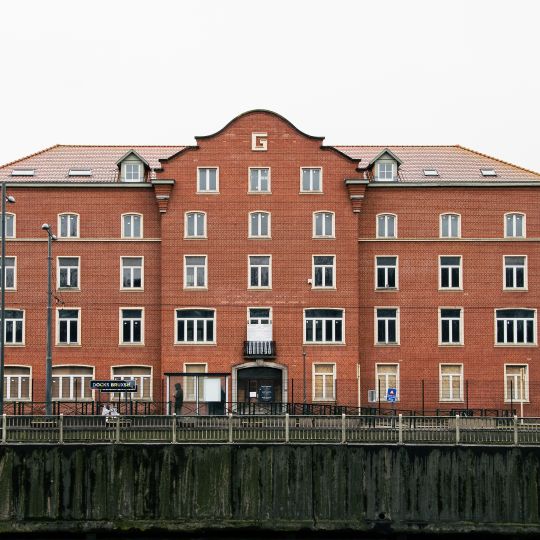
Familistère Godin in Laeken, building in Brussels, Belgium
The Familistère Godin is a rectangular building with a glass-covered interior courtyard and three and a half floors of brick construction. The central court sits open to the sky with metal and brick walkways connecting all levels, supported by square pillars.
Construction began in 1887 as part of a stove manufacturing complex, combining factory and residential spaces in one building. The design embodied social reform ideas that sought to house workers close to their workplaces with improved living standards.
The building reflects 19th-century labor movement ideals, with housing specifically designed for factory workers and their families. The layout shows how reformers of that era sought to improve working-class living conditions within an industrial setting.
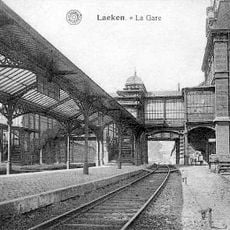
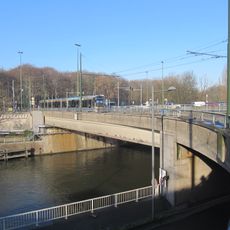
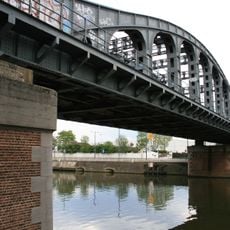
The site sits along the Willebroeck Canal with direct rail connections, making it easy to visit by public transport. The location on the waterway gives visitors a sense of how goods and materials once moved through the complex.
The roof uses Polonceau trusses, a 19th-century engineering technique that was cutting-edge for its time. This roof design is a rare technical achievement that shows how builders solved the challenge of spanning large open courtyards without intermediate supports.
The community of curious travelers
AroundUs brings together thousands of curated places, local tips, and hidden gems, enriched daily by 91,836 contributors worldwide.