Meli Heysel, Amusement park in Laeken, Brussels, Belgium
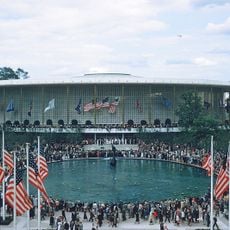
Meli Heysel was a 4.5-hectare amusement park on the Heysel plateau, opened in 1960 on the grounds of Expo 58's "Vrolijk België" section. It was a smaller version of Meli Park in Adinkerke, with playgrounds and a zoo. Its core was the 1,200 m² Meli pavilion, designed by J. Decoussemaeker and Wiegman, which held the Wonderbare Bijenkorf, a honey shop and cafeteria, and the Watersymfonie dancing fountains.
Honey trader Alberic-Joseph Florizoone of Veurne, owner of Meli Park in Adinkerke, built the 1,200 m² Meli pavilion for Expo 58 in 1958, designed by J. Decoussemaeker and the Rotterdam architect Wiegman. After the fair closed, the site on the "Vrolijk België" grounds was expanded to 4.5 hectares and opened as Meli Heizel in 1960, a smaller version of his Adinkerke park. The concession was not renewed, and the park closed in 1987, replaced by Bruparck and a Kinepolis cinema.
The park took its name from Meli, the honey brand of founder Alberic-Joseph Florizoone, and its centrepiece was De Wonderbare Bijenkorf, a walk-through beehive later moved to Meli Park in Adinkerke and reworked as Apirama. In 1973–1974 about forty ring-necked parakeets were released here; their descendants now live across Brussels.
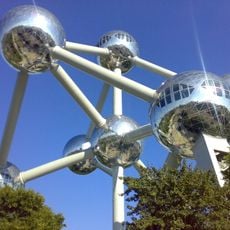
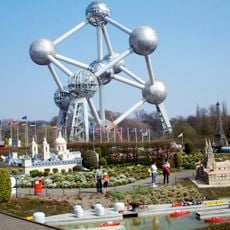
The park stood on the Heysel plateau, on the grounds of the 1958 Expo's "Vrolijk België" section, next to where the Atomium rises. It covered 4.5 hectares and was reached from central Brussels by the same roads and metro links serving the exhibition grounds.
In 1973 and 1974 Meli Heizel released around forty ring-necked parakeets. The birds survived and multiplied; their descendants are the parakeets now common in Brussels parks.
The community of curious travelers
AroundUs brings together thousands of curated places, local tips, and hidden gems, enriched daily by 93,667 contributors worldwide.