Saint George Rotunda Church, Eastern Orthodox church building in central Sofia, Bulgaria
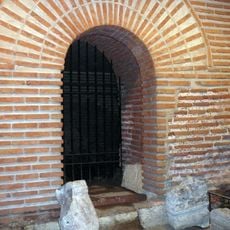
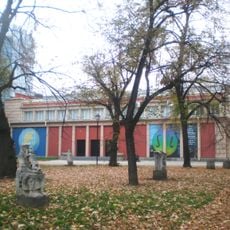
Saint George Rotunda Church is a late antique red brick rotunda in central Sofia, built on a square base with a cylindrical domed room and semicircular niches in the corners. The dome rises 13.7 metres. It stands several metres below street level between Hotel Balkan and the Presidency, and behind its apse are ruins of a Roman street with drainage, a basilica and a building with hypocaust tiles.
Built in the early 4th century, the rotunda formed part of the Roman complex of Serdica, where emperors Galerius and Constantine the Great resided. It was converted into a church in the 6th century. In the 16th century the Ottomans turned it into a mosque called Gül Camii, and the frescoes were covered with plaster. After Bulgaria's Liberation it served briefly as a temporary mausoleum for Prince Alexander of Battenberg in 1886, until his remains were moved in 1898.
The walls carry five layers of partly preserved frescoes: 4th-century floral motifs, 10th-century angels, an 11th–12th-century frieze of prophets and the Ascension, a 14th-century donor portrait of a bishop north of the entrance, and Islamic ornaments from the mosque period. The 10th-century angel face under the dome is a noted example of First Bulgarian Empire painting.
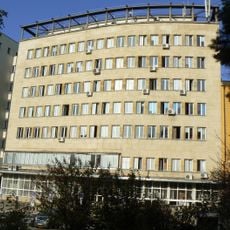
The church sits several meters below the current street level, nestled between Hotel Balkan and the Presidency. Visiting requires conscious descent, but the setting helps you understand the underground character of the place.
The building served different purposes across centuries, shifting between Roman baths, Christian church, mosque, and back to Orthodox church. This sequence shows how different cultures held the same space sacred, one after another.
The community of curious travelers
AroundUs brings together thousands of curated places, local tips, and hidden gems, enriched daily by 93,498 contributors worldwide.