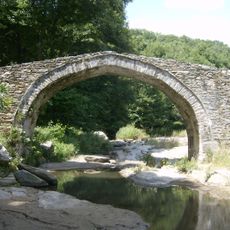
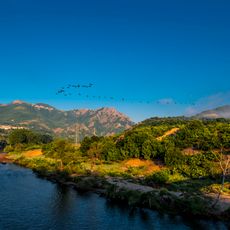
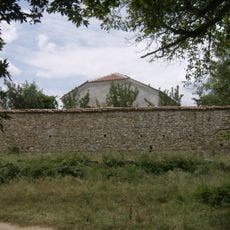
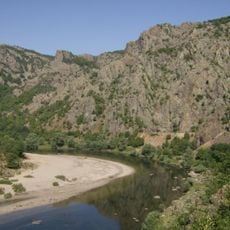
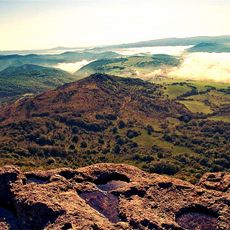
Lyutitsa, Medieval fortress in Ivaylovgrad, Bulgaria.
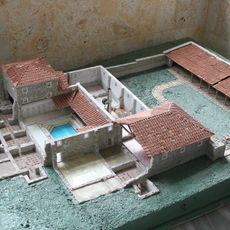
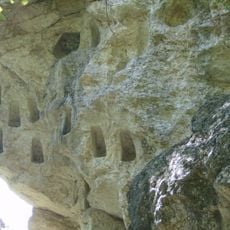
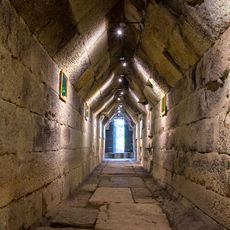
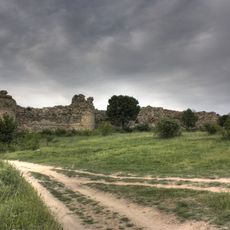
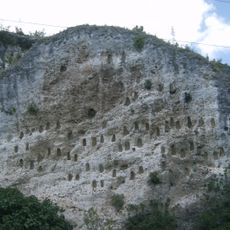
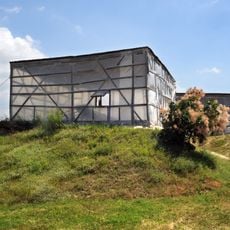
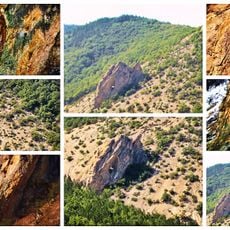
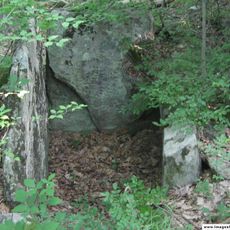
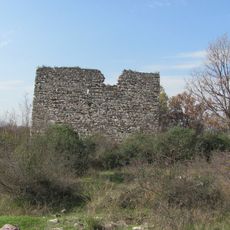
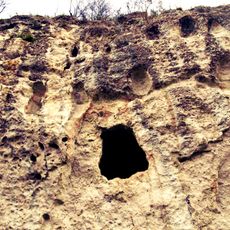
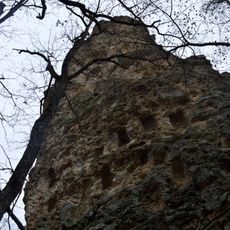
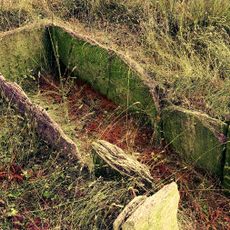
Lyutitsa is a medieval fortress on Gradishteto peak at about 560 m, covering 26 decares. Its white marble walls, over 600 m long and up to 10 m high, form an irregular oval with 12 rectangular towers and one octagonal tower. The single west gate is flanked by two rectangular towers; inside are two churches, a keep, a necropolis and a rock-cut water reservoir.
Construction began in the 4th century; the late-antique walls were largely destroyed by Huns, Goths and, in the 6th century, Slavs. The site was rebuilt under Constantine V Kopronymos and passed to Bulgaria after Khan Krum's campaigns in 813. Lyutitsa was a bishopric from the 9th to the 17th century and an archbishopric in the 17th–18th centuries, flourishing in the 13th–14th centuries before declining by the late 18th century.
Lyutitsa was the seat of a bishopric from the 9th to the 17th century and of an archbishopric in the 17th–18th centuries. Its earlier church is a three-nave basilica with wall paintings and marble panels; the later one is small, with a tiled gable roof and a cross found among the ruins. After the Ottoman conquest the church stayed in use and the Lydzha monastery was built at the foot of the hill.
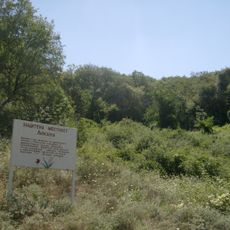
You can reach the fortress via a marked hiking trail from Ivaylovgrad, and the site is accessible year-round. Bring sturdy footwear and water, as the climb can be steep and exposed.
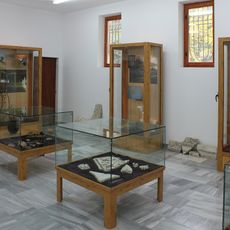
In 2018 archaeologists found a seal of the Byzantine empress Irene Palaiologina, wife of Andronikos II, showing her crowned with a sceptre and the Virgin enthroned on the reverse. A 2011 gold ring is thought to be a money-changer's ring for weighing gold coins.
The community of curious travelers
AroundUs brings together thousands of curated places, local tips, and hidden gems, enriched daily by 94,270 contributors worldwide.