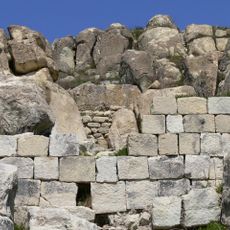
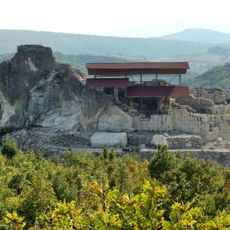
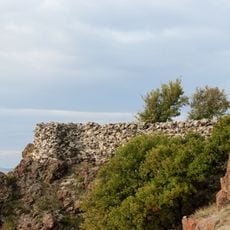
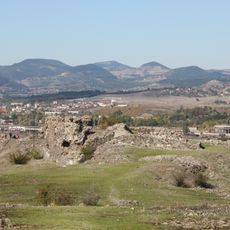
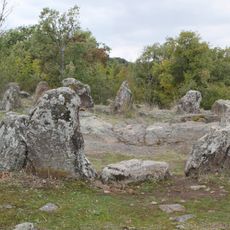
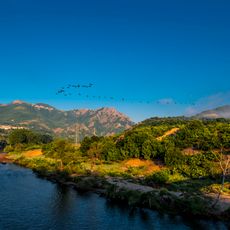
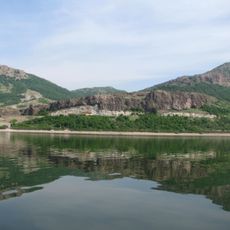
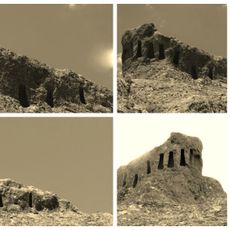
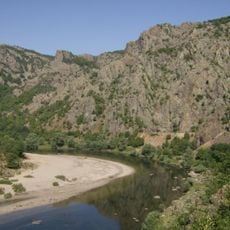
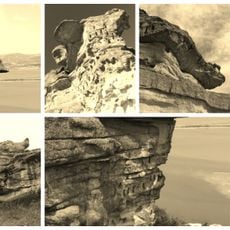
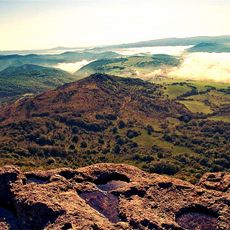
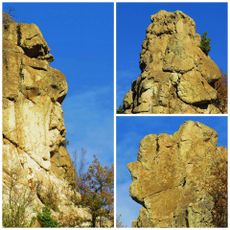
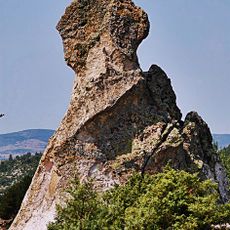
Kovan kaya, Megalithic sanctuary in Dolno Cherkovishte, Bulgaria.
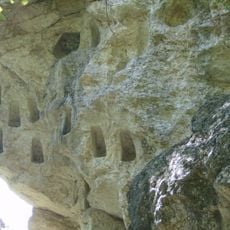
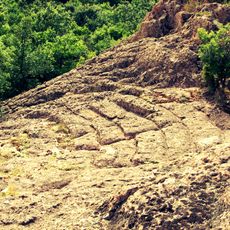
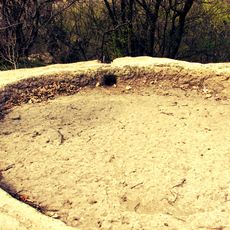
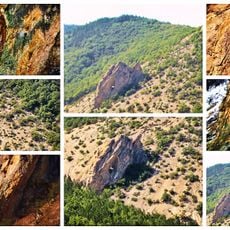
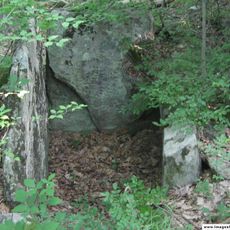
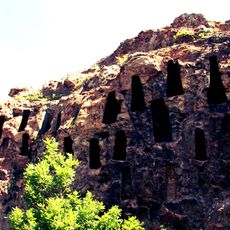
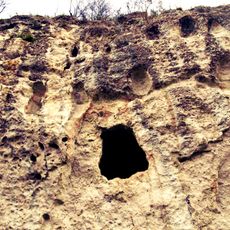
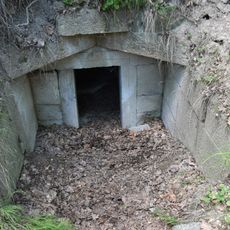
Kovan kaya is a rock massif on the left bank of the Arda River near Dolno Cherkovishte, carved with 110 trapezoidal niches and an artificial cave of unknown purpose. The niches, mostly facing south and southeast, are cut into soft volcanic tuff; berms at the right edge show how the work progressed.
The site began as a prehistoric cult complex and was later reused by the ancient Thracians. It was declared a natural landmark in 1972. The complex lies in the middle Arda valley, near the Thracian sanctuary Aul kaya and other prehistoric sites such as Hambar kaya and Beygir kaya.
The name Kovan kaya means "Bee Rock" in the local Turkish dialect. The site lies near the villages of Pchelari and Dolno Cherkovishte, and the surrounding area holds other rock sanctuaries such as Aul kaya, Hambar kaya and Beygir kaya.
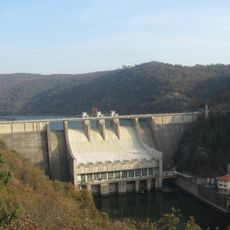
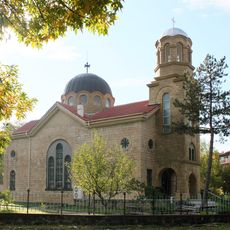
The complex lies on the left bank of the Arda, right by the road between Haskovo and Krumovgrad, so it is easy to reach by car. The niches are cut high in the rock and are not accessible; they are best seen from a distance. An information centre built nearby with European funding is currently closed.
The artificial cave cut into the rock was interpreted in earlier research as a tomb, but no scientific evidence supports this. Its purpose remains undetermined, and the 110 trapezoidal niches are oriented mainly south and southeast, with some facing west and northwest.
The community of curious travelers
AroundUs brings together thousands of curated places, local tips, and hidden gems, enriched daily by 93,644 contributors worldwide.