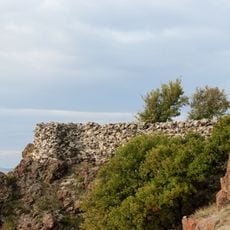
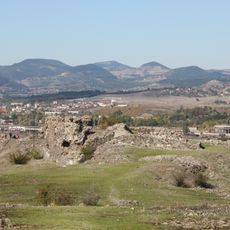
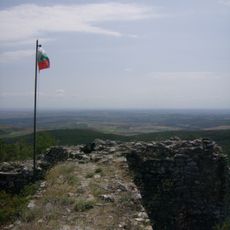
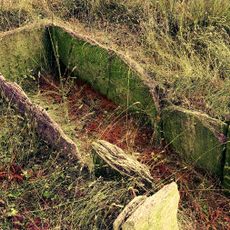
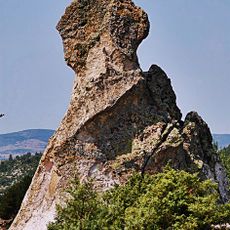
Shan kaya, Prehistoric rock sanctuary in Sladkodum, Bulgaria
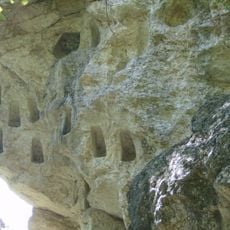
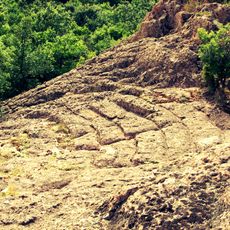
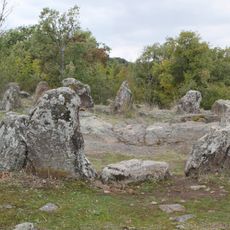
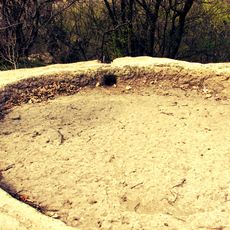
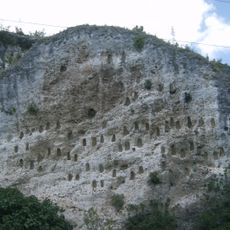
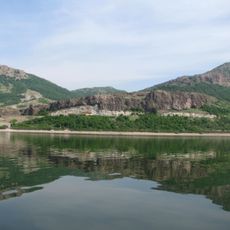
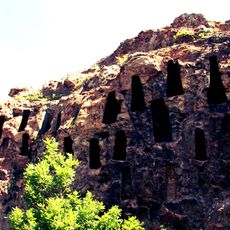
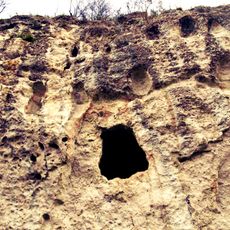
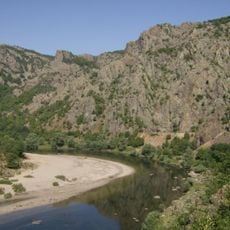
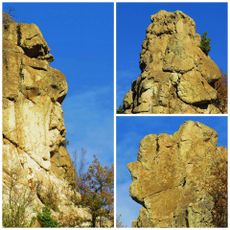
Shan kaya is a conical rock massif above a left tributary of the Dishlik dere, which flows into the Arda, near the deserted Tridolci quarter of Sladkodum. A horizontal oval opening is cut through the rock from west to east. Around the eastern opening are 35 trapezoidal niches, with 5 more at the western opening and 4 vertically oriented carved stone rings beside them.
Shan kaya has not been excavated, so its dating rests on the carved trapezoidal niches cut into the rock. Around the eastern opening are 35 niches, with 5 more by the western opening, and 12 further niches lie 100 m above at the summit of the same name. Four vertically cut oval rings beside the western opening are the first such rings recorded in the Eastern Rhodopes.
The name Shan kaya comes from the local Turkish dialect and means "bird rock", after a local falcon that nested on the massif; an earlier folk translation as "revered rock" is not supported by the last inhabitant of Tridolci. The 35 trapezoidal niches around the eastern opening and 5 around the western one are the visible traces of the site's use as a sanctuary.
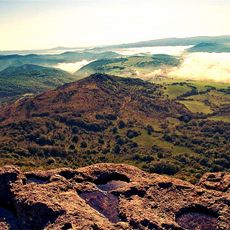
The site sits in a mountainous area and is best visited in the morning when natural light makes the carvings clear. Good footwear and time to explore the different rock surfaces are recommended.
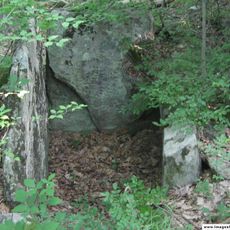
Four vertically oriented oval rock-cut rings, or halki, are carved beside the western opening's niches. They are the first such rings recorded in the Eastern Rhodopes; similar examples exist at the rock complex above Rechka near Moryantsi and at Sivri kaya near Bezvodno. The rings were likely used by stonecutters to hang auxiliary ropes while carving the niches.
The community of curious travelers
AroundUs brings together thousands of curated places, local tips, and hidden gems, enriched daily by 93,620 contributors worldwide.