Thracian Cult Complex, Archaeological museum and tomb complex in Starosel, Bulgaria.
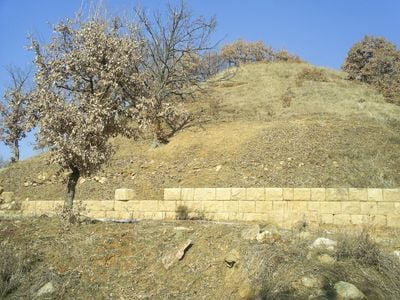
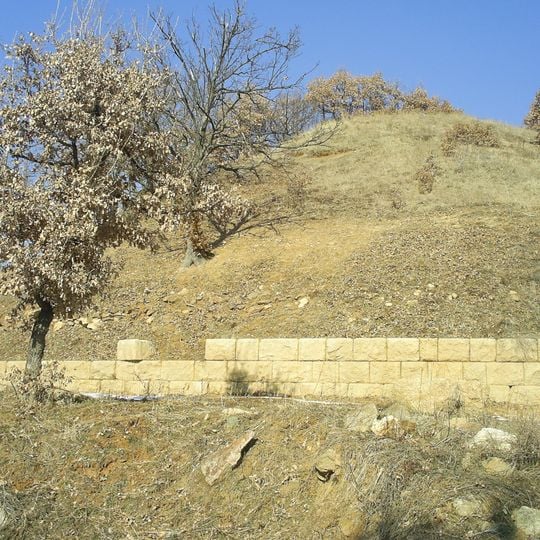
The Thracian Cult Complex at Starosel is a partially buried temple-tomb beneath the 20 m high, 85 m wide Chetinova mound. A 241 m retaining wall of tan stone blocks encircles the mound; inside, a monumental staircase leads to a round domed chamber 4.80 m in diameter with semi-columns and painted ornaments, entered through a facade of greenish volcanic tuff.
The mound was raised no later than 359 BC, as coins of Philip II of Macedon found in its fill show. The tomb was sealed after a final burial in the 350s or 340s BC, dated by two amphorae left beside the door of the first chamber. Georgi Kitov excavated it in 2000 and called it a cult complex; Chavdar Tsochev links it to the family of Cotys I.
The complex reveals Thracian religious practices centered around wine ceremonies, ancestor veneration, and elaborate burial rituals, with artifacts including gold jewelry, ceremonial weapons, and ritual objects that demonstrate their sophisticated spiritual beliefs and social hierarchy.
The monument lies partly underground: wooden scaffolding props the vault inside and plastic sheeting covers the stepped rows, so only part of it is visible. The circular chamber is entered through the antechamber past three high steps. Around the winter solstice, sunlight reaches the inner room. A buried sarcophagus was found near the parking area, and a columned tomb-sanctuary stands just below along the road.
The mound's perimeter wall, a krepida of stone blocks 241 m long, served as a fortress wall. In the rock-cut basin on the north side, excavators found wine-drinking cups and strainers, linking the complex to ritual drinking. Three lion paws are all that remain of the pedestals that flanked the entrance.
The community of curious travelers
AroundUs brings together thousands of curated places, local tips, and hidden gems, enriched daily by 93,521 contributors worldwide.