Yaylata, Archaeological reserve and protected habitat in Kavarna Municipality, Bulgaria
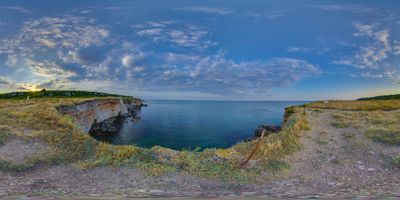
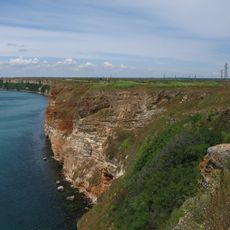
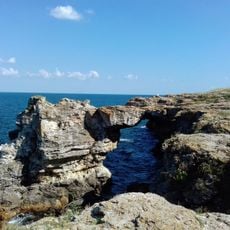
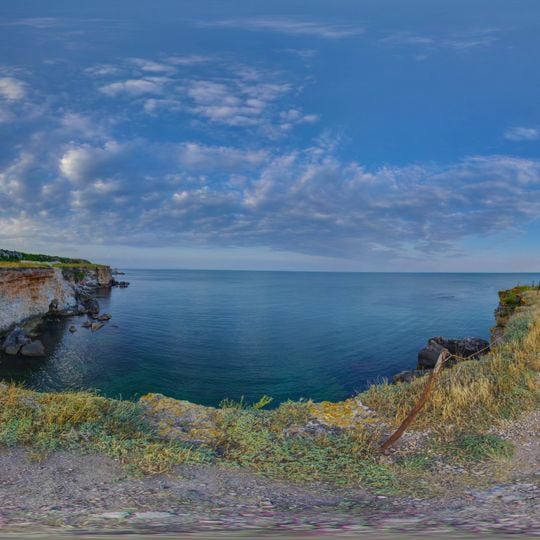
Yaylata is a national archaeological reserve on a coastal terrace of about 300 decares, 2 km south of Kamen Bryag. The terrace sits 10–15 m above sea level, while the rock face below drops 50–60 m to the Black Sea in horizontal bands of pale tan and orange above whitish rock. At the base, dark rounded boulders lie in deep blue-green water, and low green vegetation edges the cliff top.
The earliest traces of habitation are 101 caves cut into the rock, dated to the 5th millennium BC. A small Byzantine fortress with four towers and walls 2.6 m thick was built at the end of the 5th century and abandoned around the last quarter of the 6th century after attacks by Slavs and Proto-Bulgarians. A Bulgarian settlement arose there in the 9th century and was destroyed by the Pechenegs in the mid-11th century. Three necropolises with about 130 tombs date from the 2nd to 5th centuries.
The name Yaylata comes from the Turkish word yayla, meaning plateau or high pasture. The caves were reused over the centuries: Thracian tribes lived in them, and from the early Christian period hermits sheltered there. By the Middle Ages, up to the Ottoman conquest in the 14th century, they formed a rock monastery complex, with Old Bulgarian runes, crosses and fragments of icons still on the walls.
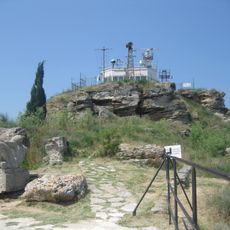
A marked trail with observation platforms and watchtowers runs along the sea cliffs; only ten of the 101 caves are currently accessible. The site lies 2 km south of Kamen Bryag and 18 km northeast of Kavarna, and the rocky ground becomes slippery when wet.
The reserve lies on the Via Pontica migration route, and ornithologists here can observe roughly 70% of Europe's bird species from the heights above the sea. Over 270 fauna species have been recorded on the territory. The cave complex itself is only partly open: visitors can currently reach ten of the 101 caves.
The community of curious travelers
AroundUs brings together thousands of curated places, local tips, and hidden gems, enriched daily by 94,257 contributors worldwide.