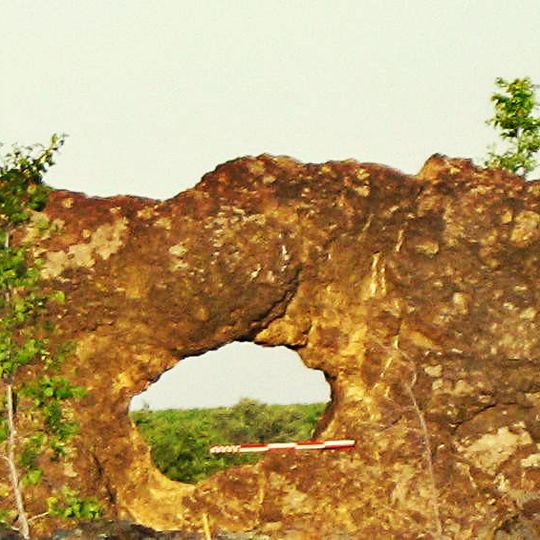
Халката, Ancient sanctuary near Glushnik, Bulgaria.
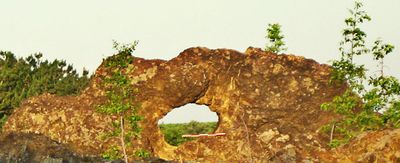
Halkata is an ancient sanctuary near Glushnik with an elliptical opening carved into a steep rock face. This opening measures roughly 0.77 meters wide and 0.45 meters tall and forms a passage through which sky bodies can be observed.
Petar Bunov first documented the rock complex and linked it to astronomical observation. Nikolay Dermendzhiev later interpreted the carved opening and the nearby throne as a lunisolar calendar device, with intercalary months inserted around February or March to align with the spring equinox. He drew parallels with pierced stones of the megalithic culture of Western Europe.
This place was where early inhabitants came to watch and understand events in the sky. The carefully shaped opening allowed people to track the movement of the sun and moon and organize their daily activities around these patterns.
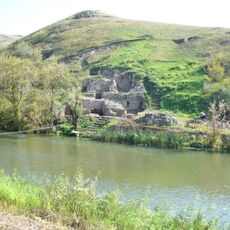
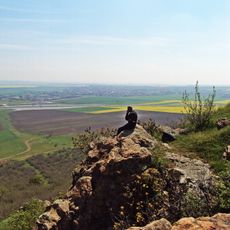
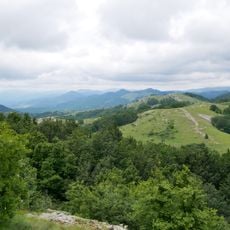
The location sits in hilly terrain and requires sturdy footwear for the walk to reach it. The best time to visit is in the morning when light comes through the opening and visibility is at its best.
The throne sits 33.88 m northwest of the opening, and the intermediate rock ridge between them was deliberately cut down at its highest points so that a seated observer sees the horizon split exactly through the hole. The hole itself is 0.77 m wide and 0.45 m high.
The community of curious travelers
AroundUs brings together thousands of curated places, local tips, and hidden gems, enriched daily by 93,912 contributors worldwide.