Lac des Chats, lake in Ontario and Quebec, Canada
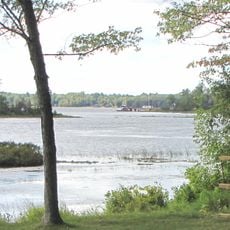
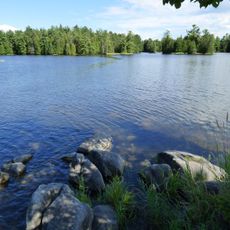
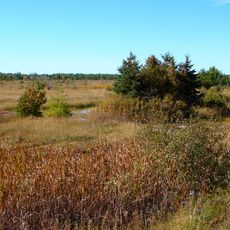
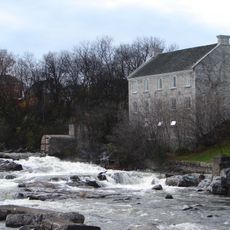
Lac des Chats is a large reservoir formed by the Chats Falls Dam along the provincial border between Ontario and Quebec, with waters fed and drained by the Ottawa River. The lake stretches across a considerable length, with an average depth of about 16 feet (5 meters), dotted with small islands and sandbars that create a varied shoreline.
Samuel de Champlain crossed the lake in 1613 on his way to meet Algonquin peoples at Isle-aux-Allumettes. From 1931 the Chats Falls hydroelectric development, operated jointly by Ontario Power Generation and Hydro-Québec, held back the water and created the reservoir. The name "Les chats" appears in a 1686 manuscript by Denonville.
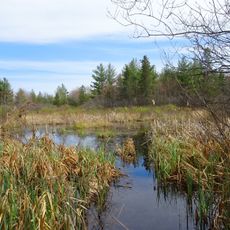
The name's origin is uncertain: sources list several hypotheses, including rocks that scratched voyageurs' canoes (noted by Pierre de Troyes in 1686), wild raccoons in the surrounding forests, cattail plants on the shores, claw-shaped rapids, or an English folk name for a local insect. Denonville wrote only "Les chats" in a 1686 manuscript.
The lake lies about 50 km west of Gatineau, with its northern shore in the Pontiac RCM of Quebec and its southern shore in Renfrew County and Ottawa, Ontario. The Chats Falls generating station and dam stand at the eastern end, near the Ontario-Quebec boundary. Access is by road; the water is a reservoir held back since 1931, so levels vary with the dam.
An old folklore tale from the 1880s describes a mysterious lake creature reportedly over 10 feet long that supposedly attacked a boat named the Levi Young. It was eventually revealed to be a large king snake found on shore, giving the local legend an amusing and very ordinary explanation.
The community of curious travelers
AroundUs brings together thousands of curated places, local tips, and hidden gems, enriched daily by 94,442 contributors worldwide.