Fort Rouillé, French colonial fort in Toronto, Canada
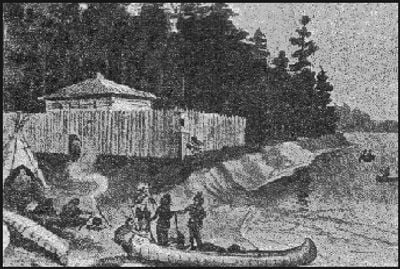
Fort Rouillé was a French military post made of timber buildings enclosed by a square palisade measuring 180 feet (55 meters) on each side. The settlement at present-day Exhibition Place formed a compact defensive compound along the shore of Lake Ontario.
Fort Rouillé was completed in spring 1751 on the site of today's Exhibition Place, replacing the smaller Fort Toronto (Fort Portneuf) that Pierre Robineau de Portneuf had built near the Humber in 1750. Named for Antoine Louis Rouillé, French minister of Marine and Colonies, it was ordered by Governor La Jonquière to intercept Indigenous trade heading to the British post at Oswego. In July 1759, after the French defeat at Fort Niagara, the garrison burned the fort and withdrew to Montreal.
The French name honors Antoine Louis Rouillé, a naval minister who never traveled to Canada. Soldiers and traders lived together here, exchanging European tools for furs with the Anishinaabe peoples.
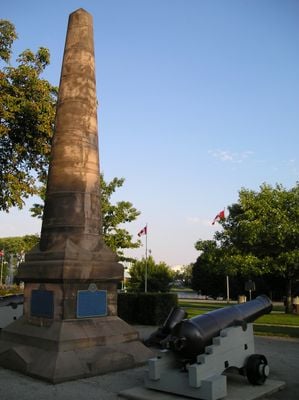
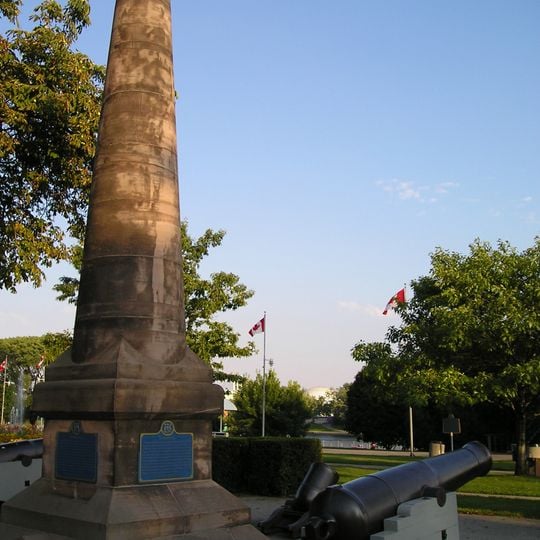
Concrete markers on the Exhibition Place grounds show the original position of the wooden palisade and its corners. An obelisk with two cannons marks the spot near the waterfront, where visitors can walk along the shoreline paths.
The five buildings inside the palisade were a corps de garde, storeroom, barracks, blacksmithy and officers' quarters, not rooms in one structure. Abbé Picquet visited in 1752 and found good bread and wine, better supplies than at other outposts. The Mississaugas asked him to build a church, having only a canteen.
The community of curious travelers
AroundUs brings together thousands of curated places, local tips, and hidden gems, enriched daily by 93,871 contributors worldwide.