Hog's Back Falls, Artificial waterfall system on the Rideau River in Ottawa, Canada
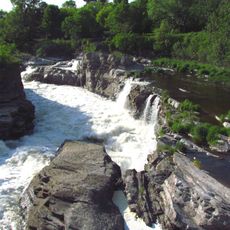
Hog's Back Falls, officially Prince of Wales Falls, is a series of artificial waterfalls on the Rideau River in Ottawa, just north of Mooney's Bay where the Rideau Canal leaves the river. The falls were created after the 1831 dam raised the river level by 12.5 metres, and water now flows over a weir into a channel cut into the eastern bank.
The Rideau Canal's chief engineer, Lt. Col. John By, placed a dam here to divert the Rideau River into the canal cut toward the Ottawa locks. The dam collapsed three times during construction before its completion in 1831, when it raised the river level at this point by 12.5 metres. A weir and an excavated channel on the east bank then produced the falls seen today, while the head of the old Three Rock Rapids lies buried under the dam.
The name Hog's Back was already in use shortly before canal construction; engineer John MacTaggart wrote in 1827 of "a noted ridge of rocks, called the Hog's Back," where raftsmen's timber rafts stuck while coming down the stream. The official name, Prince of Wales Falls, is rarely used.
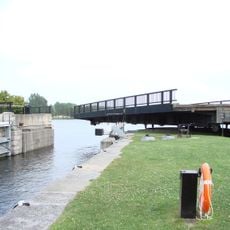
The falls sit where the Rideau Canal leaves the Rideau River, just north of Mooney's Bay. A series of locks lowers boats from this point toward the Ottawa River, and paths on both banks let you watch the water pass the weir. Spring flooding raises the river, so keep back from the edges then.
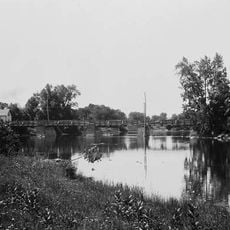
The lower section of the original Three Rock Rapids, a 600-metre stretch with a 1.8-metre drop that canoeists once paddled without portaging, is still visible below the dam; the head of the rapids lies buried beneath the canal dam.
The community of curious travelers
AroundUs brings together thousands of curated places, local tips, and hidden gems, enriched daily by 92,621 contributors worldwide.