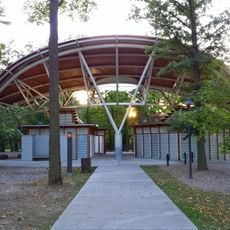
Central Experimental Farm, Experimental farm and national historic site in Ottawa, Canada.
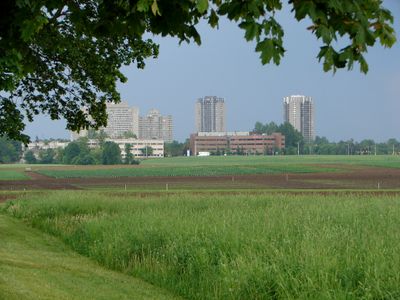
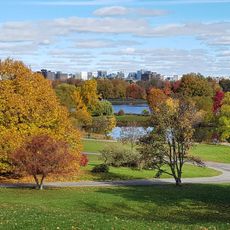
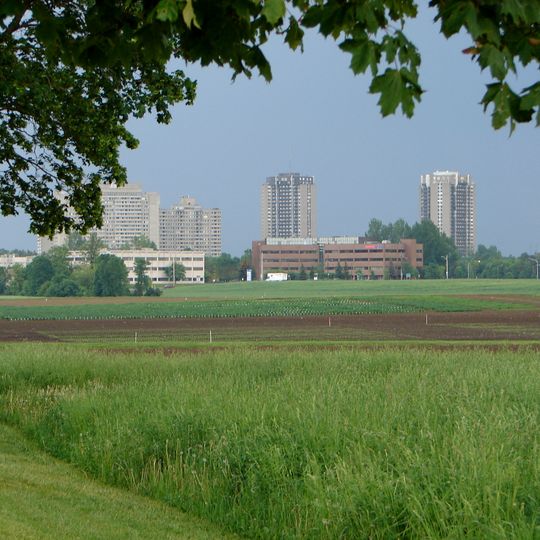
The Central Experimental Farm is an experimental farm and national historic site in Ottawa with research facilities, demonstration areas, and gardens. The grounds blend scientific workspaces with planted areas designed for testing and displaying agricultural methods.
The farm was founded in 1886 and grew into a center for scientific agricultural research in Canada. The institution played a key role in advancing new farming methods and agricultural innovation across the nation.
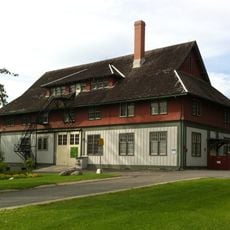
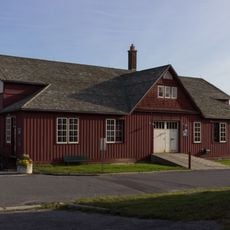
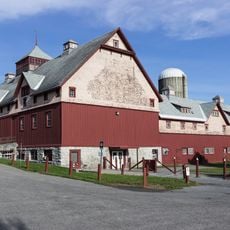
The farm's name comes from its role as the central station of the Dominion Experimental Farms network, with substations in other provinces. Thomas Seaton Scott and Thomas Fuller adopted the Neo-Gothic style for its early buildings, while David Ewart worked in the Scottish baronial style. The former Dairy Barn has housed the Canada Agriculture and Food Museum since 1983.
The farm lies between Carling Avenue to the north and Baseline Road to the south, with Prince of Wales Drive along the southeast and the Rideau Canal forming the eastern edge. The grounds are a working research site, so stay on paths and respect fenced plots and buildings. The Canadian Agriculture and Food Museum occupies the former dairy barn.
In the 1970s the farm grew cannabis on a large scale for research, with plants reaching 20 feet and yielding tonnes of crop, intended to give Canadian scientists reliable samples after the Le Dain Commission's interim report. The plants stood near Ash Lane, which locals nicknamed Hash Lane; the secrecy around the project turned it into a legend among area youth.
The community of curious travelers
AroundUs brings together thousands of curated places, local tips, and hidden gems, enriched daily by 92,634 contributors worldwide.