Acadia, Museum ship at Maritime Museum of the Atlantic in Halifax, Canada
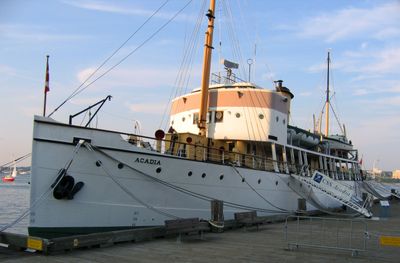
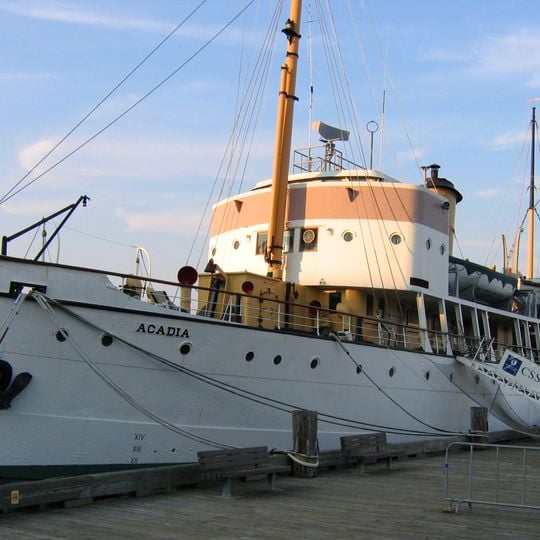
CSS Acadia is a steel-hulled ship measuring 170 feet 9 inches (52.04 m) long with a beam of 33 ft 7 in (10.24 m) and a draught of 19 ft (5.8 m). Its white hull carries a dark green lower edge, a black waterline stripe, and the name ACADIA in black capitals on the port bow, with the Roman numerals XIV, XIII and XII stacked below. A row of round portholes runs along the hull, and a tan and white superstructure with a red circular sign and a tall yellow mast rises above. A white gangway with railings extends along the starboard deck.
Designed by R. L. Newman in Ottawa and built by Swan Hunter & Wigham Richardson at Newcastle-upon-Tyne, Acadia was launched on 8 May 1913 and reached Halifax that July. She charted Hudson Bay from Port Nelson and survived the 1917 Halifax Explosion as a guard ship in Bedford Basin. Commissioned as HMCS Acadia in both world wars, she returned to hydrographic work until 1969.
The vessel represents how Canada advanced maritime research and how scientists worked on the water in the early 1900s. Visitors can observe how the spaces were set up for this specialized work.
The ship is open to visitors from May through October and you can explore multiple decks. The exhibits are arranged throughout the vessel, so comfortable footwear and care on the stairs are advised.
The ship was the first in Canada's hydrographic fleet to have a Marconi wireless telegraph system. This equipment let the crew stay in contact with land during their expeditions.
The community of curious travelers
AroundUs brings together thousands of curated places, local tips, and hidden gems, enriched daily by 94,062 contributors worldwide.