Rosedale Valley Bridge, Concrete bridge in Rosedale Valley, Canada
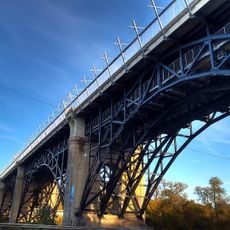
The Rosedale Valley Bridge is a covered concrete arch bridge built in 1966 by architect John B. Parkin, carrying Line 2 subway trains across the Rosedale Ravine in downtown Toronto. Its eastern end meets the west end of Castle Frank station, and it runs on the north side of, almost parallel to, the Rosedale span of the Prince Edward Viaduct. Open skylights once ventilated the bridge; they were later covered to cut noise for nearby residents.
The bridge was designed in 1966 by architect John B. Parkin and carries Line 2 trains of the Toronto subway system. It was built as part of the city's mid-20th century expansion of public transit infrastructure.
The bridge's name comes from the ravine it crosses, and its covered concrete form is visible from Bloor Street and from Rosedale Valley Road below. Its unused lower deck on the neighbouring Prince Edward Viaduct span, built in 1918 for rail, is a visible trace of how the subway route was planned and then changed.
The bridge is accessible to pedestrians and vehicles on the upper level, while the lower deck is not open to the public. Visitors can view the structure from the valley below or from the surrounding streets and pathways.
The Prince Edward Viaduct's lower deck over Rosedale Valley was built for rail but never used: its approach curves were too sharp for subway trains, so this separate bridge was built instead. The unused span still sits beside the Rosedale Valley Bridge.
The community of curious travelers
AroundUs brings together thousands of curated places, local tips, and hidden gems, enriched daily by 93,475 contributors worldwide.