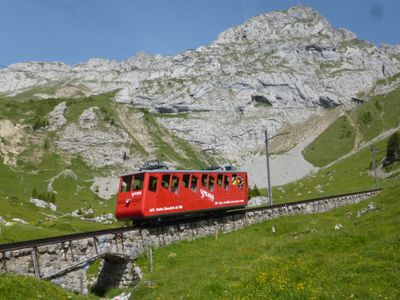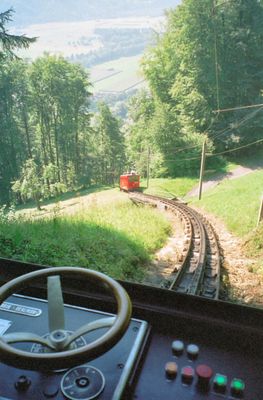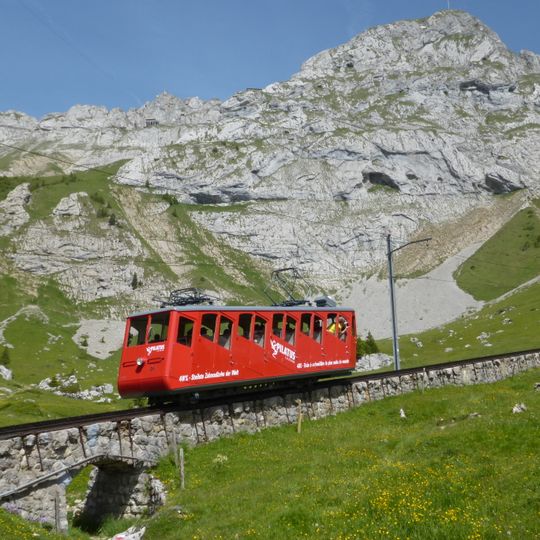
Pilatus railway, Rack railway in Alpnachstad, Switzerland
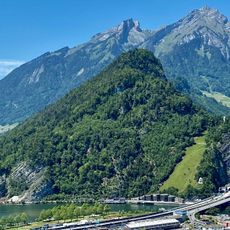
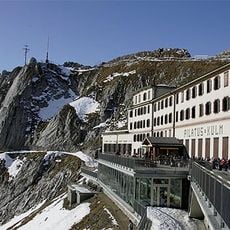
The Pilatus Railway operates as the world's steepest rack railway, ascending 5,364 feet (1,635 meters) over a distance of 2.87 miles (4.62 kilometers) with a maximum gradient of 48 percent from Alpnachstad to the summit of Mount Pilatus.
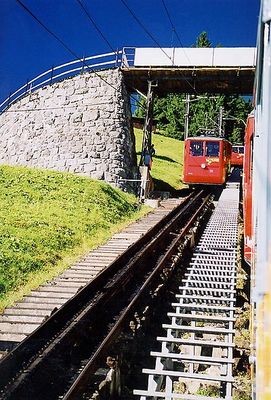
Engineer Eduard Locher designed and completed the railway in 1889, introducing an innovative horizontal cogwheel system that securely engaged with doubled racks to prevent slippage on extreme gradients, and the line was electrified in 1937 to replace the original steam locomotives.
Recognized as a class A Swiss cultural property of national significance, the railway demonstrates Swiss engineering excellence and was designated an ASME Historic Mechanical Engineering Landmark in 2001 for its groundbreaking rack system and contribution to mountain transportation history.
The railway operates seasonally from May through November, with trains departing from the station at Brünigstrasse 4 in Alpnachstad and taking approximately 30 minutes to reach the summit while traveling at maximum speeds of 9 mph (15 km/h) on the steepest sections.
The Locher rack system uses horizontal cogwheels mounted beneath the train cars that engage with a double rack on both sides of the track, eliminating the need for flanged wheels and ensuring safe operation even during strong crosswinds on the steep mountain slopes.
The community of curious travelers
AroundUs brings together thousands of curated places, local tips, and hidden gems, enriched daily by 90,820 contributors worldwide.