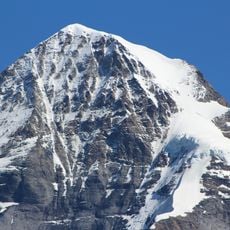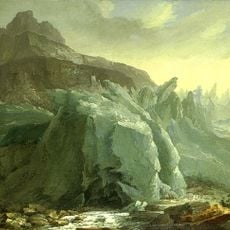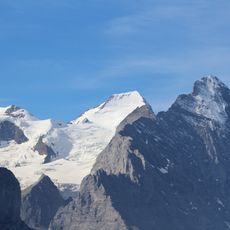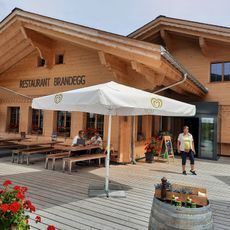
Eiger north face, North face of Alpine mountain in Bernese Alps, Switzerland
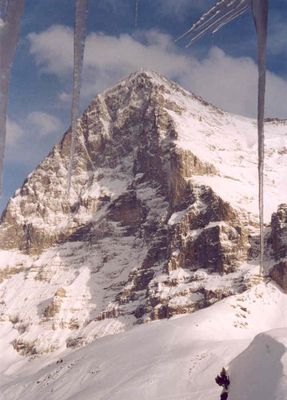
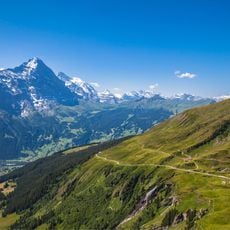
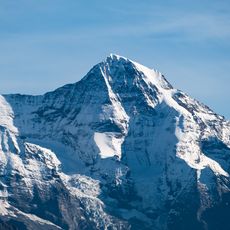
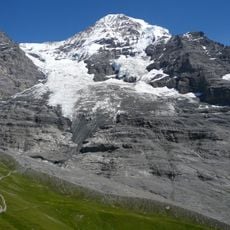
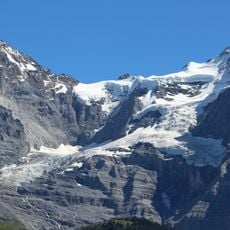
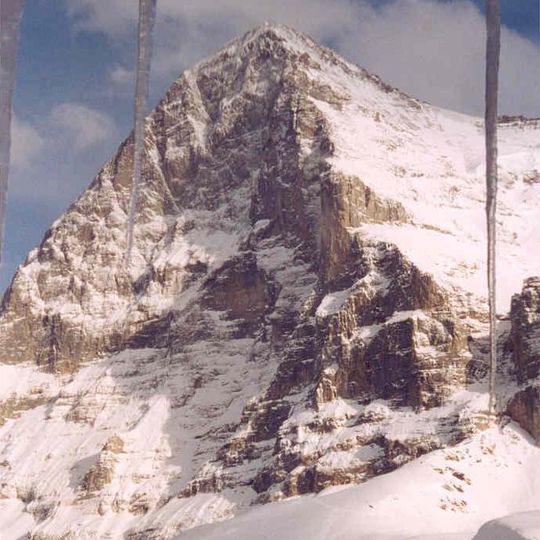
The Eiger north face is a wall of Helvetic limestone rising over 1,800 metres above the snow-covered ground at its base, its summit at 3,967 metres. The rock lies in layered bands of Schrattenkalk, marl and shale dipping 60 to 70 degrees northward, visible as fluted streaks between snow, with a central buttress and bands of ice descending both edges.
The first successful climb of this wall happened in 1938 by a rope team of Fritz Kasparek, Heinrich Harrer, Andreas Heckmair and Ludwig Vörg. Many earlier attempts ended tragically and made the route one of the most feared in the Alps.
German-speaking mountaineers called this wall Mordwand, a name that recalls the many accidents during early twentieth-century attempts. Today, visitors watch from railway windows as climbers cross the same ledges that once seemed impossible to reach.
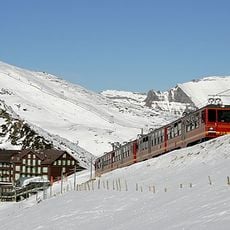
The Jungfrau railway runs through the mountain and stops at Eigerwand and Eismeer stations, where visitors can view the massive rock formations up close. Binoculars help when watching climbers, who often appear as tiny dots on the bright rock wall.
A small opening called Stollenloch was created during railway tunnel construction and now serves as an emergency exit for climbers on the wall. The window sits roughly halfway up and offers tired mountaineers an unexpected escape route into the mountain interior.
The community of curious travelers
AroundUs brings together thousands of curated places, local tips, and hidden gems, enriched daily by 92,496 contributors worldwide.