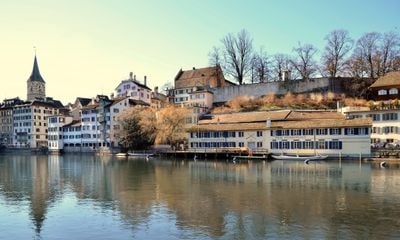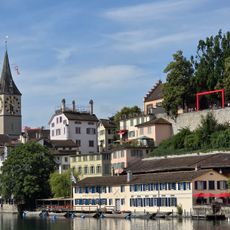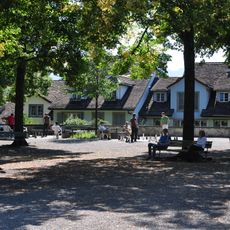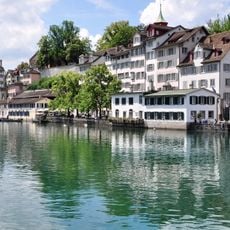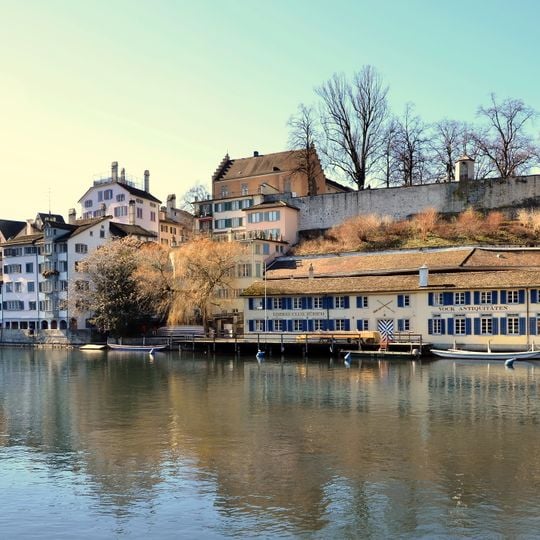
Turicum, Archaeological site in Lindenhof hill, Zürich, Switzerland
Turicum was a Gallo-Roman vicus at the lower end of Lake Zurich, grouped around the Lindenhof hill and the customs station by the Münsterhof, with commercial and residential buildings near the Limmat; it was not fortified. Its name survives from a 2nd-century tombstone found on the Lindenhof in 1747, reading STA(tio) TUR(i)CEN(sis).
Turicum grew from a military post and customs station set up around 15 BC during Augustus's conquest of eastern Helvetia; the settlement itself was an open vicus, not a fort. It first belonged to Gallia Belgica, then to Germania Superior from around AD 85–90. Its customs post, the Quadragesima Galliarum, cleared goods moving between Gallia Belgica and Raetia, mainly on the water route from Lake Zurich down the Limmat, Aare and Rhine.
The name Turicum is recorded on a 2nd-century tombstone found on the Lindenhof in 1747, which names the father as head of the Turicensis customs post. The settlement was not fortified; its buildings clustered around that customs station, the Quadragesima Galliarum, where goods and travellers were cleared between Gallia Belgica and Raetia. The water route Walensee–Lake Zurich–Limmat–Aare–Rhine carried the traffic, since Turicum lay off the main roads.
The Roman vicus lay at the foot of the Lindenhof hill, around today's Weinplatz, Schipfe and Limmatquai, and no town walls or baths have been found there. The 1747 tombstone of Lucius Aelius Urbicus, naming his father as head of the Turicum customs post, was found on the Lindenhof; the hilltop is a public square reached on foot from the Altstadt.
A gravestone from the 2nd century found here carries the oldest known written form of the name Turicum. This piece is a rare record of how the Romans themselves referred to this place.
The community of curious travelers
AroundUs brings together thousands of curated places, local tips, and hidden gems, enriched daily by 93,696 contributors worldwide.