Old city of Zürich, Medieval district in central Zürich, Switzerland
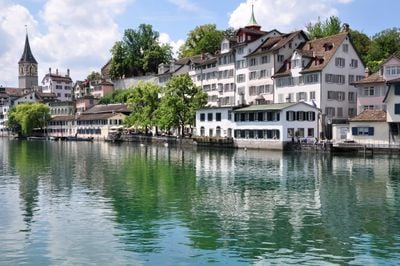
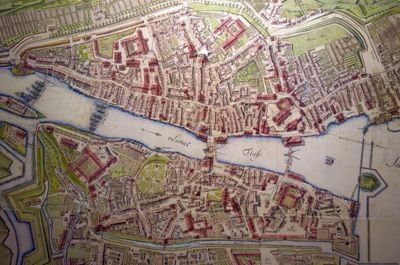
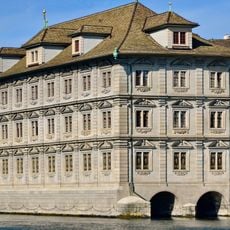
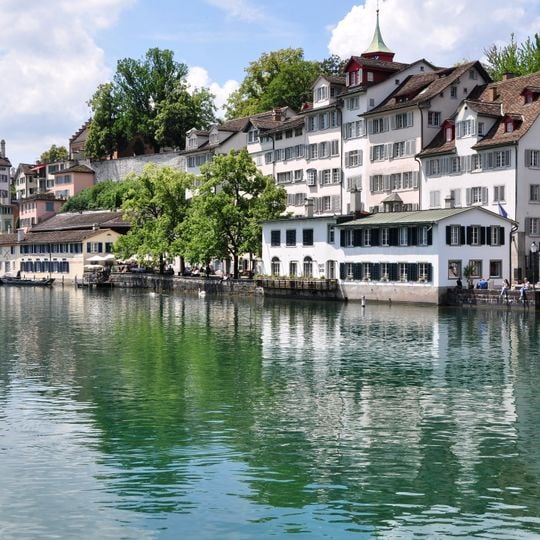
The old city of Zürich is split into two roughly equal halves by the Limmat flowing out of Lake Zürich. Its medieval character is strongest around the Lindenhof hill, the former Schipfe quarter and the Rathaus quarter along the river, where stone buildings from the 13th century cluster. The whole district covers about 1.8 square kilometres, bounded roughly by Bürkliplatz, Bahnhofstrasse, the main station, Central, Hirschengraben, Rämistrasse and the Quaibrücke.
The area began as a Roman customs post called Turicum around 15 BC and grew into a prosperous medieval trading center by the 13th century. The emergence of Zwinglian reform in the 16th century transformed its religious and political role in the region.
The district keeps guild houses, medieval churches, and the Grossmünster with its twin towers that have shaped the skyline for centuries. These buildings speak to the craftsmanship and religious importance that defined the place across generations.
The old city covers about 1.8 square kilometres, split into two roughly equal halves by the Limmat. Its edges are marked by Bürkliplatz, Bahnhofstrasse, the Hauptbahnhof, Central, Hirschengraben, Rämistrasse and the Quaibrücke. The densest medieval stone buildings from the 13th century stand around the Lindenhof hill, in the former Schipfe quarter and in the Rathaus quarter along the river.
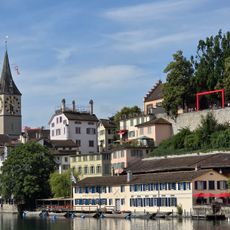
Saint Peter Church displays one of Europe's largest clock faces on its south side, marking time for over 500 years. The mechanism and artistic construction of this timekeeper are often overlooked details that highlight the craftsmanship tradition of the place.
The community of curious travelers
AroundUs brings together thousands of curated places, local tips, and hidden gems, enriched daily by 94,155 contributors worldwide.