Nathu La, Mountain pass at China-India border, Tibet
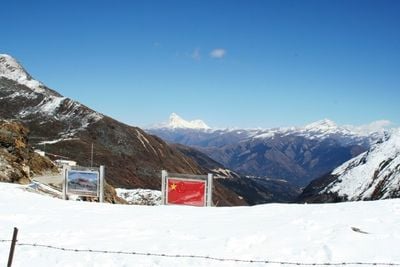
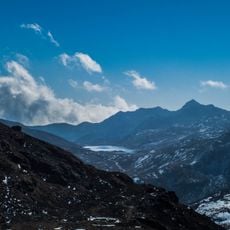
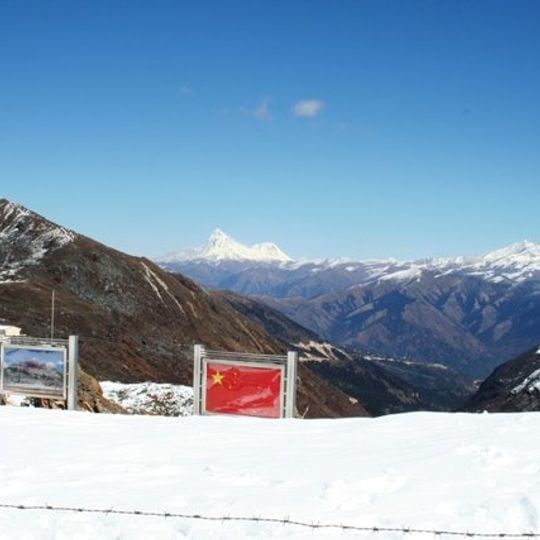
Nathu La is a boundary point and mountain pass at 14,140 feet (4,310 meters) elevation in the Dongkya Range, linking Tibet's Yadong County with India's Sikkim state. The crossing remains closed during winter months due to heavy snowfall and shows a bare landscape of rock, ice and thin air around the marker line between both countries.
J. W. Edgar surveyed Nathu La in 1873 and reported active Tibetan trade through it, but recommended the neighbouring Jelep La for a road. Francis Younghusband's 1903–04 expedition used the pass as its main communication channel, and a British diplomatic delegation to Lhasa crossed in 1936–37. Sealed after the 1962 Sino-Indian War, it reopened to trade in 2006.
The name Nathu La is commonly read as "listening ears pass", while the Chinese government explains it as a place of deepest snow and strongest wind. Lepcha people native to the region call it ma-tho hlo or na tho lo. Before 1962, mule caravans of some 200 animals carried goods from Gangtok to Lhasa in 20–25 days, and Marwari firms held about 95% of the 200 authorised trading licences.
Visitors on the Indian side need permits arranged through approved agencies or government offices, as the area remains under military restriction. The extreme altitude demands slow movement and enough time to adjust, preventing breathing trouble and headaches.
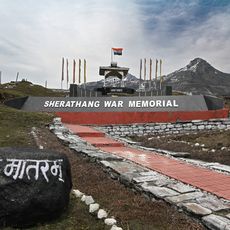
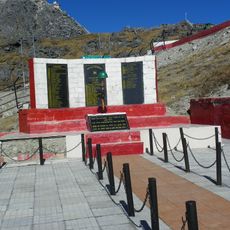
The border station operates as one of five formal meeting points where military personnel from both countries gather regularly and hold flag ceremonies. Stone walls and concrete markers define the exact boundary line, which becomes visible to only a few civilians at this remote altitude.
The community of curious travelers
AroundUs brings together thousands of curated places, local tips, and hidden gems, enriched daily by 92,394 contributors worldwide.