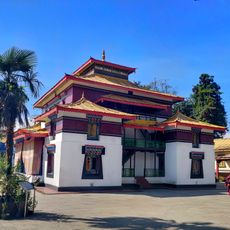
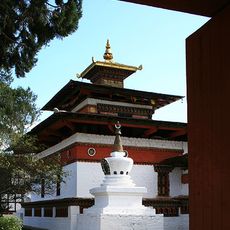
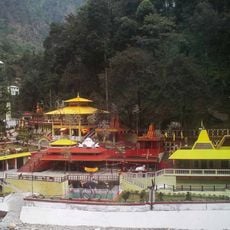
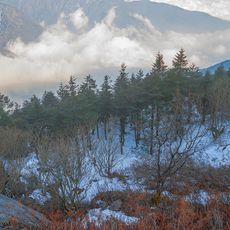
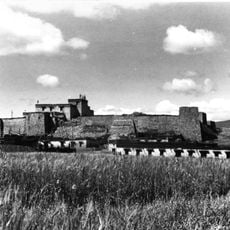
Dungkar monastery, Tibetan Buddhist monastery in Yadong County, China.
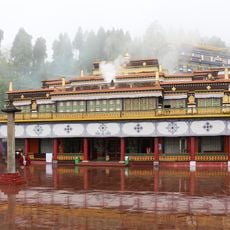
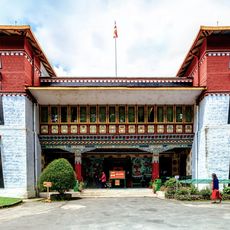
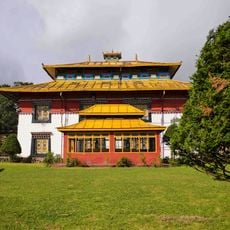
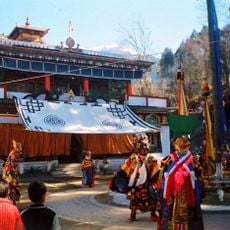
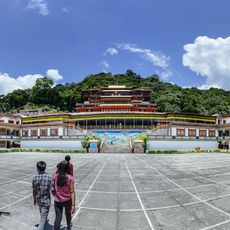
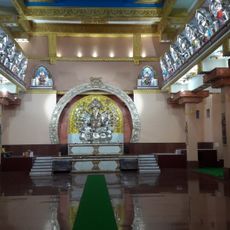
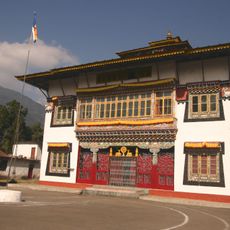
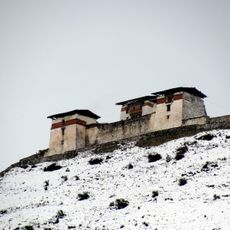
Dungkar Monastery, also called Dongga Zhashilunbu, stands on the slope of Dongga Mountain, about 13 km from Yadong county town. Its walled courtyard faces west, entered by four steps and a tall gatehouse. At the rear, the two-storey Tsokchen assembly hall measures 20 m by 20 m: a ground-floor prayer hall with four long and eight short pillars and a skylight, and an upper shrine room.
The monastery was founded in the early 17th century and grew into a major religious center of its region. It played an important role in Tibetan history by providing shelter during a time of major political change.
The monastery's Tibetan medicine is its best-known craft: its monks developed secret formulas and produced famous physician-monks, and the pharmacy's reputation reached Sikkim and Bhutan. The first tulku, Awang Gesang Baisangbu, was skilled in both scripture and medicine. The monastery once counted eleven branch temples, two near Kalimpong and two near Darjeeling in India, the rest in Yadong County.
The monastery lies on the slope of Dongga Mountain, about 13 km from Yadong county town in Shangyadong township; the approach is by road and then on foot. The compound faces west and is entered through a gatehouse with four steps, then a courtyard; the main assembly hall is 20 m square. Allow time to walk between the halls and monk quarters.
A large boulder stands in front of the monastery gate, carved with Tsongkhapa and his two chief disciples seated in lotus position on lotus thrones, teaching. Below them is the protector Tangjin Chogyal, blue-bodied with a bull's head, holding ritual implements and trampling a demon underfoot.
The community of curious travelers
AroundUs brings together thousands of curated places, local tips, and hidden gems, enriched daily by 92,773 contributors worldwide.