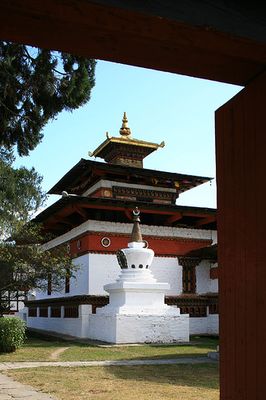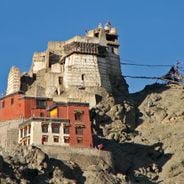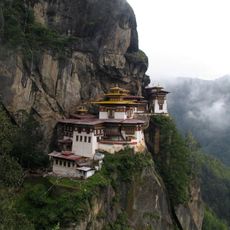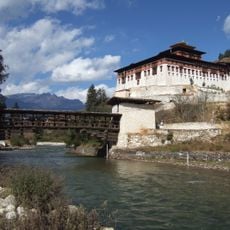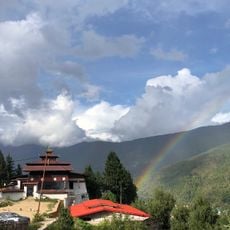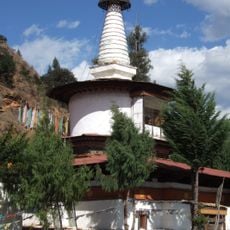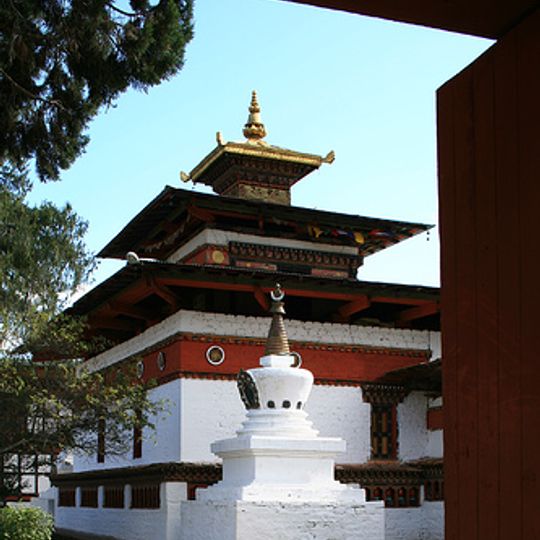
Kyichu Lhakhang, Buddhist temple in Paro District, Bhutan.
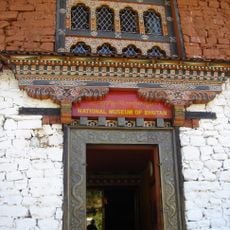
Kyichu Lhakhang is a Buddhist temple in Paro, Bhutan, designed with painted wooden ceilings, carved doors, and detailed murals throughout. Religious scenes and Buddhist themes cover the interior surfaces, creating a richly decorated sacred space.
Songtsen Gampo, 33rd king of Tibet's Yarlung dynasty, founded the Jowo Temple of Kyichu in 659 as one of 108 border-taming temples built to subdue the demoness Sin Mo. Padmasambhava visited in the 8th century; Pema Lingpa (1450–1521) is said to have uncovered and restored it. Ngawang Namgyal took it over in 1644, and the 25th Je Khenpo Sherab Gyaltshen restored and reconsecrated it between 1836 and 1838.
The temple's name means "temple of the happy water" in Dzongkha, and it is also called the Thousand-Armed Avalokiteshvara Temple. Every year from the 22nd day of the 8th lunar month, a three-day festival, the Kichu Zangchoe Moenlam or Rite of Great Accomplishment, is held here. The Jowo Lhakhang holds an eight-year-old Shakyamuni statue counted among Bhutan's national treasures.
The temple is open from sunrise to sunset and requires respectful clothing when entering. Photography is not allowed inside, though guides in multiple languages help visitors understand the space.
The temple is one of four "border taming" temples, part of a network of 12 arranged around the Jokhang in Lhasa, all built in Songtsen Gampo's time. Chinese sources describe it as pinning the outstretched limbs of a demoness who threatened Tibet's fortunes. The main chapel, Jowo Lhakhang, holds an eight-year-old Shakyamuni image counted as a national treasure.
The community of curious travelers
AroundUs brings together thousands of curated places, local tips, and hidden gems, enriched daily by 92,787 contributors worldwide.