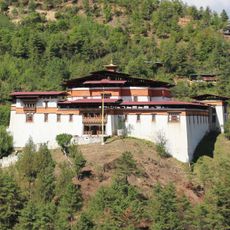
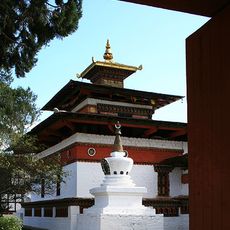
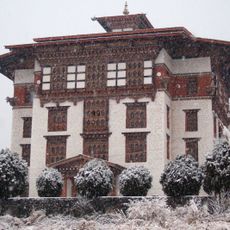
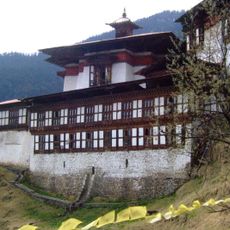
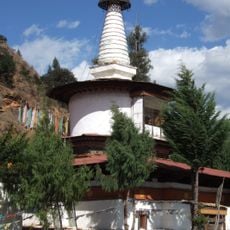
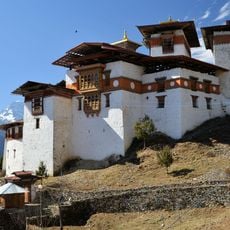
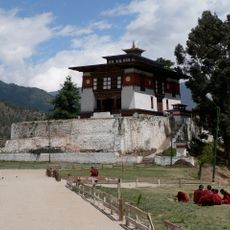
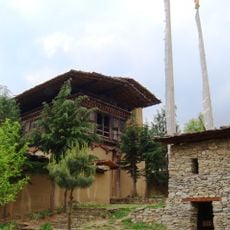
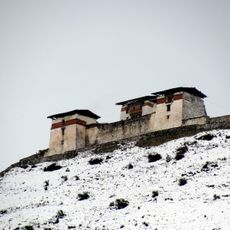
Tango Monastery, Tibetan Buddhist monastery in Thimphu, Bhutan
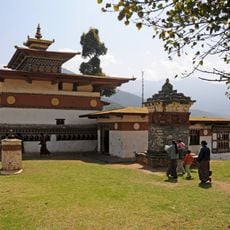
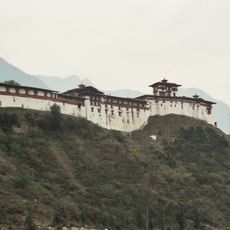
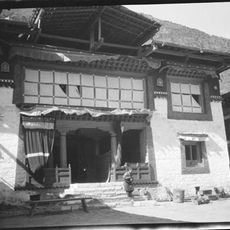
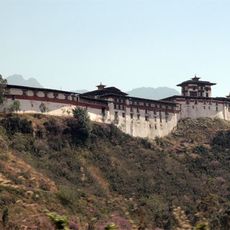
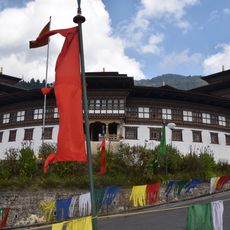
Tango Monastery is a Drukpa Kagyu Buddhist monastery and fortress (dzong) on a ridge near Cheri Mountain, 14 km north of Thimphu. Founded as a meditation hermitage by Phajo Drugom Zhigpo in the 13th century, it was rebuilt in its present dzong form in 1688 by Tenzin Rabgye, the fourth Temporal Ruler. The name Tango means "horse head" in Dzongkha, after Hayagriva (Tandin), the wrathful deity enshrined here.
Guru Rinpoche identified the cliff as Hayagriva in the 8th century, and in 1222 Phajo Drugom Zhigpo founded a meditation hermitage here, Tango Choeying Dzong. In 1616 the Tibetan lama Shabdrung Ngawang Namgyal meditated in its cave after the site was offered to him by Tshewang Tenzing of Dorden. Tenzin Rabgye, the 4th Temporal Ruler, built the monastery in its present form in 1688.
The monastery serves as a center for Buddhist learning where monks pursue their spiritual education and prepare for leadership roles in Bhutanese religious life. Visitors can observe the daily rhythm of monastic practice and see the spaces where teaching and prayer take place.
Reaching the monastery involves a demanding uphill hike with steps and switchbacks that requires a reasonable level of fitness. Proper footwear and adequate time are important since there are no shortcuts and sections of the path are quite steep.
The monastery's name comes from the Dzongkha word for "horse head", after Hayagriva (locally Tandin), the wrathful deity kept there. Local tradition holds that Guru Rinpoche identified the cliff as Hayagriva's form in the 8th century, and that Phajo Drugom Zhigpo saw the cliff ablaze in 1222.
The community of curious travelers
AroundUs brings together thousands of curated places, local tips, and hidden gems, enriched daily by 92,792 contributors worldwide.