Dechencholing Palace, Royal palace in Thimphu, Bhutan
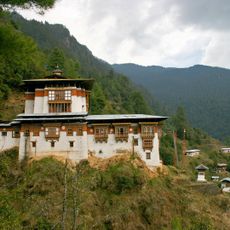
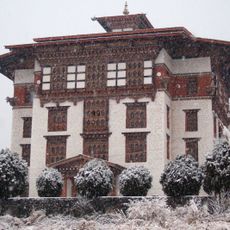
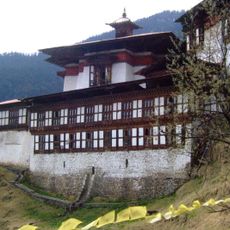
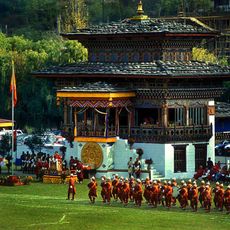
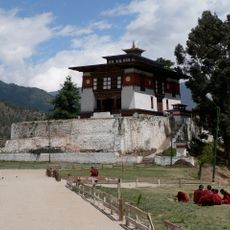
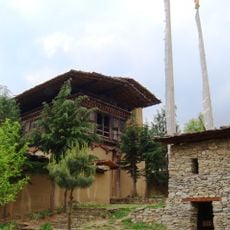
Dechencholing Palace is a three-story building set among willow trees, lawns and ponds at the northern end of the Thimphu Valley, on the west bank of the Thimphu River. Its white and cream facade has brown-framed windows, some grouped in threes beneath small projecting roofs, and a central section rising higher under a tiered roof with upturned corners. A covered gallery with a red and gold railing runs along the lower level.
The building was commissioned in 1953 by King Jigme Dorji Wangchuck shortly after his coronation as the third monarch of Bhutan. The palace marks an important moment in the country's modern history and royal development.
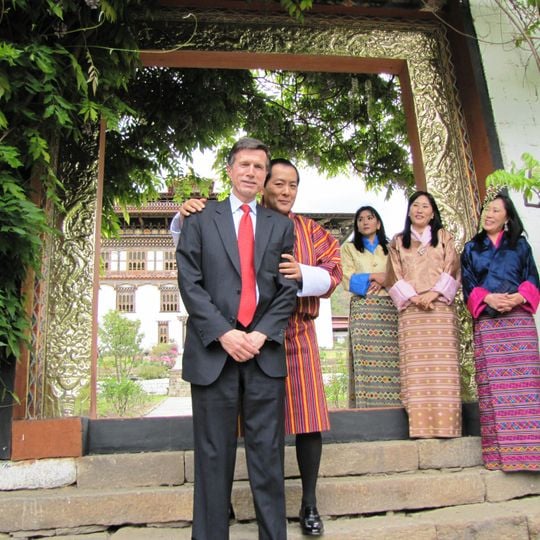
The palace hosts luncheons and banquets for visiting heads of state, and Indian ambassadors regularly come here to discuss relations between India and Bhutan. The Dowager Queen Phuntsho Choden, known as Gayum Angay, lived here as a Buddhist nun and kept her own chapel, with candles burning in bowls. She employed women at the palace to weave men's and women's garments, producing national dress costumes.
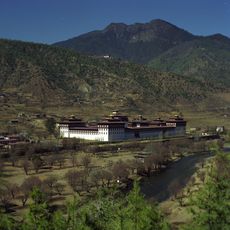
The palace stands approximately 4 kilometers north of Tashichho Dzong and about 7 kilometers from central Thimphu, with its exterior visible throughout the day. The best views of the building come from the roadside, making it an easily accessible spot for visitors interested in exploring traditional architecture.
In 1957 King Jigme Wangchuck brought the artist Lam Durlop Dorji from Bumthang to open an embroidery school at the palace for about 30 young monks. Its workshops produced large thongdrel appliqué hangings and thangka scroll paintings, and the school's work centres on Buddhist subjects.
The community of curious travelers
AroundUs brings together thousands of curated places, local tips, and hidden gems, enriched daily by 92,784 contributors worldwide.