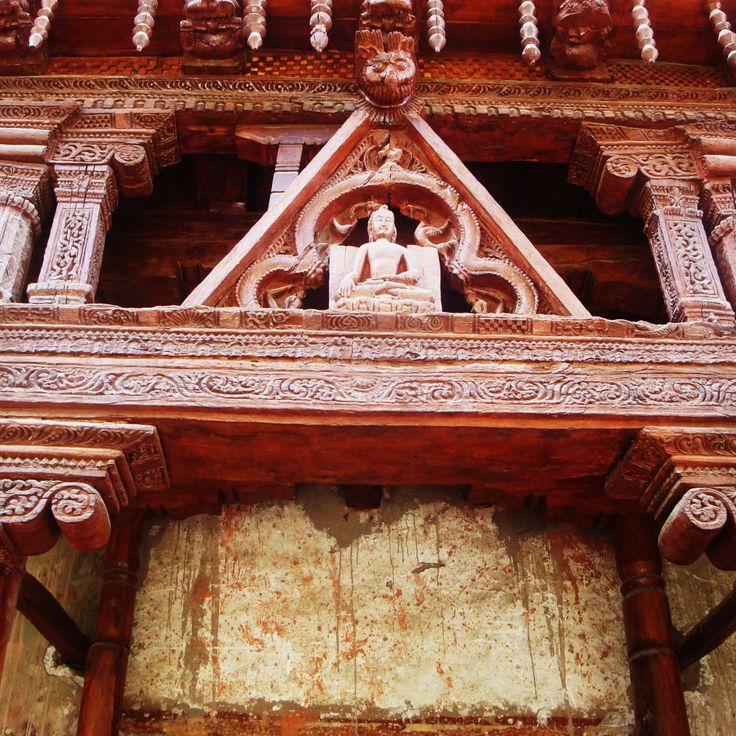
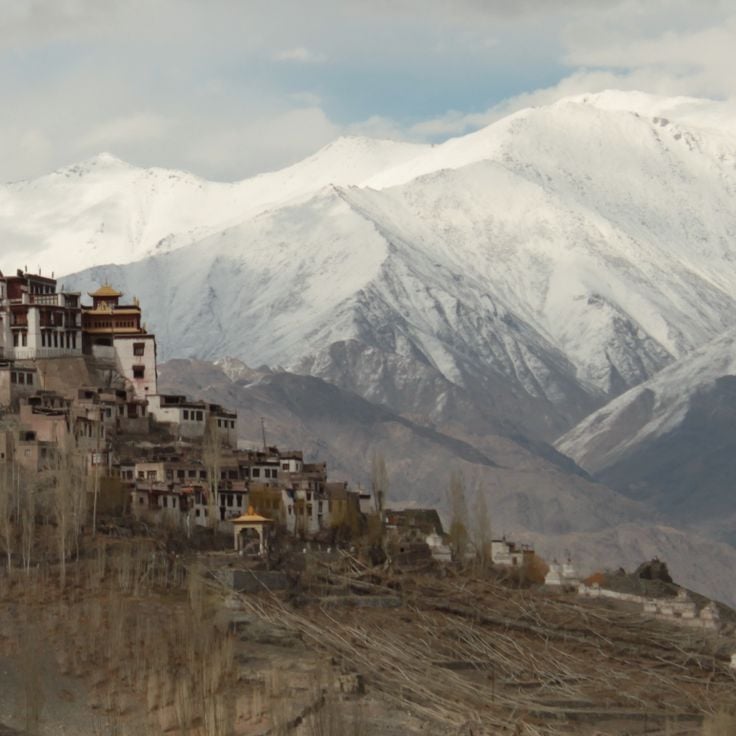
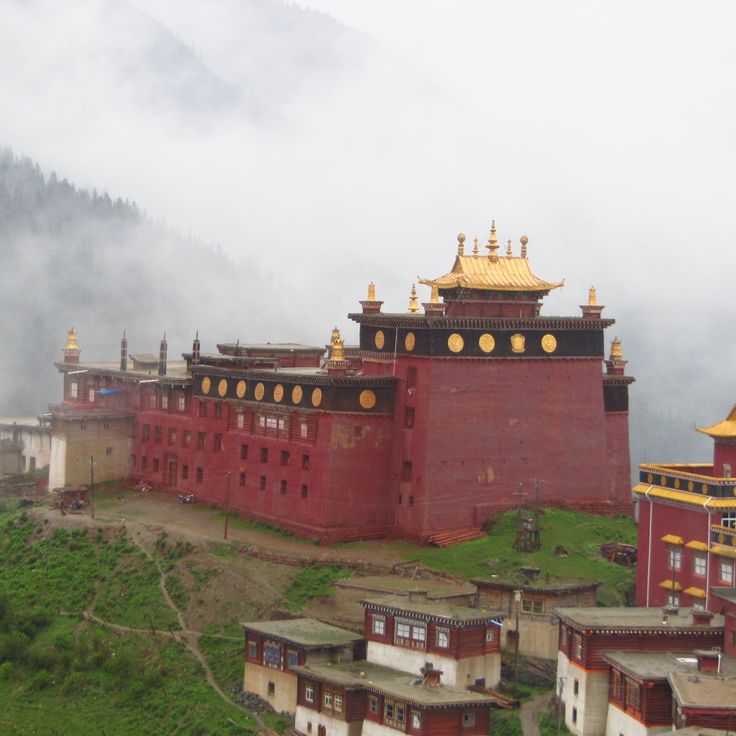
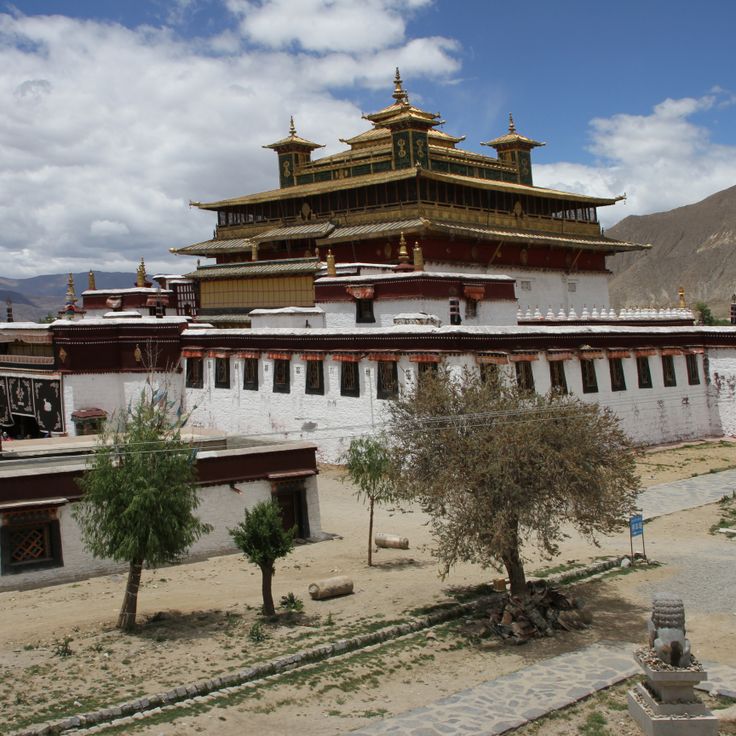
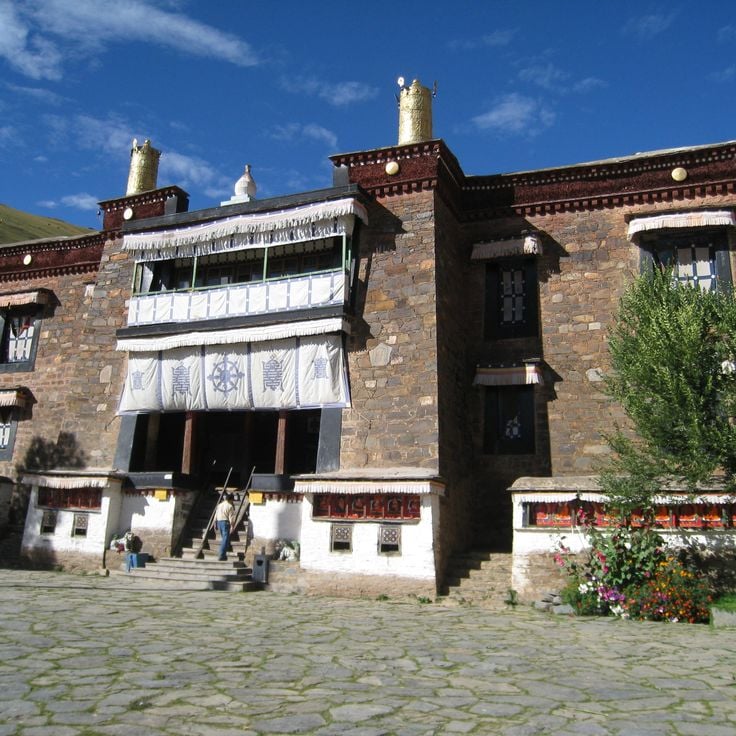
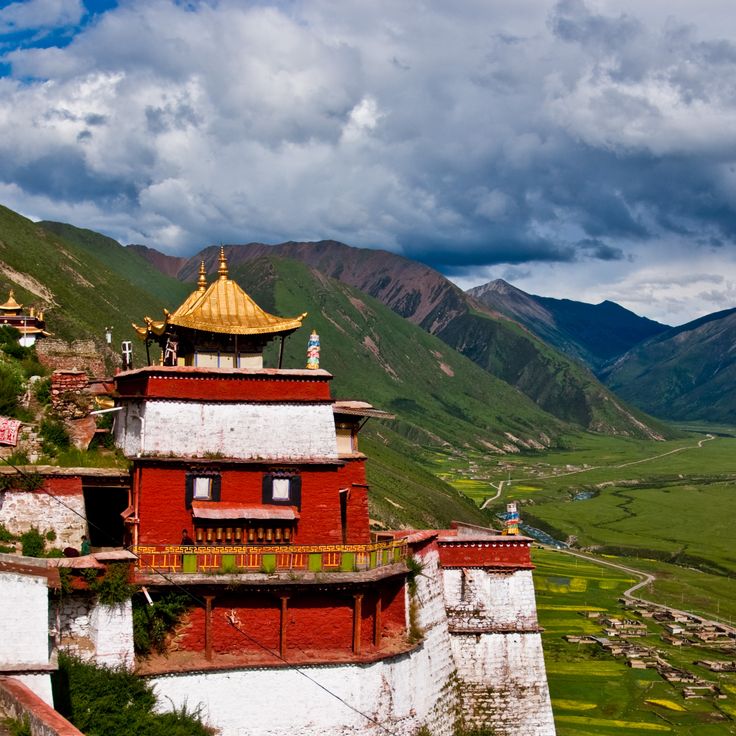
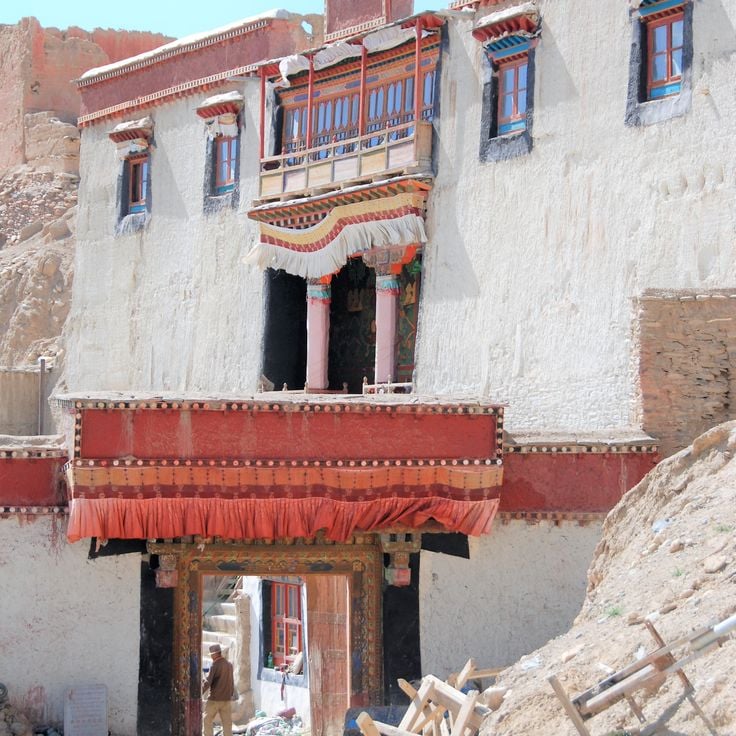
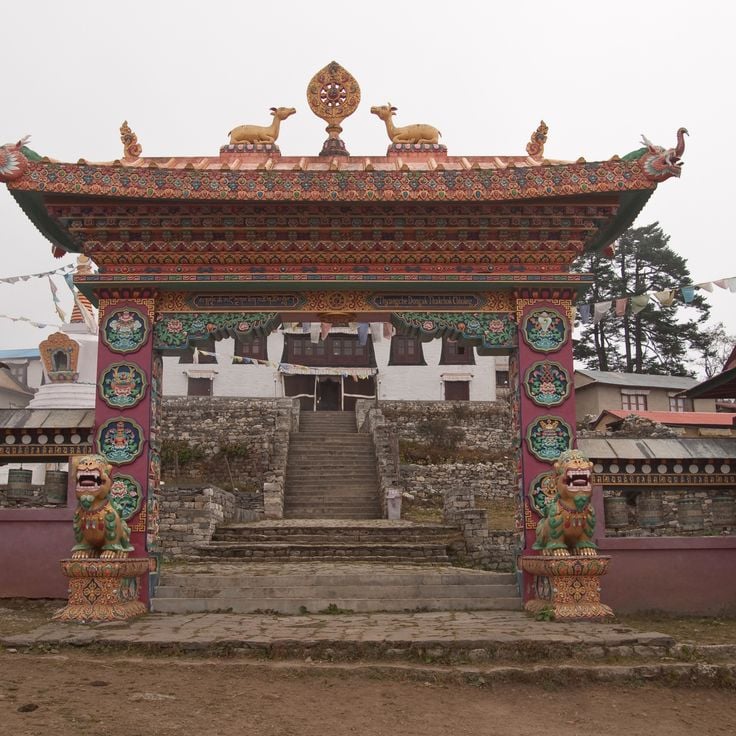
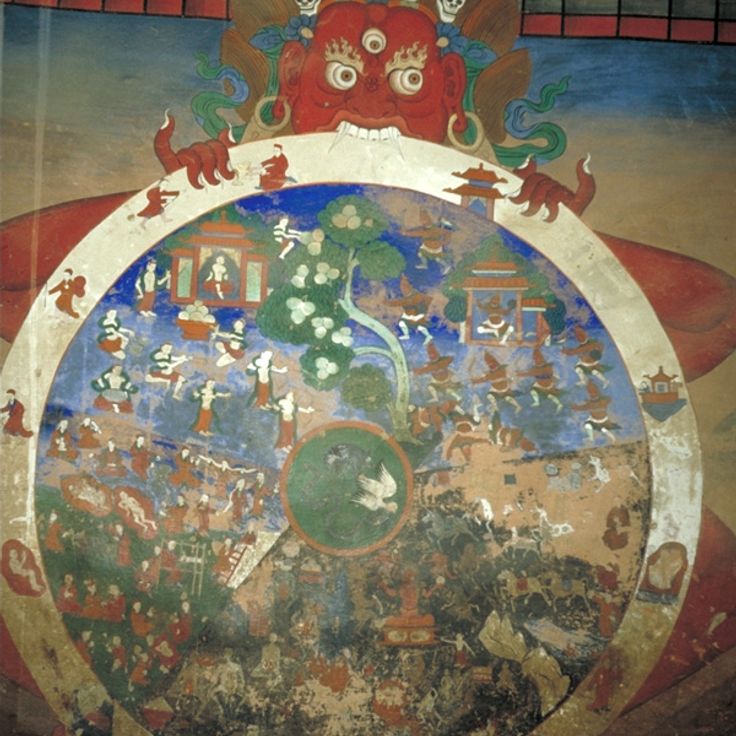
Buddhist monasteries in the Himalayan mountain ranges display religious and architectural traditions dating from the 11th century. These buildings house art collections, sacred texts, and cultural artifacts that have shaped generations of believers. Many monasteries function as religious schools and preserve Tibetan Buddhist teachings.
The collection shows a diverse landscape of sacred sites. Rumtek in Sikkim serves as a major center of the Karma Kagyü tradition. Tawang in Arunachal Pradesh is one of India's largest monasteries. In Ladakh, numerous monasteries such as Hemis, Thiksey, Diskit, and Alchi each hold their own histories and art treasures. Other locations like Samye, Drepung, and Tashilhunpo in Tibet, along with Thyangboche in Nepal, demonstrate how these traditions spread across the entire region.
These monasteries are not only religious sites but also places where visitors can witness daily Buddhist practice. Monks study sacred texts, perform rituals, and maintain artistic skills such as thangka painting and wood carving. The monasteries offer insight into a world that has preserved its values and practices over centuries.
Buddhist monasteries in the Himalayan mountain ranges display religious and architectural traditions dating from the 11th century. These buildings house art collections, sacred texts, and cultural artifacts that have shaped generations of believers. Many monasteries function as religious schools and preserve Tibetan Buddhist teachings.
The collection shows a diverse landscape of sacred sites. Rumtek in Sikkim serves as a major center of the Karma Kagyü tradition. Tawang in Arunachal Pradesh is one of India's largest monasteries. In Ladakh, numerous monasteries such as Hemis, Thiksey, Diskit, and Alchi each hold their own histories and art treasures. Other locations like Samye, Drepung, and Tashilhunpo in Tibet, along with Thyangboche in Nepal, demonstrate how these traditions spread across the entire region.
These monasteries are not only religious sites but also places where visitors can witness daily Buddhist practice. Monks study sacred texts, perform rituals, and maintain artistic skills such as thangka painting and wood carving. The monasteries offer insight into a world that has preserved its values and practices over centuries.
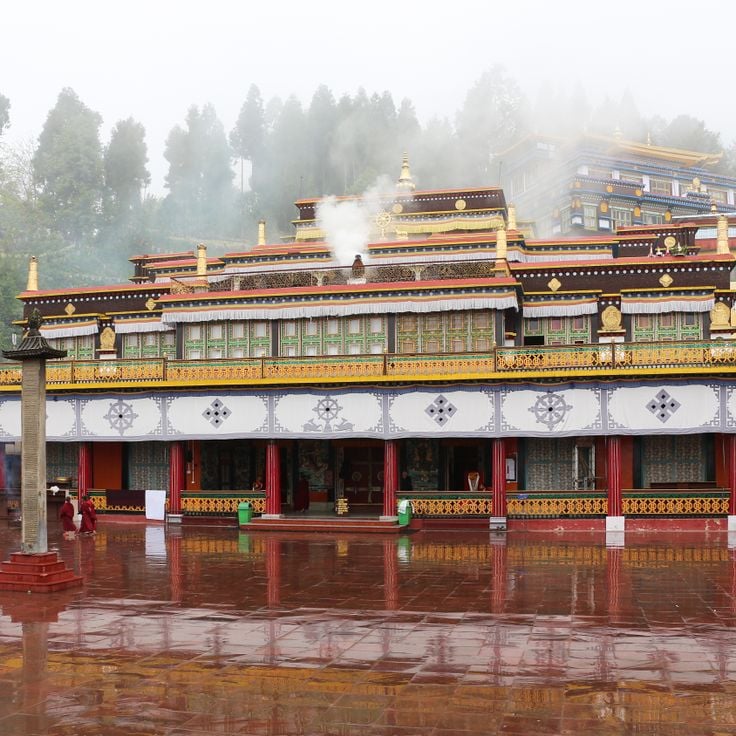
This Buddhist monastery in Sikkim displays religious and architectural traditions from the 16th century. The complex houses religious artworks, sacred texts, and a school for Buddhist studies. Rumtek Monastery is among the significant Himalayan temples that preserve and teach Tibetan Buddhist teachings.
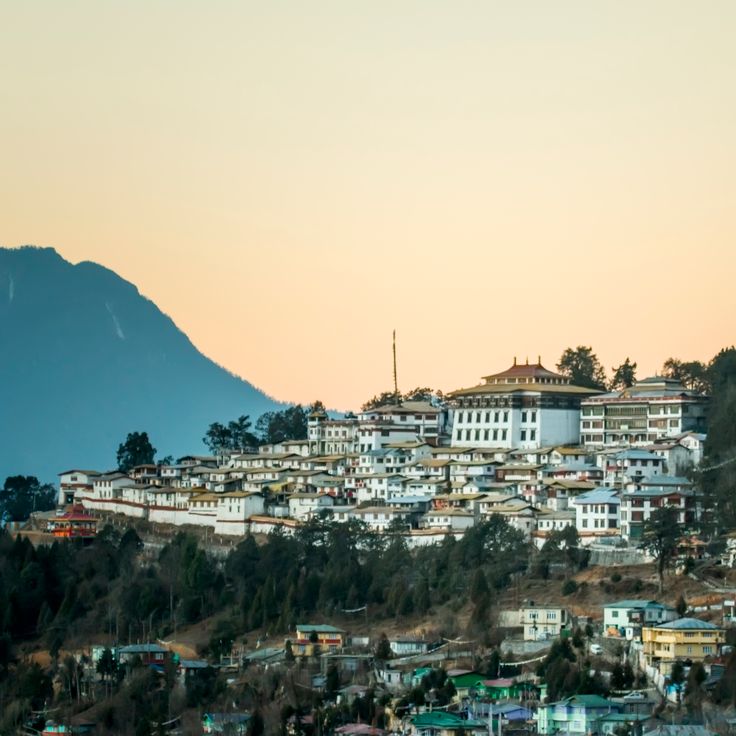
Tawang Monastery is a 17th century Buddhist complex in the Himalayan mountain range. The site consists of 65 buildings with a library holding old books and manuscripts. This monastery functions as a religious school and preserves Tibetan Buddhist teachings alongside sacred texts and cultural artifacts that reflect centuries of spiritual and architectural traditions.
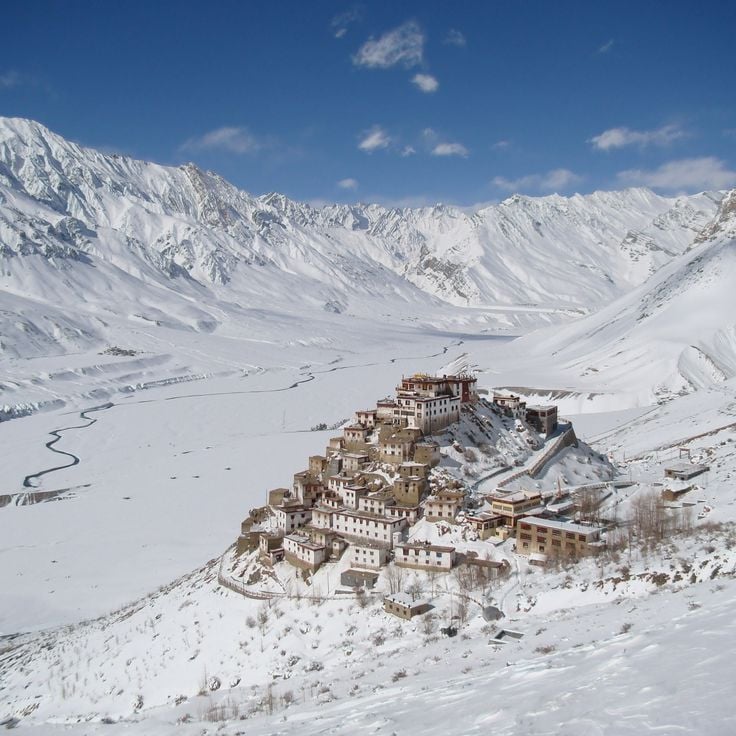
This monastery in the Himalayas is part of a collection of Buddhist sites that have preserved religious traditions since the 11th century. Perched at 4166 meters elevation, the buildings house thangkas, ancient wall paintings, and historical weapons. Like other monasteries in the mountain ranges, it serves as a place of worship and study for the Tibetan Buddhist community.
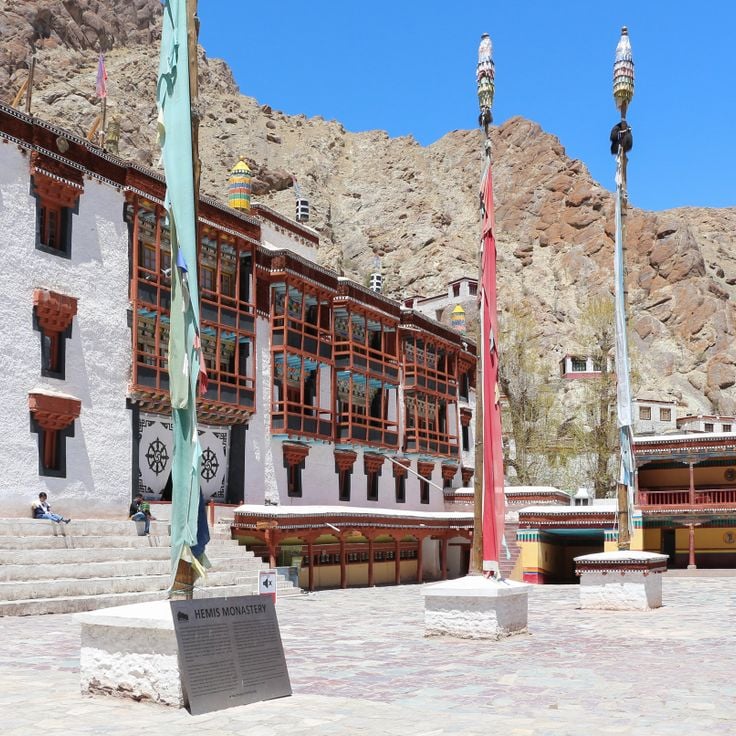
Hemis Monastery is an important center of Tibetan Buddhist practice in the Himalayan mountains. Built in the 17th century, the monastery houses a copper statue of Buddha, tapestries, and a collection of ancient masks. These buildings represent the religious and architectural traditions that have shaped the region for centuries.
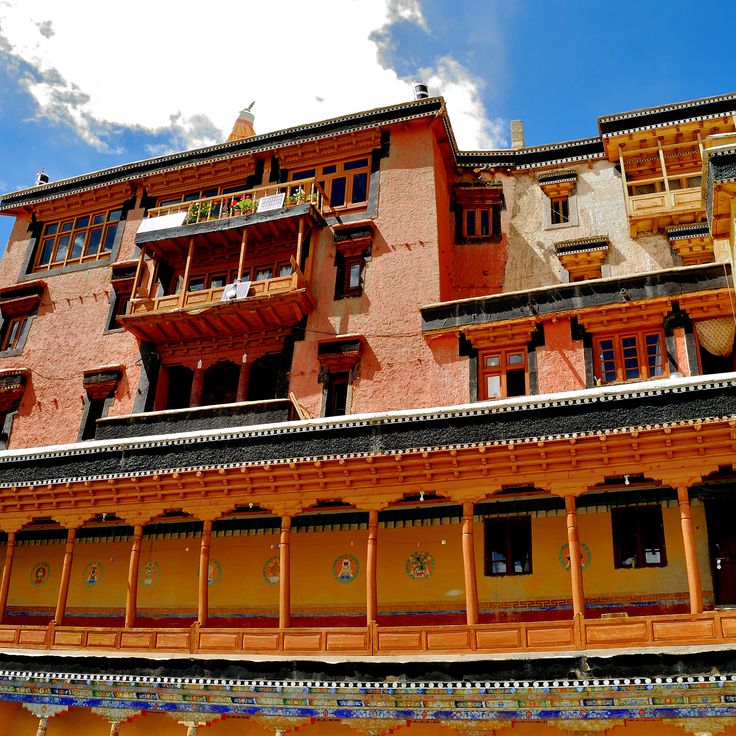
Thiksey Monastery is a twelve-story complex from the 15th century that mirrors the architectural form of the Potala Palace with red and white buildings. It stands among the Buddhist monasteries in the Himalaya that have preserved religious and architectural traditions since the 11th century. The monastery houses art collections, sacred texts, and cultural artifacts while serving as a religious school that maintains Tibetan Buddhist teachings.
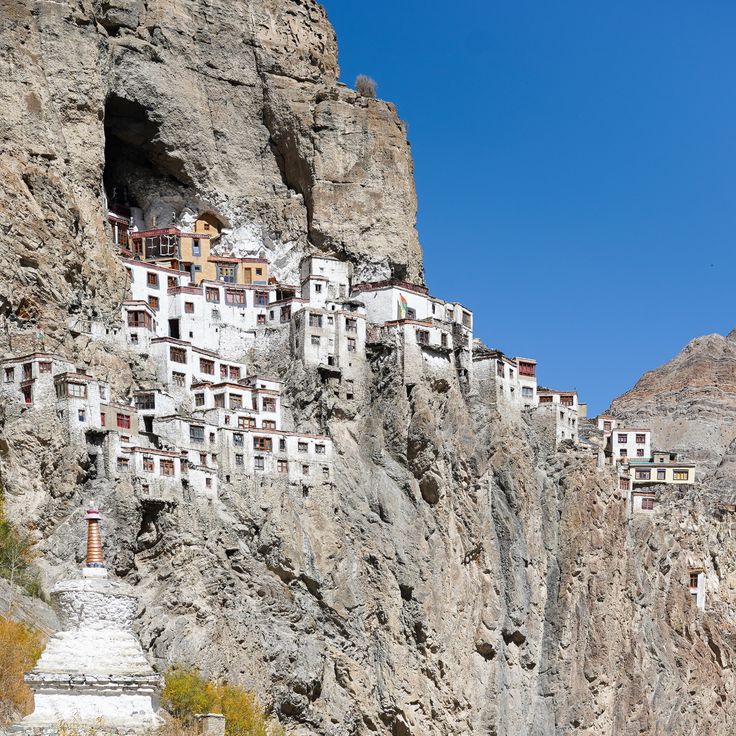
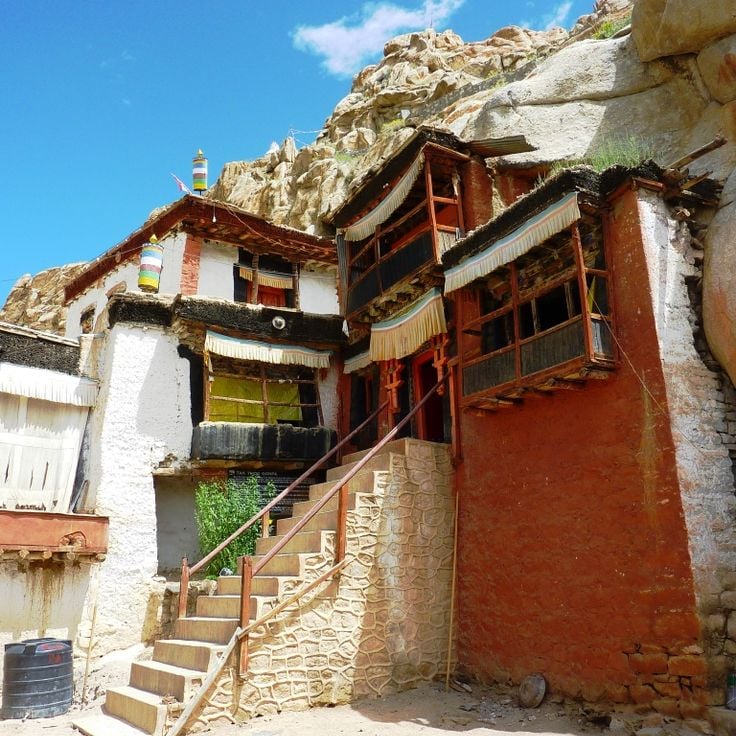
Phuktal Monastery is one of the Buddhist monasteries in the Himalayan mountain ranges displaying religious and architectural traditions dating from the 11th century. Built into a cave, it is accessible only by foot path. The monastery houses approximately 70 monks and preserves Tibetan Buddhist teachings. It functions as a religious school and contains art collections, sacred texts, and cultural artifacts.
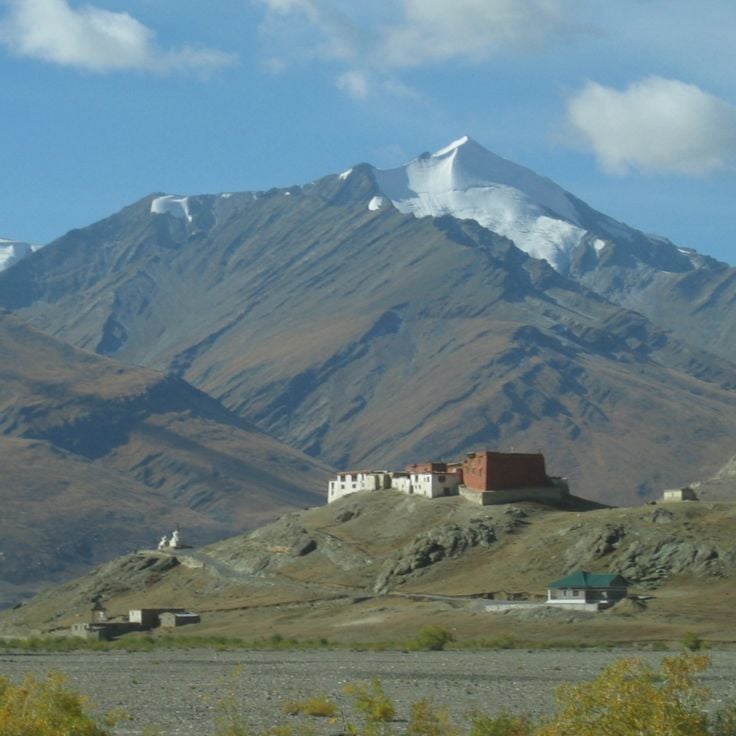
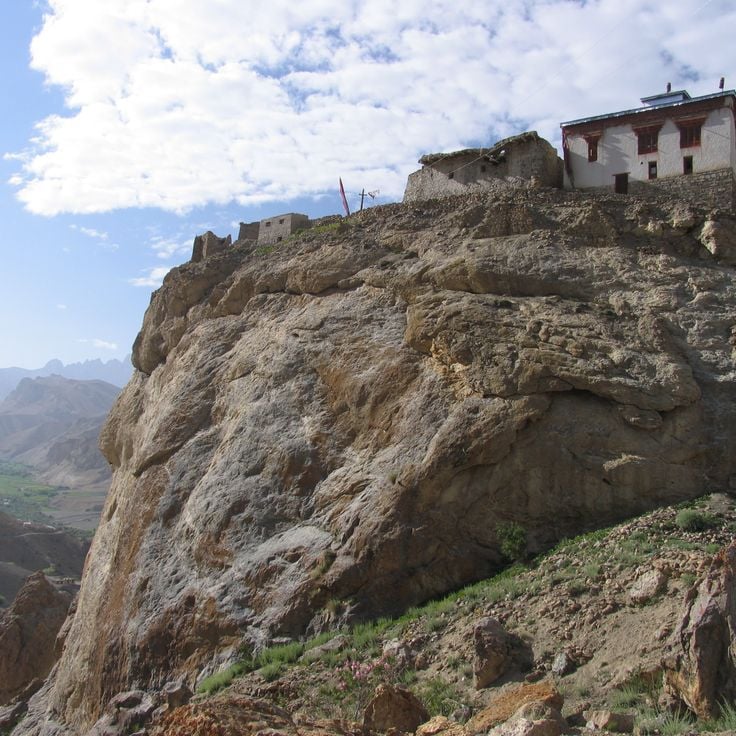
Rangdum Monastery stands on a hill at 4000 meters (13,100 feet) altitude, surrounded by mountains and glaciers in the Suru region. This monastery displays the religious and architectural traditions of Tibetan Buddhism dating from the 11th century. The buildings house art collections, sacred texts, and cultural artifacts, and the monastery functions as a place of worship and learning.
Diskit Monastery is the oldest monastery in Nubra and exemplifies the Buddhist monasteries of the Himalayan mountain ranges that preserve religious and architectural traditions dating from the 11th century. This monastery houses a 32 meter (105 foot) high statue of Buddha Maitreya, ancient murals, and religious texts. It functions as a religious school and maintains Tibetan Buddhist teachings.
Alchi Monastery is an 11th-century Buddhist complex in Ladakh that represents the religious and architectural traditions of Himalayan monasteries and temples. Within its stone structures, the monastery contains colored wall paintings depicting Buddhist scenes and deities. The buildings house art collections, sacred texts, and cultural artifacts that preserve Tibetan Buddhist teachings.
Matho Monastery is a Tibetan Buddhist monastery of the Sakya tradition, built in the 15th century on a mountain peak at 3800 meters elevation, representing the religious and architectural traditions preserved in the Himalayan monasteries since the 11th century. The monastery houses art collections, sacred texts, and cultural artifacts. Like many monasteries in the region, it serves as a religious school and maintains Tibetan Buddhist teachings.
This monastery is a major center of the Karma Kagyu lineage within the Buddhist temples and monasteries of the Himalayan ranges. Palpung Monastery houses an extensive library of Tibetan texts and functions as a school for Buddhist art. The complex preserves religious teachings and artistic traditions that trace back to the 11th century.
Samye Monastery is the first Buddhist monastery of Tibet, built in the 8th century following a mandala design with a central temple and four subsidiary temples. As part of Himalayan monasteries and temples, it embodies religious and architectural traditions dating from the 11th century. The monastery houses art collections, sacred texts, and cultural artifacts, and functions as a religious school preserving Tibetan Buddhist teachings.
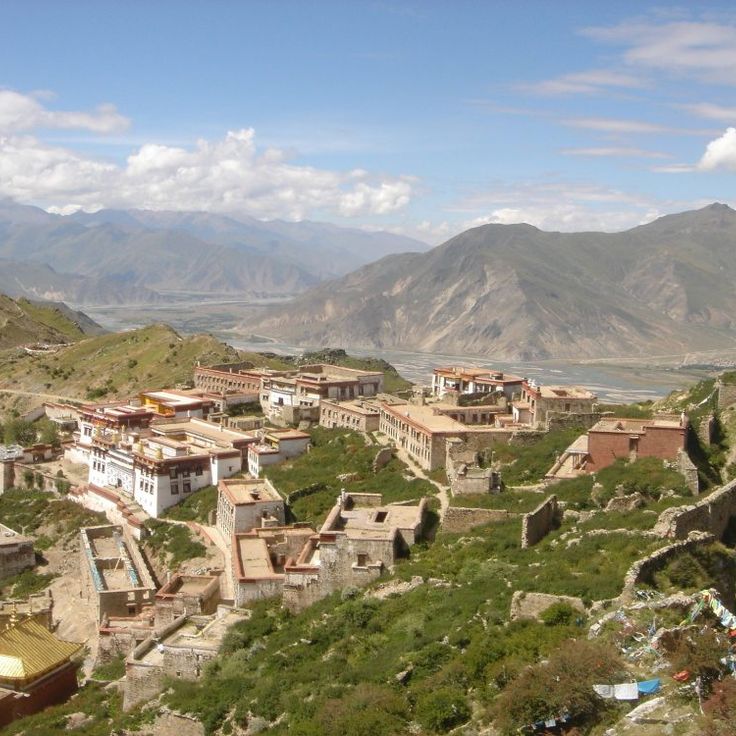
Mindrolling Monastery is one of the major Buddhist institutions in the Himalayan region and houses one of Tibet's largest religious schools. The monastery preserves extensive collections of Buddhist texts and artworks that document teachings and architectural traditions reaching back to the 11th century. The buildings continue to function as a religious learning center and play an important role in maintaining this spiritual culture.
Drigung Til Monastery is a religious center of the Kagyu tradition within the Himalayan mountain ranges that has practiced Tibetan burial ceremonies since the 12th century. The monastery preserves Buddhist teachings and religious artworks that instruct and inspire generations of monks.
Simbiling Monastery in Nepal serves as a center for Buddhist studies within the Himalayan mountain ranges. The monastery preserves the traditions of the Sherpa community and displays religious and architectural practices dating from the 11th century. Its buildings house art collections, sacred texts, and cultural artifacts. The monastery functions as a religious school and passes on Tibetan Buddhist teachings.
Thyangboche Monastery is part of a collection of Buddhist monasteries in the Himalayan mountain ranges that display religious and architectural traditions dating from the 11th century. This monastery stands at 3867 meters elevation and provides insights into the religious practices of the region. The buildings house art collections, sacred texts, and cultural artifacts. Many monasteries, including this one, function as religious schools and preserve Tibetan Buddhist teachings.
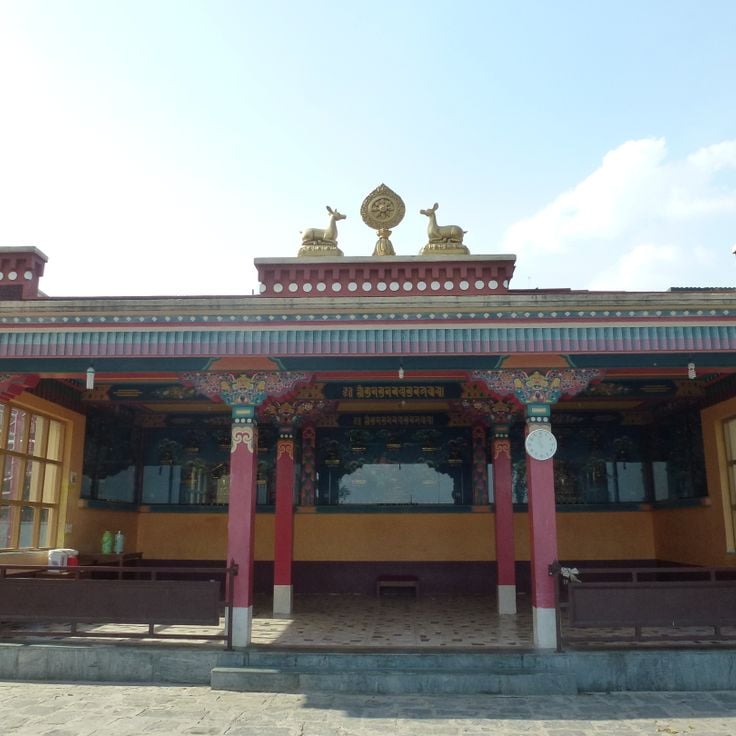
Kopan Monastery is a Buddhist center in Kathmandu that reflects the religious and architectural traditions of Himalayan monasteries. About 360 monks live here, studying Tibetan philosophy in meditation halls. The monastery contains a library of sacred texts and living quarters. As a religious school, Kopan preserves Tibetan Buddhist teachings that have been passed down for centuries in the Himalayan mountains.
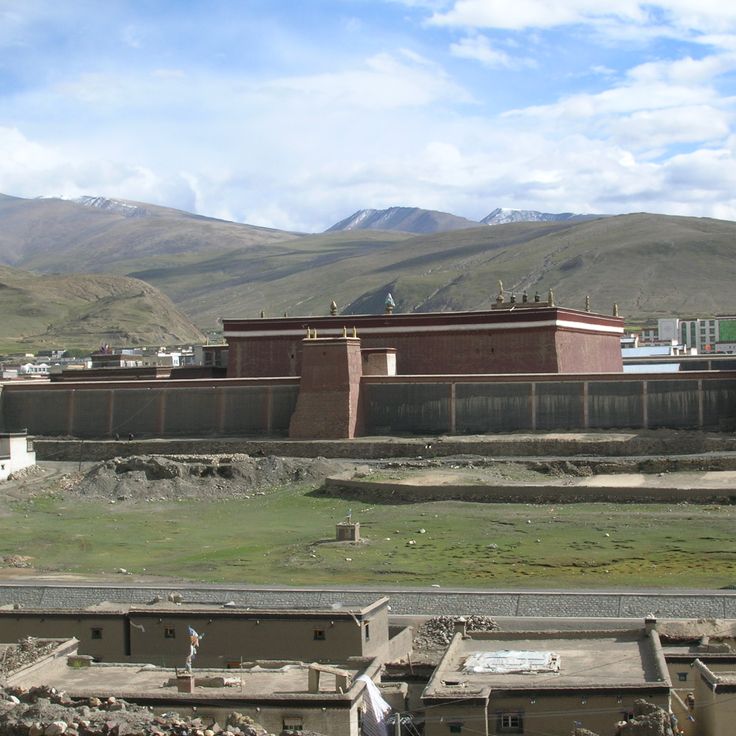
Sakya Monastery in Shigatse represents Buddhist religious and architectural traditions from the 11th century. Its grey walls house a significant library of 84000 scrolls and a collection of medieval religious art. As part of the Himalayan monastery tradition, this site functions as a center for preserving Tibetan Buddhist teachings and storing sacred texts and cultural artifacts.
Bardan Monastery sits in the Zanskar valley as a Buddhist temple that reflects the religious and architectural traditions of the Himalayan region. The buildings contain prayer halls, a library, and wall paintings from the 17th century. The monastery functions as a place where Tibetan Buddhist teachings are studied and preserved for future generations.
Takthok Monastery is a Nyingma school monastery that belongs to the Buddhist monasteries in the Himalaya, which display religious and architectural traditions dating from the 11th century. The monastery contains caves, shrines, and a library holding Buddhist texts from the 8th century. Like other Himalayan monasteries, Takthok Monastery serves as a center for learning and preserving Tibetan Buddhist teachings.
Mulbekh Monastery in the Himalayan mountains represents the Buddhist architectural and religious traditions rooted in this region since the 11th century. Located in Ladakh at 3500 meters altitude, the monastery houses two prayer halls and a 9-meter high Buddha figure carved directly from rock. Like other Buddhist monasteries throughout the Himalayan range, Mulbekh serves as a place of worship and preserves Tibetan Buddhist teachings, art collections, and sacred texts.
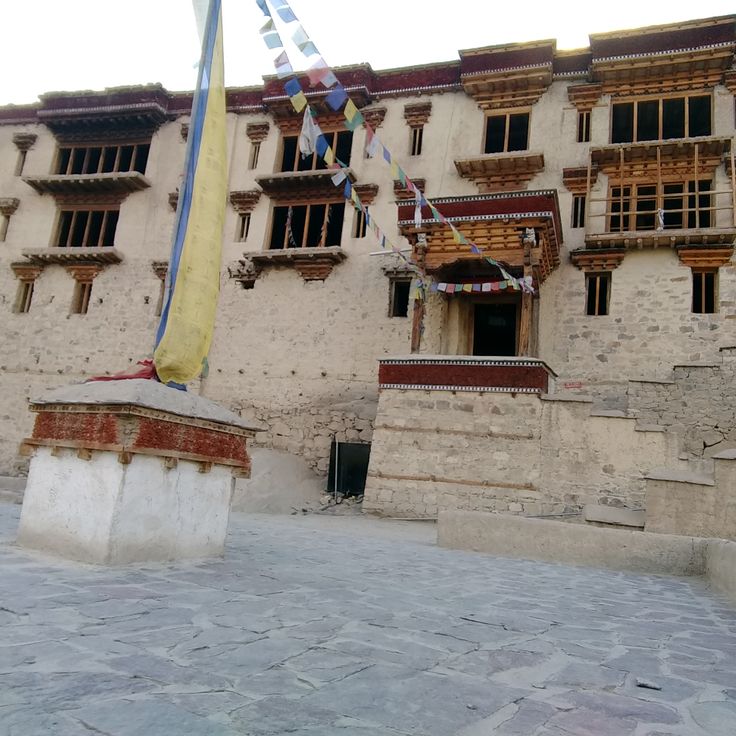
Shey Monastery is a 17th century palace in Ladakh that exemplifies Buddhist architectural traditions found in Himalayan monasteries. It houses a 12-meter copper Buddha statue and religious wall paintings. The monastery preserves Tibetan Buddhist teachings and art collections that have been maintained in these mountain communities for centuries.
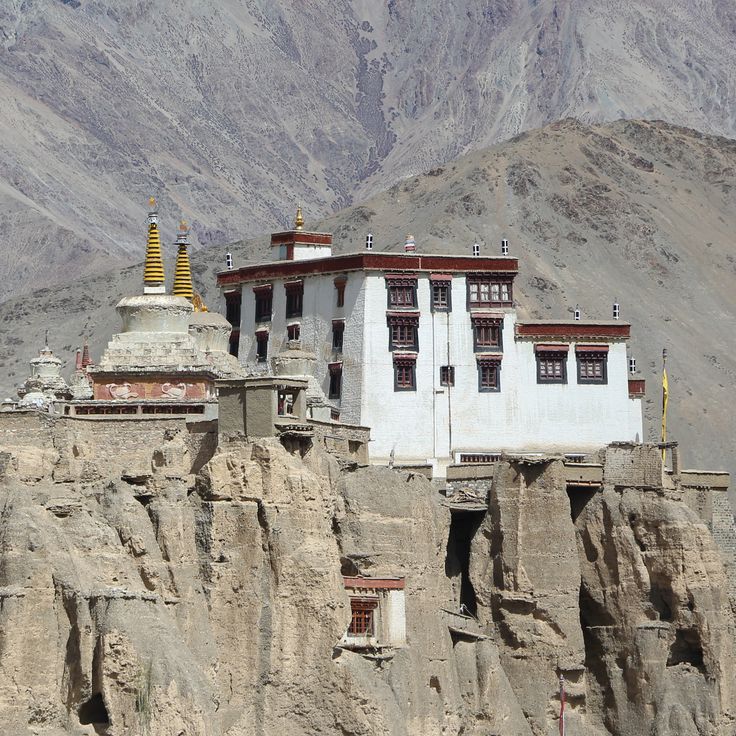
This 11th century monastery sits in a barren mountain landscape at 3510 meters elevation and houses 150 monks. Lamayuru Monastery is part of the Buddhist traditions of the Himalayan mountain ranges and preserves Tibetan Buddhist teachings, sacred texts, and cultural artifacts within its walls.
Likir Monastery is a 15th century Buddhist monastery in Ladakh, India, part of the religious and architectural traditions found throughout the Himalayan ranges. The monastery houses a museum displaying Tibetan artifacts and a 23-meter tall gilded Buddha statue. It functions as a religious school and preserves Tibetan Buddhist teachings and artistic traditions.
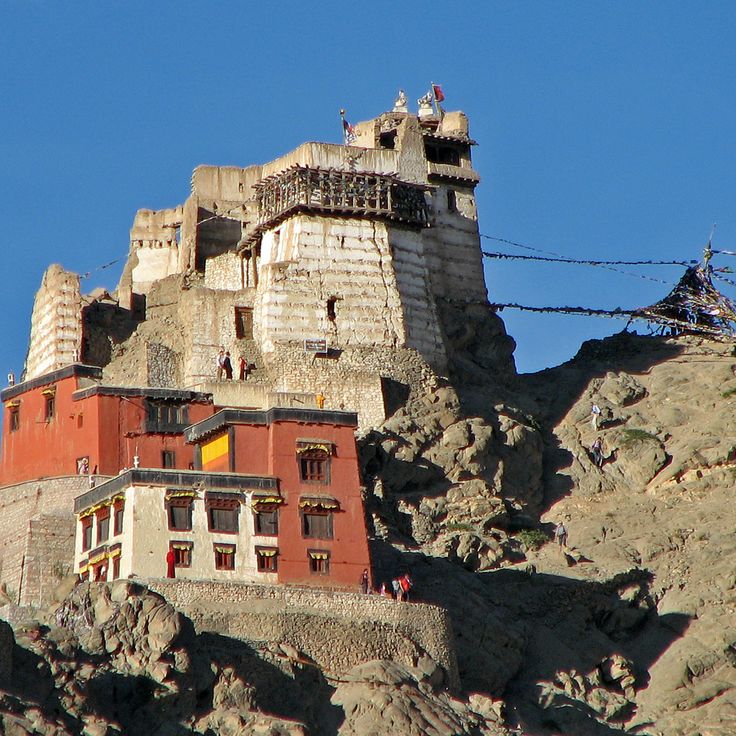
Namgyal Tsemo Gompa is a Buddhist monastery in the Himalayan mountain ranges, established in the 15th century. The monastery sits on a hill overlooking the city of Leh and displays architecture and teachings of Tibetan Buddhism. Its buildings contain art collections, sacred texts, and cultural artifacts preserved over centuries.
Ganden Monastery is one of the three great Gelug university monasteries of Tibet and displays the Buddhist and architectural traditions of the Himalayan monasteries. The monastery was destroyed in 1959 and later rebuilt. It houses art collections, sacred texts, and cultural artifacts, and functions as a religious school that preserves Tibetan Buddhist teachings.
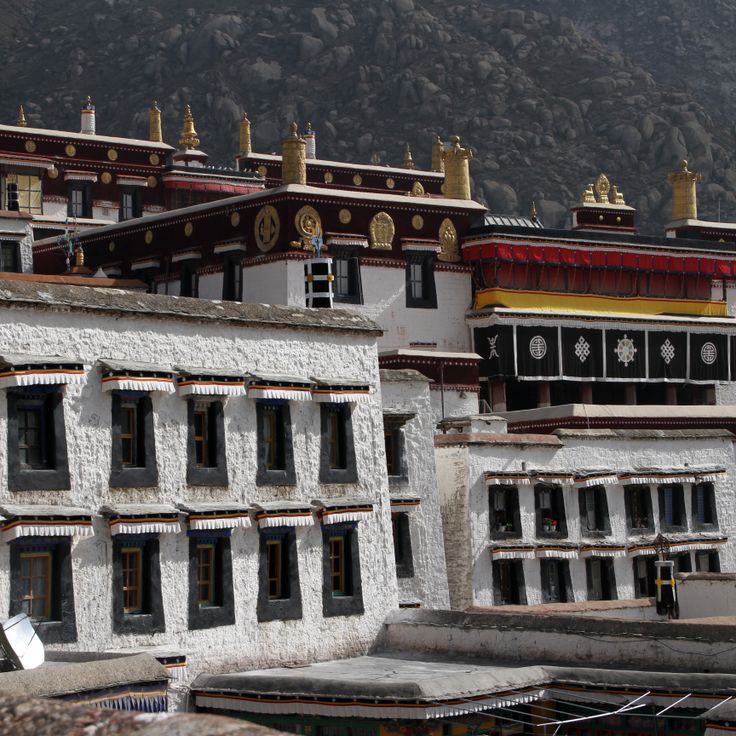
Drepung Monastery in Tibet is one of the largest monastic complexes in the Himalayan region, with roots tracing back to the 15th century. This monastery houses extensive art collections, sacred texts, and religious artifacts that represent Tibetan Buddhist traditions. The monastery functions as a religious school where monks study and preserve the teachings of Tibetan Buddhism. The buildings reflect centuries of architectural and religious development in the region.
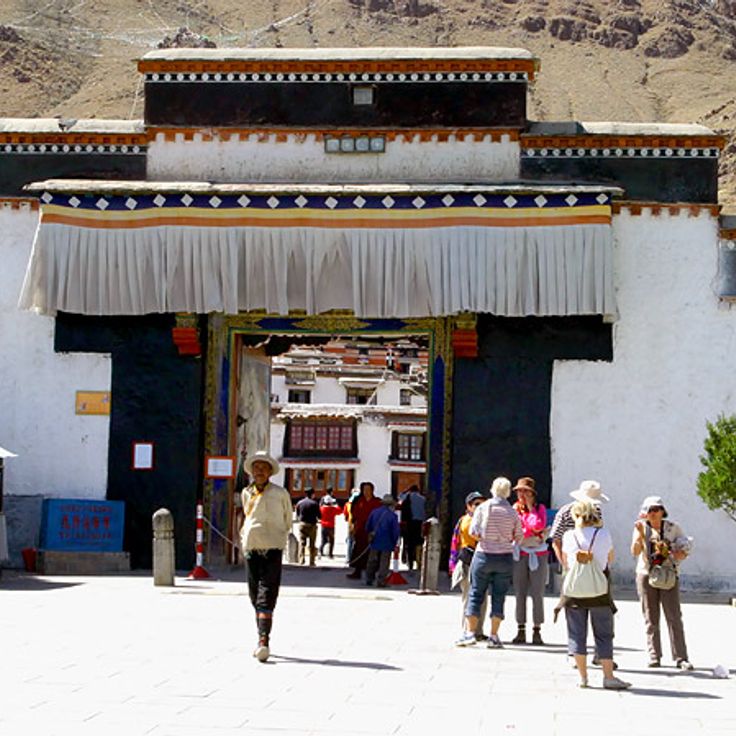
Tashilhunpo Monastery is the historic seat of the Panchen Lamas, featuring a grand statue of Maitreya Buddha and detailed murals. As one of the major Buddhist monasteries in the Himalayan ranges, it preserves religious and architectural traditions dating from the 11th century. The monastery functions as a religious school, maintaining Tibetan Buddhist teachings through its art collections, sacred texts, and cultural objects.
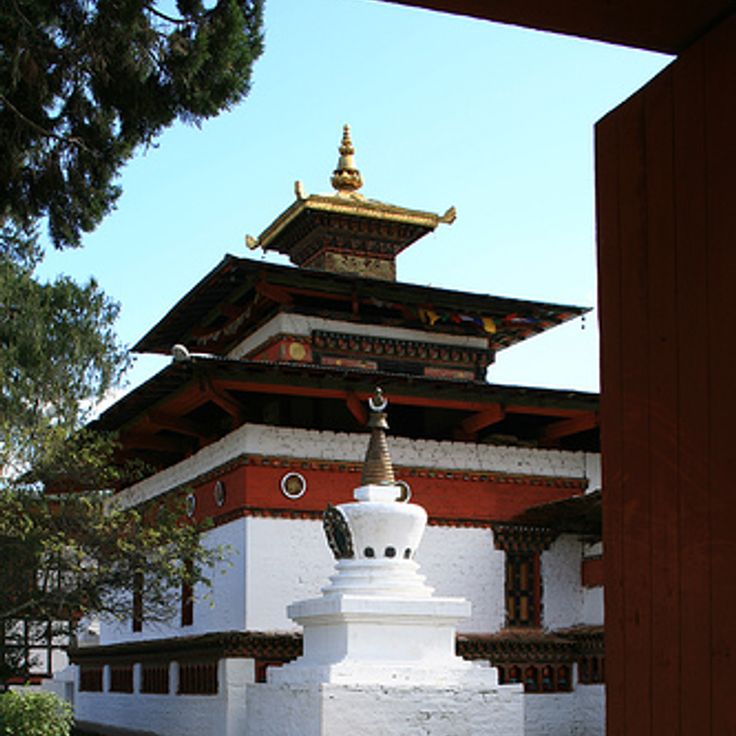
Kyichu Lhakhang is a Buddhist temple from the 7th century in the Himalayan mountain ranges and displays religious and architectural traditions maintained since the 11th century across this mountain chain. The temple houses historical statues and wall paintings and follows the Tibetan construction style preserved in the Himalayan monasteries and temples of this collection.
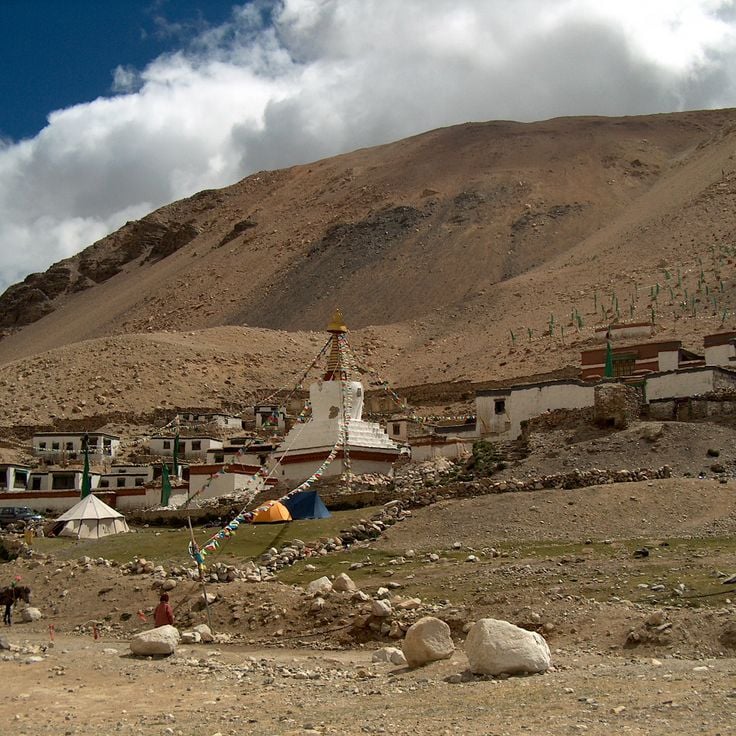
Rongbuk Monastery is part of the Buddhist monasteries dotting the Himalayan mountain ranges, standing at high elevation on Mount Everest's north side. The monastery preserves religious and architectural traditions dating from the 11th century. The complex includes a main hall and several prayer rooms that house sacred texts and cultural artifacts.
This Buddhist monastery in Sikkim displays religious and architectural traditions from the 16th century. The complex houses religious artworks, sacred texts, and a school for Buddhist studies. Rumtek Monastery is among the significant Himalayan temples that preserve and teach Tibetan Buddhist teachings.
Tawang Monastery is a 17th century Buddhist complex in the Himalayan mountain range. The site consists of 65 buildings with a library holding old books and manuscripts. This monastery functions as a religious school and preserves Tibetan Buddhist teachings alongside sacred texts and cultural artifacts that reflect centuries of spiritual and architectural traditions.
This monastery in the Himalayas is part of a collection of Buddhist sites that have preserved religious traditions since the 11th century. Perched at 4166 meters elevation, the buildings house thangkas, ancient wall paintings, and historical weapons. Like other monasteries in the mountain ranges, it serves as a place of worship and study for the Tibetan Buddhist community.
Hemis Monastery is an important center of Tibetan Buddhist practice in the Himalayan mountains. Built in the 17th century, the monastery houses a copper statue of Buddha, tapestries, and a collection of ancient masks. These buildings represent the religious and architectural traditions that have shaped the region for centuries.
Thiksey Monastery is a twelve-story complex from the 15th century that mirrors the architectural form of the Potala Palace with red and white buildings. It stands among the Buddhist monasteries in the Himalaya that have preserved religious and architectural traditions since the 11th century. The monastery houses art collections, sacred texts, and cultural artifacts while serving as a religious school that maintains Tibetan Buddhist teachings.
Phuktal Monastery is one of the Buddhist monasteries in the Himalayan mountain ranges displaying religious and architectural traditions dating from the 11th century. Built into a cave, it is accessible only by foot path. The monastery houses approximately 70 monks and preserves Tibetan Buddhist teachings. It functions as a religious school and contains art collections, sacred texts, and cultural artifacts.
Rangdum Monastery stands on a hill at 4000 meters (13,100 feet) altitude, surrounded by mountains and glaciers in the Suru region. This monastery displays the religious and architectural traditions of Tibetan Buddhism dating from the 11th century. The buildings house art collections, sacred texts, and cultural artifacts, and the monastery functions as a place of worship and learning.
Diskit Monastery is the oldest monastery in Nubra and exemplifies the Buddhist monasteries of the Himalayan mountain ranges that preserve religious and architectural traditions dating from the 11th century. This monastery houses a 32 meter (105 foot) high statue of Buddha Maitreya, ancient murals, and religious texts. It functions as a religious school and maintains Tibetan Buddhist teachings.
Alchi Monastery is an 11th-century Buddhist complex in Ladakh that represents the religious and architectural traditions of Himalayan monasteries and temples. Within its stone structures, the monastery contains colored wall paintings depicting Buddhist scenes and deities. The buildings house art collections, sacred texts, and cultural artifacts that preserve Tibetan Buddhist teachings.
Matho Monastery is a Tibetan Buddhist monastery of the Sakya tradition, built in the 15th century on a mountain peak at 3800 meters elevation, representing the religious and architectural traditions preserved in the Himalayan monasteries since the 11th century. The monastery houses art collections, sacred texts, and cultural artifacts. Like many monasteries in the region, it serves as a religious school and maintains Tibetan Buddhist teachings.
This monastery is a major center of the Karma Kagyu lineage within the Buddhist temples and monasteries of the Himalayan ranges. Palpung Monastery houses an extensive library of Tibetan texts and functions as a school for Buddhist art. The complex preserves religious teachings and artistic traditions that trace back to the 11th century.
Samye Monastery is the first Buddhist monastery of Tibet, built in the 8th century following a mandala design with a central temple and four subsidiary temples. As part of Himalayan monasteries and temples, it embodies religious and architectural traditions dating from the 11th century. The monastery houses art collections, sacred texts, and cultural artifacts, and functions as a religious school preserving Tibetan Buddhist teachings.
Mindrolling Monastery is one of the major Buddhist institutions in the Himalayan region and houses one of Tibet's largest religious schools. The monastery preserves extensive collections of Buddhist texts and artworks that document teachings and architectural traditions reaching back to the 11th century. The buildings continue to function as a religious learning center and play an important role in maintaining this spiritual culture.
Drigung Til Monastery is a religious center of the Kagyu tradition within the Himalayan mountain ranges that has practiced Tibetan burial ceremonies since the 12th century. The monastery preserves Buddhist teachings and religious artworks that instruct and inspire generations of monks.
Simbiling Monastery in Nepal serves as a center for Buddhist studies within the Himalayan mountain ranges. The monastery preserves the traditions of the Sherpa community and displays religious and architectural practices dating from the 11th century. Its buildings house art collections, sacred texts, and cultural artifacts. The monastery functions as a religious school and passes on Tibetan Buddhist teachings.
Thyangboche Monastery is part of a collection of Buddhist monasteries in the Himalayan mountain ranges that display religious and architectural traditions dating from the 11th century. This monastery stands at 3867 meters elevation and provides insights into the religious practices of the region. The buildings house art collections, sacred texts, and cultural artifacts. Many monasteries, including this one, function as religious schools and preserve Tibetan Buddhist teachings.
Kopan Monastery is a Buddhist center in Kathmandu that reflects the religious and architectural traditions of Himalayan monasteries. About 360 monks live here, studying Tibetan philosophy in meditation halls. The monastery contains a library of sacred texts and living quarters. As a religious school, Kopan preserves Tibetan Buddhist teachings that have been passed down for centuries in the Himalayan mountains.
Sakya Monastery in Shigatse represents Buddhist religious and architectural traditions from the 11th century. Its grey walls house a significant library of 84000 scrolls and a collection of medieval religious art. As part of the Himalayan monastery tradition, this site functions as a center for preserving Tibetan Buddhist teachings and storing sacred texts and cultural artifacts.
Bardan Monastery sits in the Zanskar valley as a Buddhist temple that reflects the religious and architectural traditions of the Himalayan region. The buildings contain prayer halls, a library, and wall paintings from the 17th century. The monastery functions as a place where Tibetan Buddhist teachings are studied and preserved for future generations.
Takthok Monastery is a Nyingma school monastery that belongs to the Buddhist monasteries in the Himalaya, which display religious and architectural traditions dating from the 11th century. The monastery contains caves, shrines, and a library holding Buddhist texts from the 8th century. Like other Himalayan monasteries, Takthok Monastery serves as a center for learning and preserving Tibetan Buddhist teachings.
Mulbekh Monastery in the Himalayan mountains represents the Buddhist architectural and religious traditions rooted in this region since the 11th century. Located in Ladakh at 3500 meters altitude, the monastery houses two prayer halls and a 9-meter high Buddha figure carved directly from rock. Like other Buddhist monasteries throughout the Himalayan range, Mulbekh serves as a place of worship and preserves Tibetan Buddhist teachings, art collections, and sacred texts.
Shey Monastery is a 17th century palace in Ladakh that exemplifies Buddhist architectural traditions found in Himalayan monasteries. It houses a 12-meter copper Buddha statue and religious wall paintings. The monastery preserves Tibetan Buddhist teachings and art collections that have been maintained in these mountain communities for centuries.
This 11th century monastery sits in a barren mountain landscape at 3510 meters elevation and houses 150 monks. Lamayuru Monastery is part of the Buddhist traditions of the Himalayan mountain ranges and preserves Tibetan Buddhist teachings, sacred texts, and cultural artifacts within its walls.
Likir Monastery is a 15th century Buddhist monastery in Ladakh, India, part of the religious and architectural traditions found throughout the Himalayan ranges. The monastery houses a museum displaying Tibetan artifacts and a 23-meter tall gilded Buddha statue. It functions as a religious school and preserves Tibetan Buddhist teachings and artistic traditions.
Namgyal Tsemo Gompa is a Buddhist monastery in the Himalayan mountain ranges, established in the 15th century. The monastery sits on a hill overlooking the city of Leh and displays architecture and teachings of Tibetan Buddhism. Its buildings contain art collections, sacred texts, and cultural artifacts preserved over centuries.
Ganden Monastery is one of the three great Gelug university monasteries of Tibet and displays the Buddhist and architectural traditions of the Himalayan monasteries. The monastery was destroyed in 1959 and later rebuilt. It houses art collections, sacred texts, and cultural artifacts, and functions as a religious school that preserves Tibetan Buddhist teachings.
Drepung Monastery in Tibet is one of the largest monastic complexes in the Himalayan region, with roots tracing back to the 15th century. This monastery houses extensive art collections, sacred texts, and religious artifacts that represent Tibetan Buddhist traditions. The monastery functions as a religious school where monks study and preserve the teachings of Tibetan Buddhism. The buildings reflect centuries of architectural and religious development in the region.
Tashilhunpo Monastery is the historic seat of the Panchen Lamas, featuring a grand statue of Maitreya Buddha and detailed murals. As one of the major Buddhist monasteries in the Himalayan ranges, it preserves religious and architectural traditions dating from the 11th century. The monastery functions as a religious school, maintaining Tibetan Buddhist teachings through its art collections, sacred texts, and cultural objects.
Kyichu Lhakhang is a Buddhist temple from the 7th century in the Himalayan mountain ranges and displays religious and architectural traditions maintained since the 11th century across this mountain chain. The temple houses historical statues and wall paintings and follows the Tibetan construction style preserved in the Himalayan monasteries and temples of this collection.
Rongbuk Monastery is part of the Buddhist monasteries dotting the Himalayan mountain ranges, standing at high elevation on Mount Everest's north side. The monastery preserves religious and architectural traditions dating from the 11th century. The complex includes a main hall and several prayer rooms that house sacred texts and cultural artifacts.
This Buddhist monastery in Sikkim displays religious and architectural traditions from the 16th century. The complex houses religious artworks, sacred texts, and a school for Buddhist studies. Rumtek Monastery is among the significant Himalayan temples that preserve and teach Tibetan Buddhist teachings.
Tawang Monastery is a 17th century Buddhist complex in the Himalayan mountain range. The site consists of 65 buildings with a library holding old books and manuscripts. This monastery functions as a religious school and preserves Tibetan Buddhist teachings alongside sacred texts and cultural artifacts that reflect centuries of spiritual and architectural traditions.
This monastery in the Himalayas is part of a collection of Buddhist sites that have preserved religious traditions since the 11th century. Perched at 4166 meters elevation, the buildings house thangkas, ancient wall paintings, and historical weapons. Like other monasteries in the mountain ranges, it serves as a place of worship and study for the Tibetan Buddhist community.
Hemis Monastery is an important center of Tibetan Buddhist practice in the Himalayan mountains. Built in the 17th century, the monastery houses a copper statue of Buddha, tapestries, and a collection of ancient masks. These buildings represent the religious and architectural traditions that have shaped the region for centuries.
Thiksey Monastery is a twelve-story complex from the 15th century that mirrors the architectural form of the Potala Palace with red and white buildings. It stands among the Buddhist monasteries in the Himalaya that have preserved religious and architectural traditions since the 11th century. The monastery houses art collections, sacred texts, and cultural artifacts while serving as a religious school that maintains Tibetan Buddhist teachings.
Phuktal Monastery is one of the Buddhist monasteries in the Himalayan mountain ranges displaying religious and architectural traditions dating from the 11th century. Built into a cave, it is accessible only by foot path. The monastery houses approximately 70 monks and preserves Tibetan Buddhist teachings. It functions as a religious school and contains art collections, sacred texts, and cultural artifacts.
Rangdum Monastery stands on a hill at 4000 meters (13,100 feet) altitude, surrounded by mountains and glaciers in the Suru region. This monastery displays the religious and architectural traditions of Tibetan Buddhism dating from the 11th century. The buildings house art collections, sacred texts, and cultural artifacts, and the monastery functions as a place of worship and learning.
Diskit Monastery is the oldest monastery in Nubra and exemplifies the Buddhist monasteries of the Himalayan mountain ranges that preserve religious and architectural traditions dating from the 11th century. This monastery houses a 32 meter (105 foot) high statue of Buddha Maitreya, ancient murals, and religious texts. It functions as a religious school and maintains Tibetan Buddhist teachings.
Alchi Monastery is an 11th-century Buddhist complex in Ladakh that represents the religious and architectural traditions of Himalayan monasteries and temples. Within its stone structures, the monastery contains colored wall paintings depicting Buddhist scenes and deities. The buildings house art collections, sacred texts, and cultural artifacts that preserve Tibetan Buddhist teachings.
Matho Monastery is a Tibetan Buddhist monastery of the Sakya tradition, built in the 15th century on a mountain peak at 3800 meters elevation, representing the religious and architectural traditions preserved in the Himalayan monasteries since the 11th century. The monastery houses art collections, sacred texts, and cultural artifacts. Like many monasteries in the region, it serves as a religious school and maintains Tibetan Buddhist teachings.
This monastery is a major center of the Karma Kagyu lineage within the Buddhist temples and monasteries of the Himalayan ranges. Palpung Monastery houses an extensive library of Tibetan texts and functions as a school for Buddhist art. The complex preserves religious teachings and artistic traditions that trace back to the 11th century.
Samye Monastery is the first Buddhist monastery of Tibet, built in the 8th century following a mandala design with a central temple and four subsidiary temples. As part of Himalayan monasteries and temples, it embodies religious and architectural traditions dating from the 11th century. The monastery houses art collections, sacred texts, and cultural artifacts, and functions as a religious school preserving Tibetan Buddhist teachings.
Mindrolling Monastery is one of the major Buddhist institutions in the Himalayan region and houses one of Tibet's largest religious schools. The monastery preserves extensive collections of Buddhist texts and artworks that document teachings and architectural traditions reaching back to the 11th century. The buildings continue to function as a religious learning center and play an important role in maintaining this spiritual culture.
Drigung Til Monastery is a religious center of the Kagyu tradition within the Himalayan mountain ranges that has practiced Tibetan burial ceremonies since the 12th century. The monastery preserves Buddhist teachings and religious artworks that instruct and inspire generations of monks.
Simbiling Monastery in Nepal serves as a center for Buddhist studies within the Himalayan mountain ranges. The monastery preserves the traditions of the Sherpa community and displays religious and architectural practices dating from the 11th century. Its buildings house art collections, sacred texts, and cultural artifacts. The monastery functions as a religious school and passes on Tibetan Buddhist teachings.
Thyangboche Monastery is part of a collection of Buddhist monasteries in the Himalayan mountain ranges that display religious and architectural traditions dating from the 11th century. This monastery stands at 3867 meters elevation and provides insights into the religious practices of the region. The buildings house art collections, sacred texts, and cultural artifacts. Many monasteries, including this one, function as religious schools and preserve Tibetan Buddhist teachings.
Kopan Monastery is a Buddhist center in Kathmandu that reflects the religious and architectural traditions of Himalayan monasteries. About 360 monks live here, studying Tibetan philosophy in meditation halls. The monastery contains a library of sacred texts and living quarters. As a religious school, Kopan preserves Tibetan Buddhist teachings that have been passed down for centuries in the Himalayan mountains.
Sakya Monastery in Shigatse represents Buddhist religious and architectural traditions from the 11th century. Its grey walls house a significant library of 84000 scrolls and a collection of medieval religious art. As part of the Himalayan monastery tradition, this site functions as a center for preserving Tibetan Buddhist teachings and storing sacred texts and cultural artifacts.
Bardan Monastery sits in the Zanskar valley as a Buddhist temple that reflects the religious and architectural traditions of the Himalayan region. The buildings contain prayer halls, a library, and wall paintings from the 17th century. The monastery functions as a place where Tibetan Buddhist teachings are studied and preserved for future generations.
Takthok Monastery is a Nyingma school monastery that belongs to the Buddhist monasteries in the Himalaya, which display religious and architectural traditions dating from the 11th century. The monastery contains caves, shrines, and a library holding Buddhist texts from the 8th century. Like other Himalayan monasteries, Takthok Monastery serves as a center for learning and preserving Tibetan Buddhist teachings.
Mulbekh Monastery in the Himalayan mountains represents the Buddhist architectural and religious traditions rooted in this region since the 11th century. Located in Ladakh at 3500 meters altitude, the monastery houses two prayer halls and a 9-meter high Buddha figure carved directly from rock. Like other Buddhist monasteries throughout the Himalayan range, Mulbekh serves as a place of worship and preserves Tibetan Buddhist teachings, art collections, and sacred texts.
Shey Monastery is a 17th century palace in Ladakh that exemplifies Buddhist architectural traditions found in Himalayan monasteries. It houses a 12-meter copper Buddha statue and religious wall paintings. The monastery preserves Tibetan Buddhist teachings and art collections that have been maintained in these mountain communities for centuries.
This 11th century monastery sits in a barren mountain landscape at 3510 meters elevation and houses 150 monks. Lamayuru Monastery is part of the Buddhist traditions of the Himalayan mountain ranges and preserves Tibetan Buddhist teachings, sacred texts, and cultural artifacts within its walls.
Likir Monastery is a 15th century Buddhist monastery in Ladakh, India, part of the religious and architectural traditions found throughout the Himalayan ranges. The monastery houses a museum displaying Tibetan artifacts and a 23-meter tall gilded Buddha statue. It functions as a religious school and preserves Tibetan Buddhist teachings and artistic traditions.
Namgyal Tsemo Gompa is a Buddhist monastery in the Himalayan mountain ranges, established in the 15th century. The monastery sits on a hill overlooking the city of Leh and displays architecture and teachings of Tibetan Buddhism. Its buildings contain art collections, sacred texts, and cultural artifacts preserved over centuries.
Ganden Monastery is one of the three great Gelug university monasteries of Tibet and displays the Buddhist and architectural traditions of the Himalayan monasteries. The monastery was destroyed in 1959 and later rebuilt. It houses art collections, sacred texts, and cultural artifacts, and functions as a religious school that preserves Tibetan Buddhist teachings.
Drepung Monastery in Tibet is one of the largest monastic complexes in the Himalayan region, with roots tracing back to the 15th century. This monastery houses extensive art collections, sacred texts, and religious artifacts that represent Tibetan Buddhist traditions. The monastery functions as a religious school where monks study and preserve the teachings of Tibetan Buddhism. The buildings reflect centuries of architectural and religious development in the region.
Tashilhunpo Monastery is the historic seat of the Panchen Lamas, featuring a grand statue of Maitreya Buddha and detailed murals. As one of the major Buddhist monasteries in the Himalayan ranges, it preserves religious and architectural traditions dating from the 11th century. The monastery functions as a religious school, maintaining Tibetan Buddhist teachings through its art collections, sacred texts, and cultural objects.
Kyichu Lhakhang is a Buddhist temple from the 7th century in the Himalayan mountain ranges and displays religious and architectural traditions maintained since the 11th century across this mountain chain. The temple houses historical statues and wall paintings and follows the Tibetan construction style preserved in the Himalayan monasteries and temples of this collection.
Rongbuk Monastery is part of the Buddhist monasteries dotting the Himalayan mountain ranges, standing at high elevation on Mount Everest's north side. The monastery preserves religious and architectural traditions dating from the 11th century. The complex includes a main hall and several prayer rooms that house sacred texts and cultural artifacts.