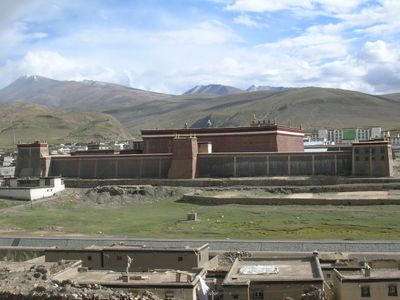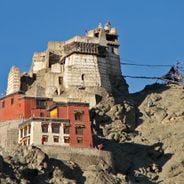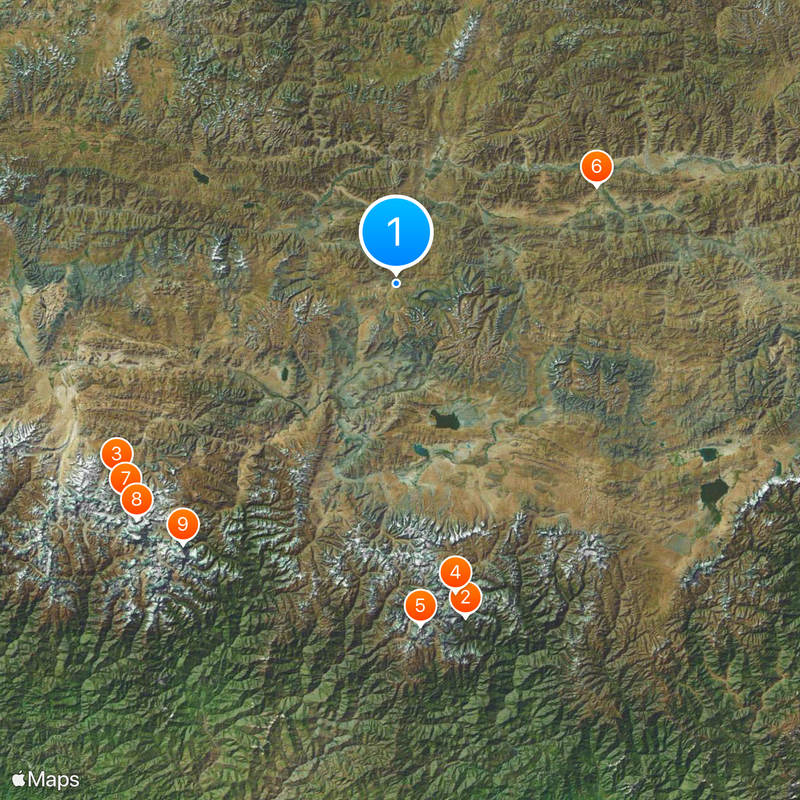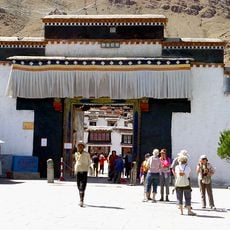
Sakya Monastery, Buddhist monastery in Sagya County, Tibet
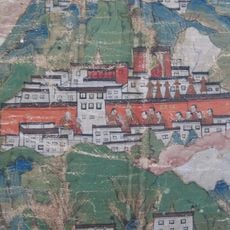
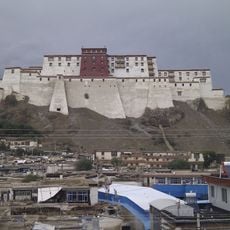
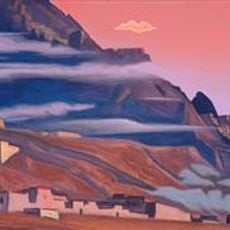
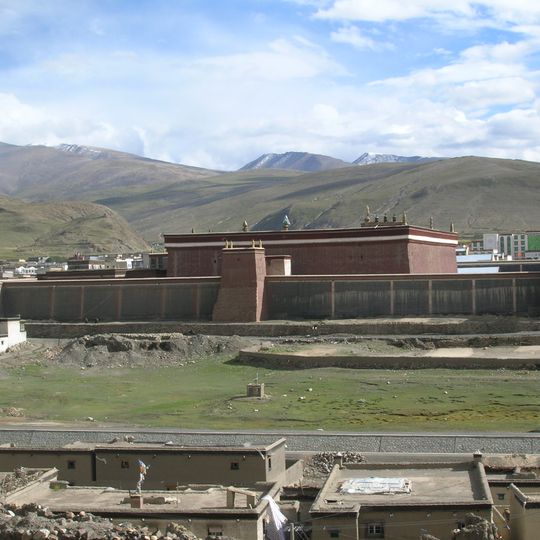
Sakya Monastery is a major Buddhist temple complex in Sa'gya County, Tibet, with buildings spread across both banks of the Zhongqu River. The northern section sits on the slopes of Mount Benpo, while the southern section occupies flat terrain below.
Khon Konchok Gyalpo established the site in 1073, making it the center of the Sakya school of Tibetan Buddhism. During the Yuan Dynasty, the monastery gained religious and political control over Tibet under Mongol patronage.
The monastery walls carry three colors marking different bodhisattvas: red represents Manjushri, white represents Avalokiteshvara, and blue represents Vajrapani. This color scheme gave the Sakya school its nickname as the Flowery or Variegated tradition.
The complex sits at 4050 meters (13,300 feet) elevation and requires time for visitors from lower altitudes to adjust. An entrance fee of 50 yuan grants access to the religious sites and historical collections inside.
The library houses 84,000 volumes, including the Budejialongma collection weighing over 1000 pounds (450 kilograms). Around 3000 murals cover the interior walls, showing religious scenes from different centuries.
The community of curious travelers
AroundUs brings together thousands of curated places, local tips, and hidden gems, enriched daily by 91,145 contributors worldwide.