Tashilhunpo Monastery, Tibetan Buddhist monastery in Xigazê, China
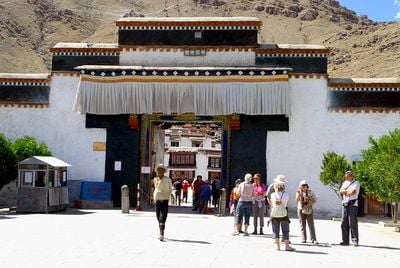
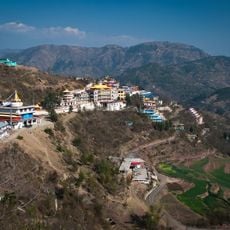
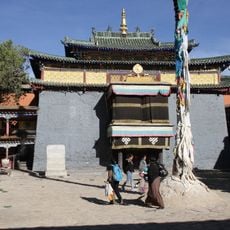
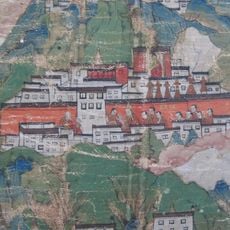
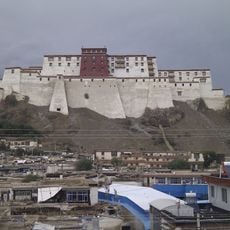
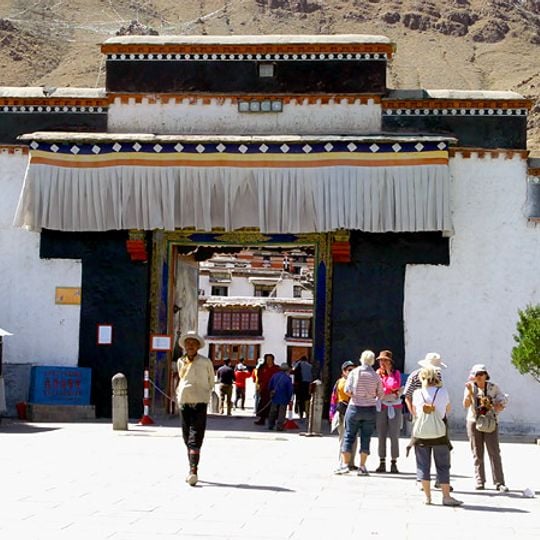
Tashilhunpo Monastery stands on the south slope of Nyiwö Ri (Sunlight Hill) in western Shigatse, facing south, founded in 1447. Its 230,000-square-metre walled complex, over 3,000 metres in perimeter, has low flat-roofed white buildings for monks' quarters and study units in front, and tall red-walled halls with gilded roofs behind. The white gateway in the photograph carries a pleated white valance, a blue band with white diamonds, an orange stripe and a black-and-red trim above a dark blue-black lower wall.
The monastery was founded in the 15th century as a religious center and later became the traditional seat of the Panchen Lamas, important leaders in Tibetan Buddhism. This connection made the site a major center of religious authority and learning in the region.
The monastery functions today as a place where monks study, pray daily, and pass on Buddhist practices to new generations. Visitors can observe monks gathering in courtyards and performing religious ceremonies in the temples.
The walled complex covers 230,000 square metres on the south slope of Nyiwö Ri, with a perimeter of over 3,000 metres; the low white flat-roofed buildings in front are monks' quarters, while the tall red-walled, gilded-roof halls stand at the rear. Pilgrims walk the lingkhor, the sacred path outside the walls, so allow time to circle the monastery rather than only crossing the courtyards.
The Jampa Buddha in the Jampa hall is 26.2 metres tall, seated on a 3.5-metre lotus, and is described as the largest bronze Maitreya statue in the world. Records say 110 craftsmen cast it over four years, and it is set with more than 1,400 ornaments of pearl, diamond and coral.
The community of curious travelers
AroundUs brings together thousands of curated places, local tips, and hidden gems, enriched daily by 92,927 contributors worldwide.