Palcho Monastery, Buddhist monastery in Gyangzê County, China
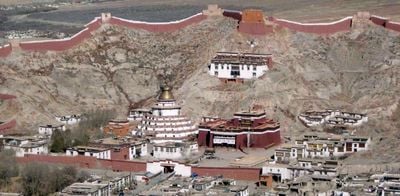
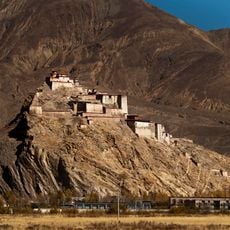
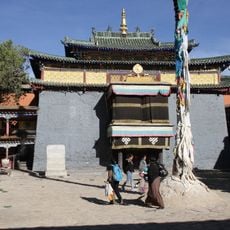
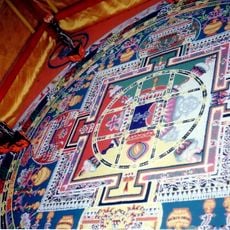
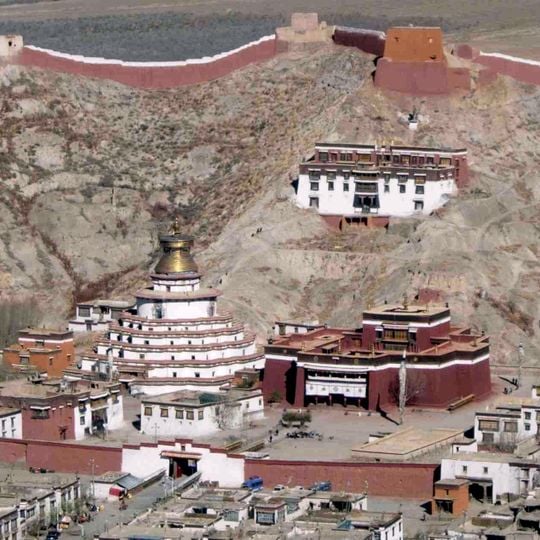
Palcho Monastery is a Buddhist monastery in Gyangzê County composed of several interconnected buildings with white walls, red trim, and traditional Tibetan architectural features. The complex is anchored by the Kumbum, a towering structure with 108 chapels arranged in a three-dimensional mandala design.
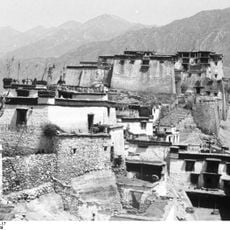
Prince Rabten Kunzang Phak and the scholar Kedrub Je founded the monastery in 1418; the main temple was completed in 1425 and the Kumbum in 1437. It became a centre of the Sakya school, and by the late 17th century housed 16 colleges of the Sakya, Shalu and Gelug traditions. British troops occupied it in 1904, and it was damaged in 1959 and the Cultural Revolution before restoration.
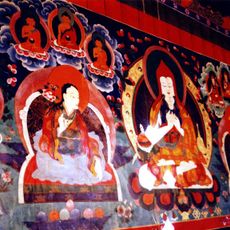
The monastery is shared by the Gelug, Sakya and Shalu schools, each keeping its own college and rituals. Gelug monks mark Tsongkhapa's death on the 25th day of the tenth lunar month with butter lamps, Sakya monks hold a Vajrakila rite in the fourth month, and Shalu monks commemorate Buton Rinchendrub from the 2nd to 27th of the sixth month.
Visitors need permits to enter the monastery, so plan ahead and check local requirements before your visit. Guided tours in several languages help explain the religious art and architectural details.
The monastery's three surviving colleges belong to the Gelug, Sakya and Shalu schools, a coexistence rare in Tibet. In the early 21st century the approved quota was 80 monks: 40 Gelug, 20 Sakya and 20 Shalu.
The community of curious travelers
AroundUs brings together thousands of curated places, local tips, and hidden gems, enriched daily by 92,883 contributors worldwide.