Narthang Monastery, Tibetan Buddhist monastery in Samzhubzê District, Tibet, China.
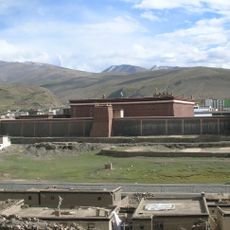
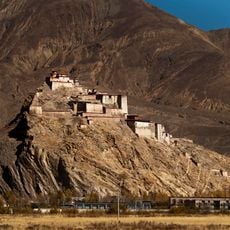
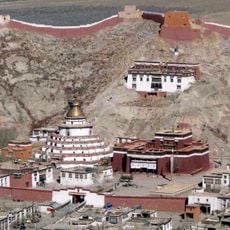
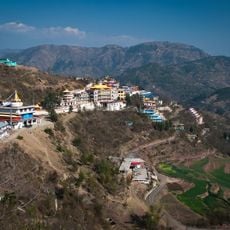
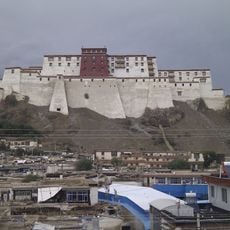
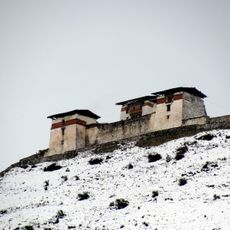
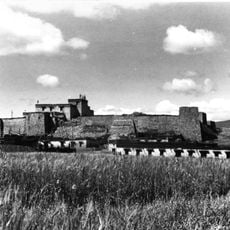
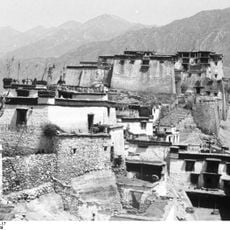
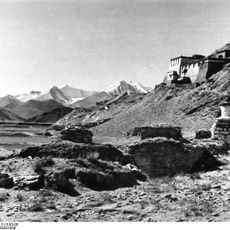
Narthang Monastery stands 15 km west of Shigatse beside the China–Nepal Highway. Its five main buildings and large chanting hall were razed in 1966; today only mud-brick foundations can be traced, while parts of the high fortress walls in Mongolian style still stand behind a roadside village.
Founded in 1153 by Tumtön Lodrö Drakpa, a disciple of Sharawa Yonten Drak, Narthang was a Kadam monastery and the fourth great monastery of Tsang alongside Shalu, Sakya and Tashilhunpo. With backing from the fourth Panchen Lama, the fifth Dalai Lama, Sönam Rapten and Güshi Khan it became a branch of Tashi Lhunpo. Its five main buildings and great chanting hall were razed in 1966; only mud-brick foundations and parts of the Mongolian-style fortress walls remain.
Narthang takes its name from the Tibetan for 'elephant-trunk plain', after the hill and rock where Atisha is said to have foretold a monastery. Its printing house produced the Narthang edition of the Kangyur and Tengyur, carved under Polhané Sönam Topgyé in the 1730s and 1740s; the first impressions survive at Tashilhunpo and the Potala.
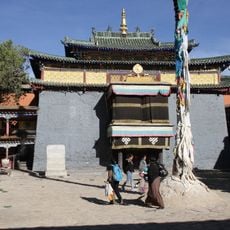
Narthang lies about 15 km west of Shigatse, beside the China-Nepal Highway, with the high crumbling walls visible behind a roadside village. A few monks have returned and several minor buildings have been restored, while the five main buildings and the great chanting hall survive only as mud-brick foundations. The ground is uneven and partly exposed, so allow time to walk the ruins carefully.
The printing house produced the Narthang edition of the Kangyur and Tengyur, carved in the 1730s under the regent Polhané Sonam Topgyal. Its 108 Kangyur and 215 Tengyur volumes were printed from woodblocks kept at the monastery, and copies survive at Tashilhunpo and the Potala.
The community of curious travelers
AroundUs brings together thousands of curated places, local tips, and hidden gems, enriched daily by 93,471 contributors worldwide.