Menri Monastery, Bon monastery in Topgyel, Tsang, Tibet, China
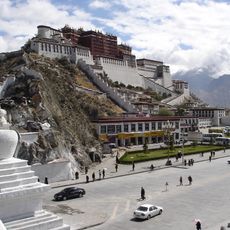
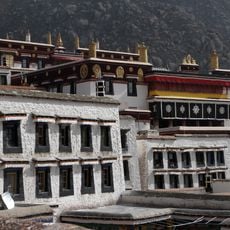
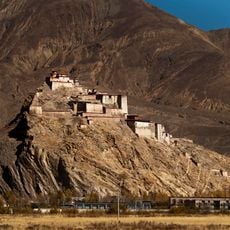
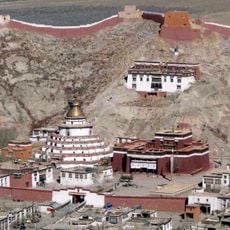
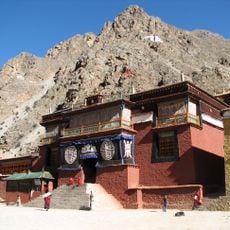
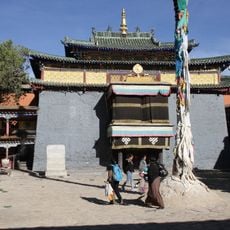
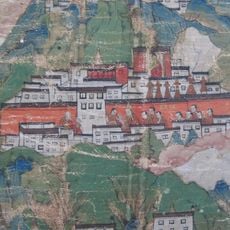
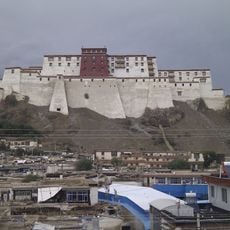
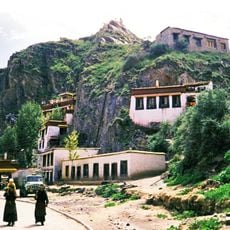
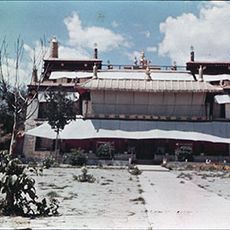
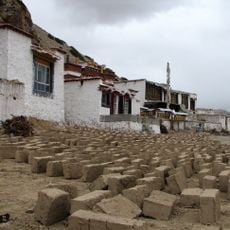
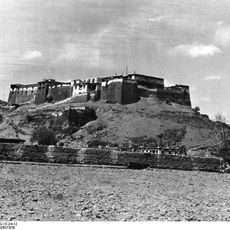
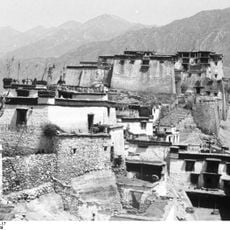
Menri Monastery is a Bon monastery built into a steep hillside at 4,700 metres in Topgyel, Tsang. Its white buildings with red horizontal bands and gold roofs step up the slope in tiers, with a gold-tipped spire at the left edge. It had four colleges — Lingmey, Lingto, Lingkey and Lingzur — with twelve divisions and 400 to 500 monks in 1959.
Menri was founded in 1405 by Nyammé Shérap Gyeltsen (1356–1416) of Gyarong on the slope of Mount Shari Phowa in Topgyel, Tsang, in the Bru lineage and Yéru Wensakha tradition. The earlier Menri, founded in 1072 as Yéru Wensakha Monastery, was destroyed by a flood in 1386. The monastery had 32 abbots up to 1966; in 1967 it was refounded at Dolanji, Himachal Pradesh, by Lungtok Tenpai Nyima and Lopön Tenzin Namdak.
The name Menri means "medicine mountain", after the medicinal plants and springs on the slope. Each month the monastery holds a protector-deity prayer assembly in the Zhubukhang hall, known as the Twelve Zhuba festival, and the yearly calendar adds 29-day and 15-day ritual assemblies. The abbot, or Khenchen, is recognized as spiritual leader of Bon.
The complex sits on a steep mountainside requiring sure footing when exploring different areas and navigating stairs between colleges. The 3800-meter elevation should be considered during a visit, as physical acclimatization is helpful for comfortable movement.
The monastery's name, Menri (sman ri), means "medicine mountain", taken from the medicinal plants and medicinal springs on the mountain where it was built. Its first incarnation, Yéru Wensakha, was founded in 1072 and destroyed by a flood in 1386; the present monastery dates from 1405. In 1967 it was refounded at Dolanji in Himachal Pradesh, India, by Lungtok Tenpai Nyima and Lopön Tenzin Namdak.
The community of curious travelers
AroundUs brings together thousands of curated places, local tips, and hidden gems, enriched daily by 94,061 contributors worldwide.