See the monuments around you in AROpen chests in the app
Around Us is built for your phone — point your camera at the streets and discover the monuments and places around you in augmented reality.Around Us is built for your phone — chests unlock when you walk, explore and capture nearby places.
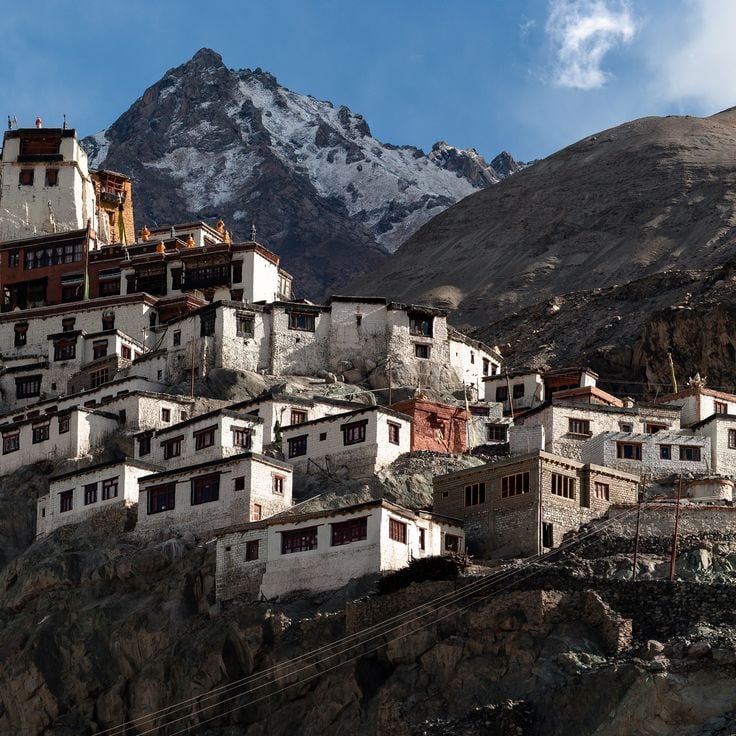
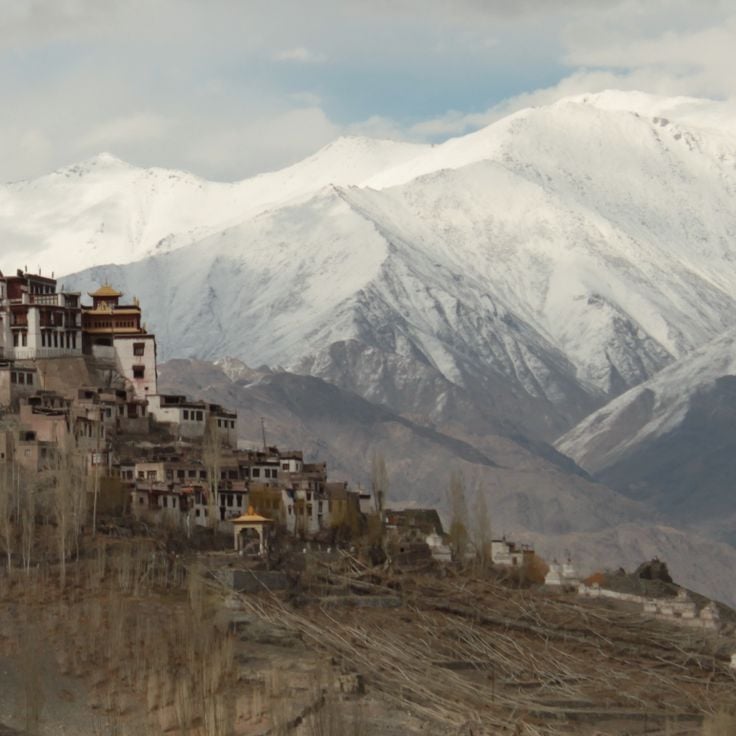
Deep in the Himalayas, Buddhist monks live by traditions that have remained largely unchanged since the 11th century.
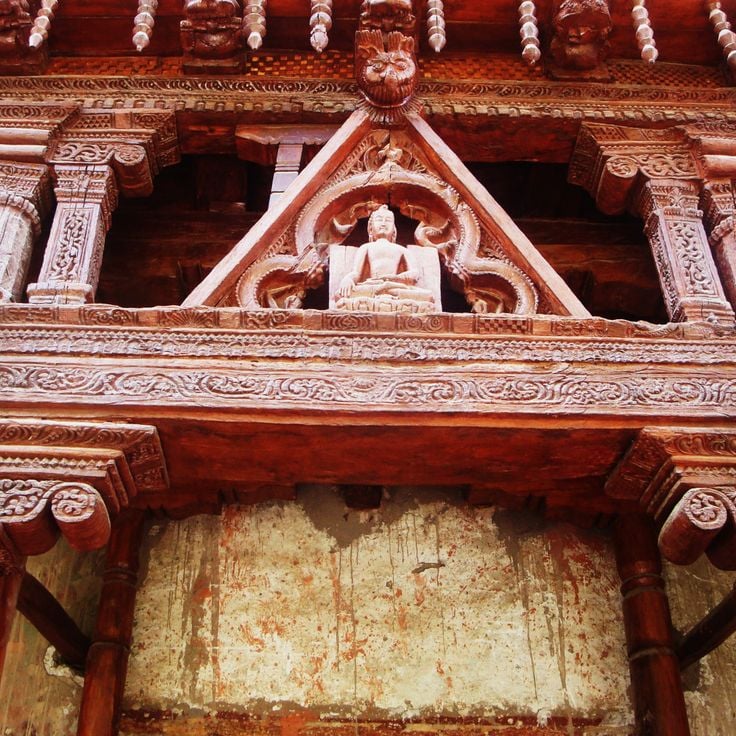
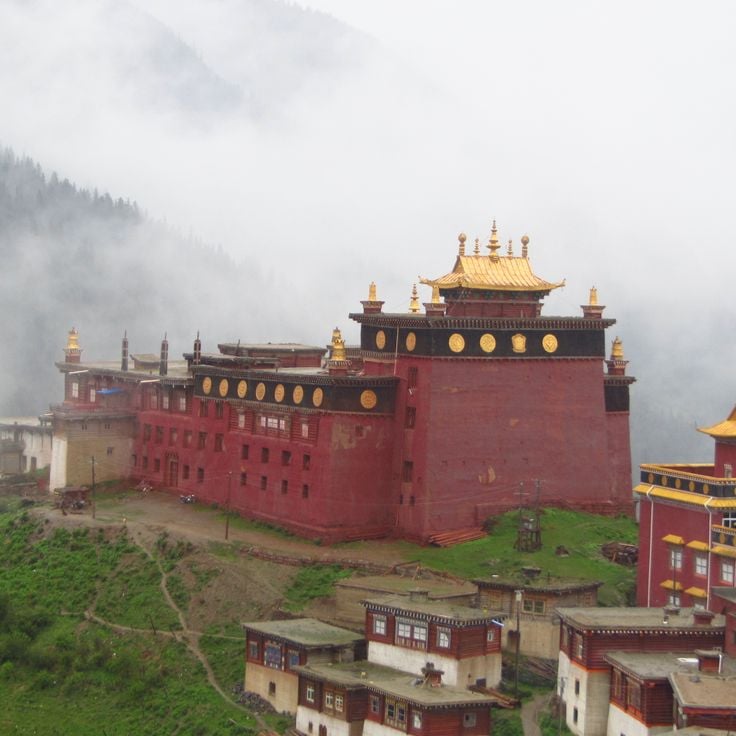
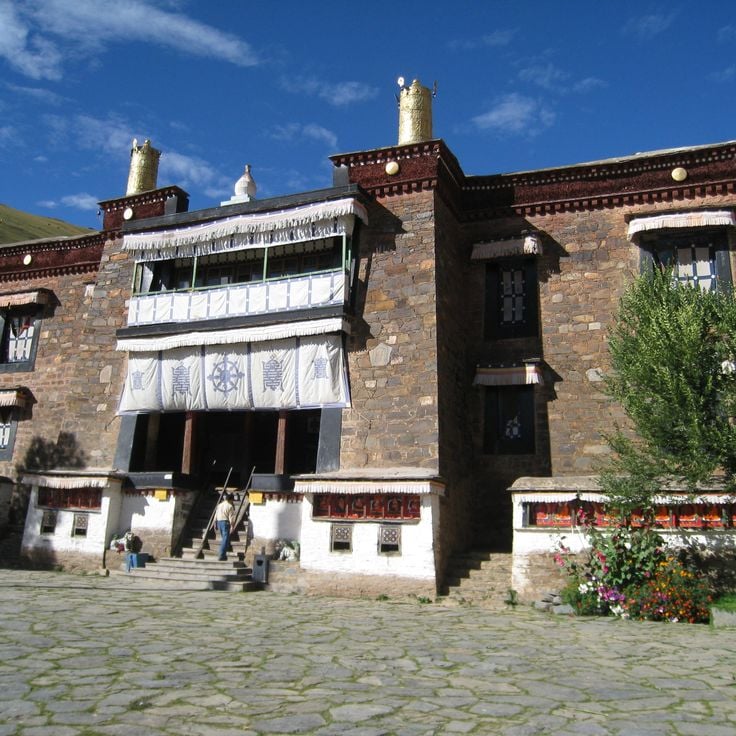
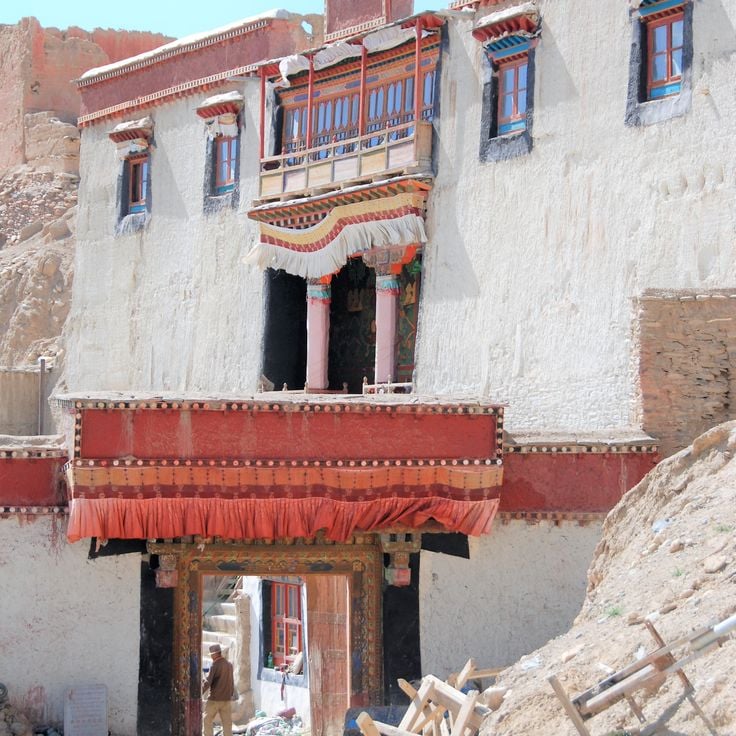
High in the Himalayan mountains, Buddhist monasteries hold onto ways of life that trace back to the 11th century. These buildings keep art, old books, and objects that matter deeply to the people who worship there. Many serve as schools where monks learn and teach the traditions of Tibetan Buddhism.
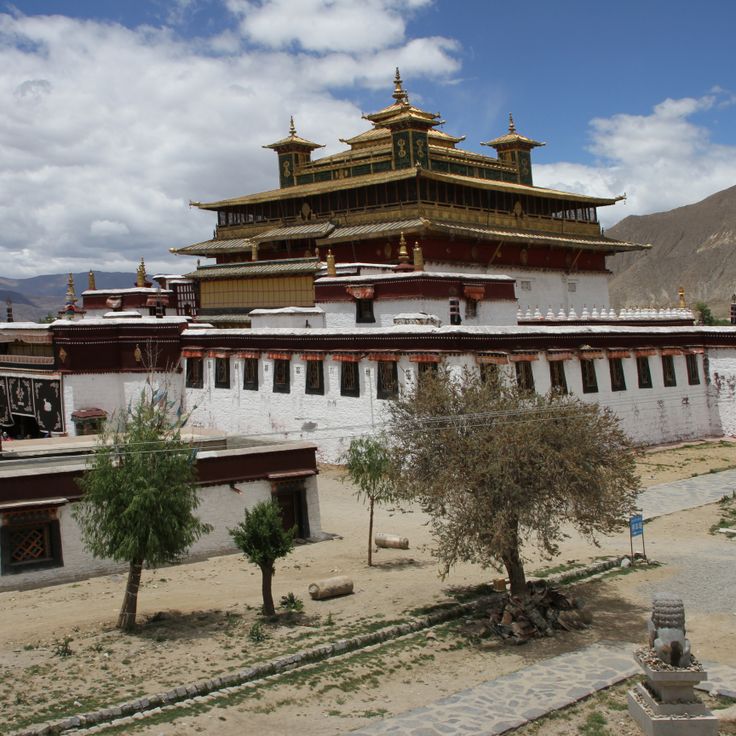
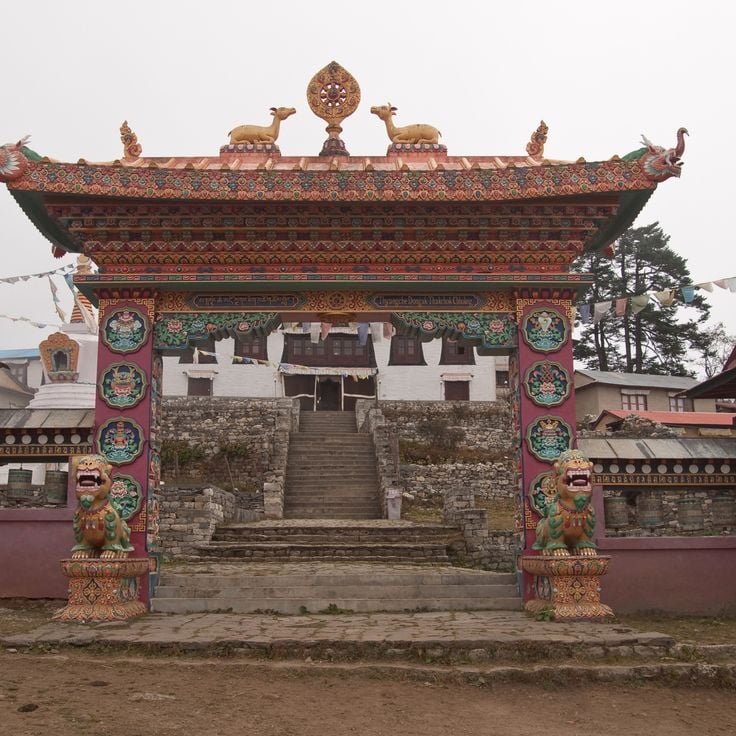
Across the region, you will find monasteries with different histories and purposes. Rumtek in Sikkim is a major home of the Karma Kagyü tradition, while Tawang in Arunachal Pradesh ranks among India's largest. Ladakh holds many monasteries, including Hemis, Thiksey, Diskit, and Alchi, each with its own art and stories. Further east, Samye, Drepung, and Tashilhunpo in Tibet, along with Thyangboche in Nepal, show how Buddhism spread through the mountains and took root in different places.
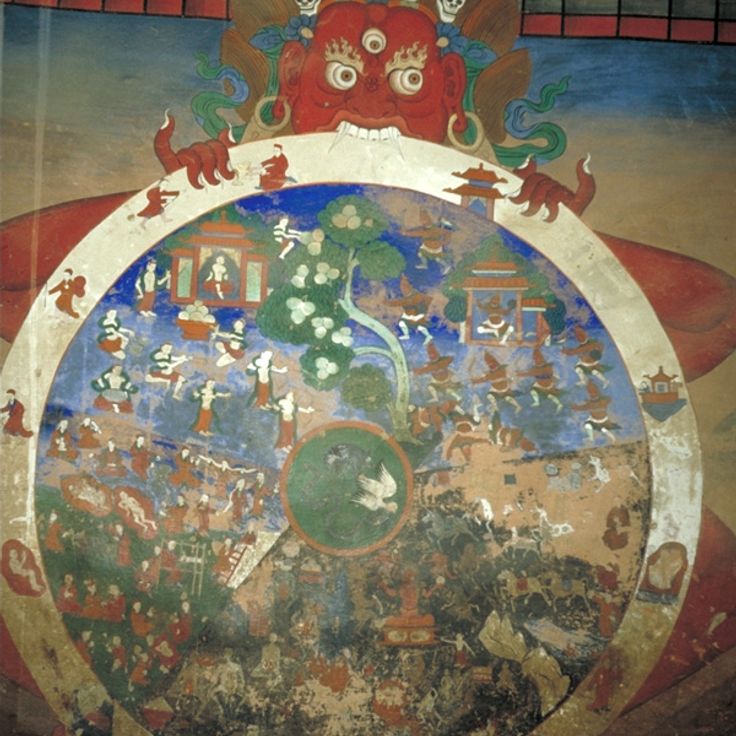
These monasteries are active centers of faith and learning. When you visit, you can see monks at work: reading sacred texts, performing ceremonies, and creating thangka paintings or wooden carvings by hand. Spending time in these places gives you a real sense of a world where people have lived by the same values and customs for hundreds of years.
Deep in the Himalayas, Buddhist monks live by traditions that have remained largely unchanged since the 11th century.
High in the Himalayan mountains, Buddhist monasteries hold onto ways of life that trace back to the 11th century. These buildings keep art, old books, and objects that matter deeply to the people who worship there. Many serve as schools where monks learn and teach the traditions of Tibetan Buddhism.
Across the region, you will find monasteries with different histories and purposes. Rumtek in Sikkim is a major home of the Karma Kagyü tradition, while Tawang in Arunachal Pradesh ranks among India's largest. Ladakh holds many monasteries, including Hemis, Thiksey, Diskit, and Alchi, each with its own art and stories. Further east, Samye, Drepung, and Tashilhunpo in Tibet, along with Thyangboche in Nepal, show how Buddhism spread through the mountains and took root in different places.
These monasteries are active centers of faith and learning. When you visit, you can see monks at work: reading sacred texts, performing ceremonies, and creating thangka paintings or wooden carvings by hand. Spending time in these places gives you a real sense of a world where people have lived by the same values and customs for hundreds of years.
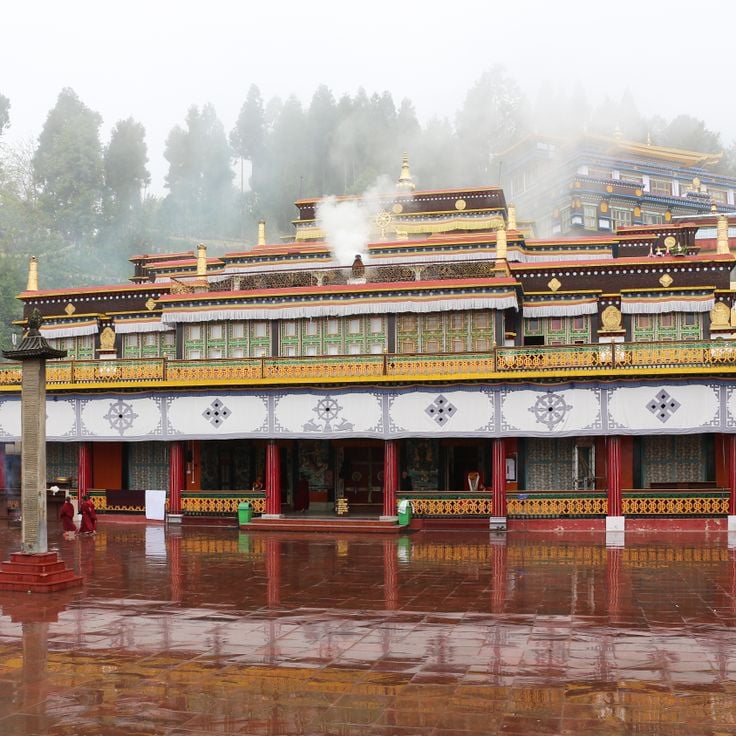
Rumtek Monastery sits in the hills of Sikkim and stands as one of the main centers of the Karma Kagyü tradition of Tibetan Buddhism. The complex traces its traditions back to the 16th century and holds religious artworks, sacred texts, and a school where monks live and study by rules passed down over generations. A visit here gives a real sense of a community that has shaped its daily life around the same values for hundreds of years.
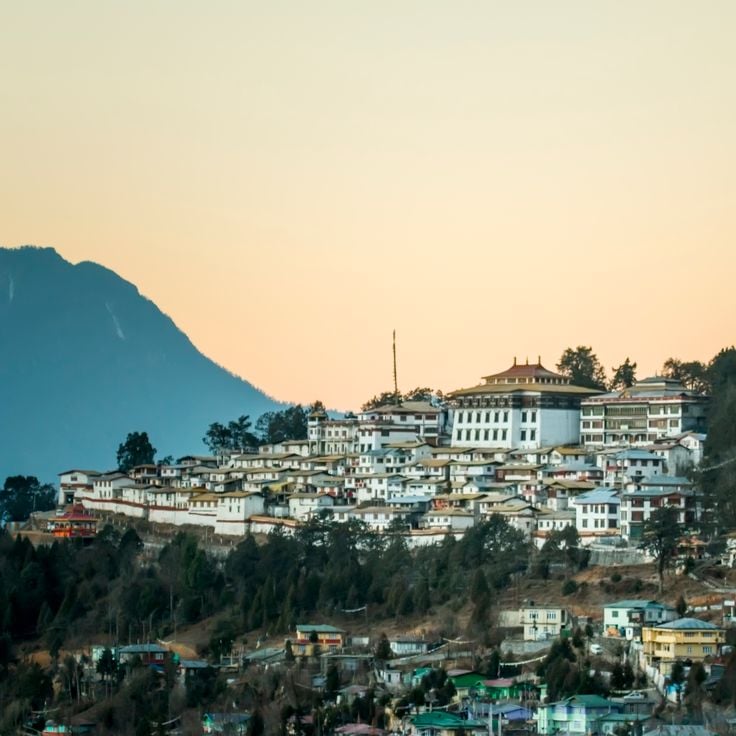
Tawang Monastery sits high in the mountains of Arunachal Pradesh and is one of the largest Buddhist monasteries in India. Built in the 17th century, this complex brings together dozens of buildings, including a library that holds old texts and manuscripts. Monks live and study here according to the teachings of Tibetan Buddhism, and visitors can witness ceremonies, prayer rituals, and handmade religious art.
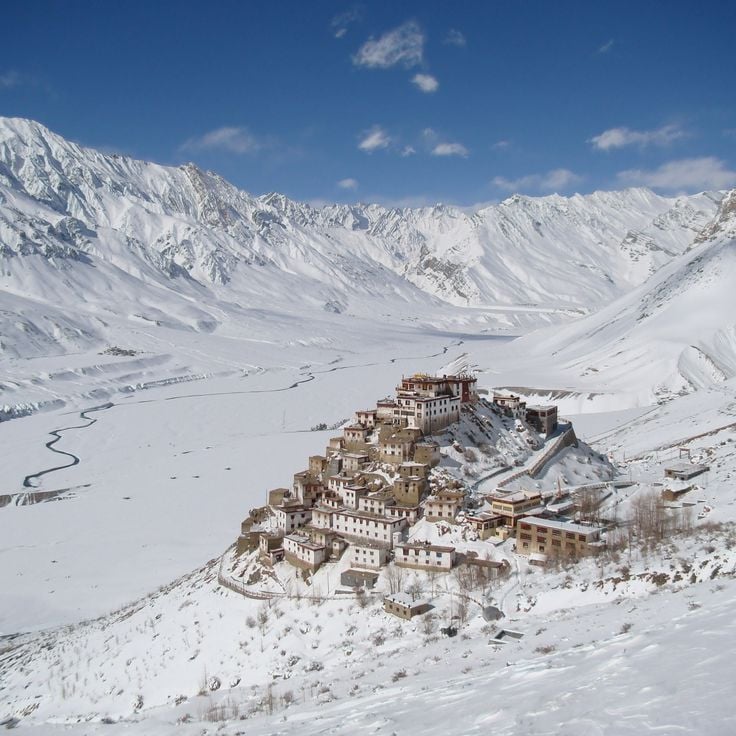
Key Monastery sits at around 4,000 meters (13,000 feet) in Himachal Pradesh and is part of a group of Buddhist sites in the Himalayas that have been active since the 11th century. The buildings hold thangkas, old wall paintings, and historical weapons. Like other monasteries in the region, Key Monastery is a place of prayer and learning for the Tibetan Buddhist community, where monks live, teach, and pass on the traditions of their faith.
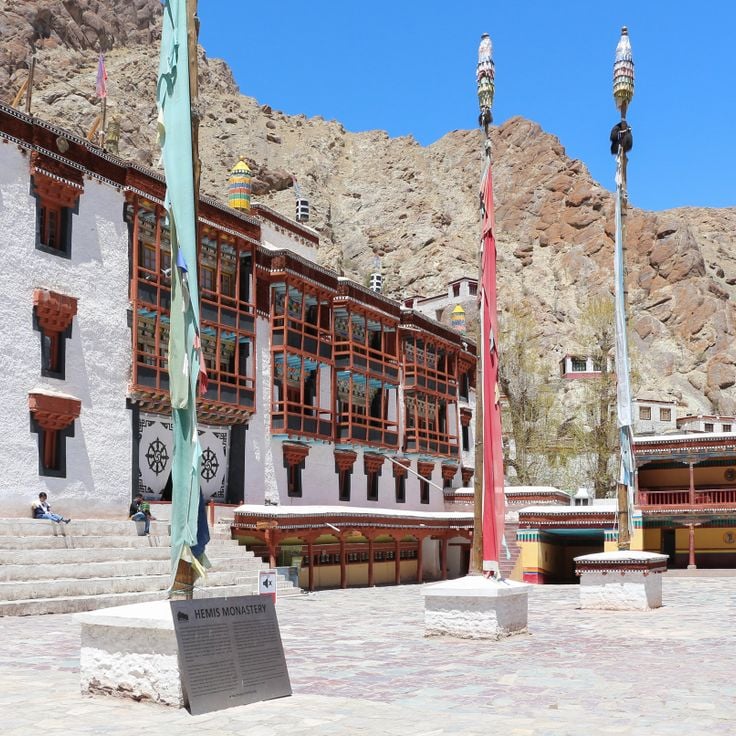
Hemis Monastery sits in the mountains of Ladakh and is one of the most visited Buddhist monasteries in India. Built in the 17th century, it holds a copper statue of Buddha, a collection of old masks, and large painted hangings. Monks live and study here, following the traditions of Tibetan Buddhism, and the monastery remains an active place of prayer and learning.
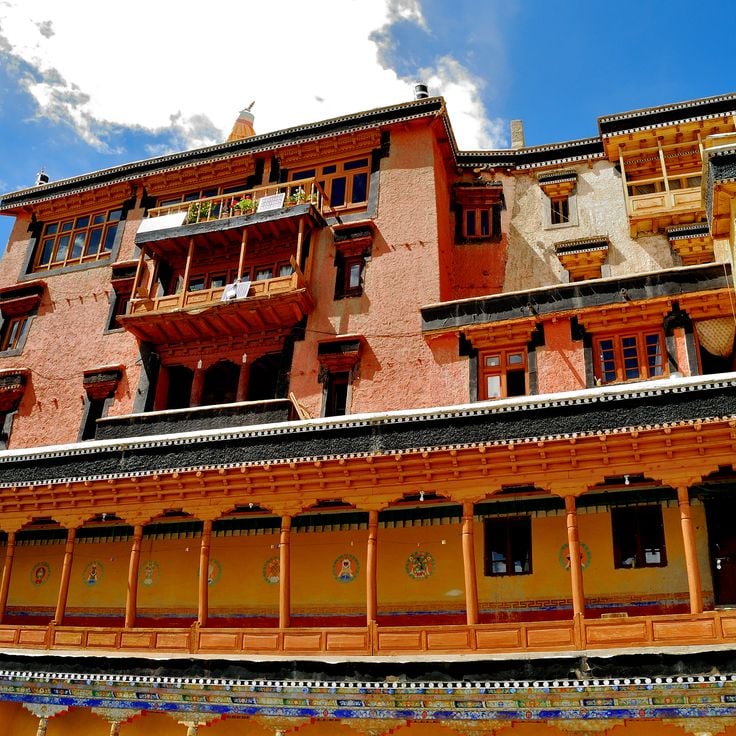
Thiksey Monastery is a twelve-story complex built in the 15th century in Ladakh. Its red and white buildings rise above the surrounding landscape and echo the form of the Potala Palace. Like other monasteries in this collection, it holds thangka paintings, sacred texts, and religious objects, and it serves as a school where monks study and pass on Tibetan Buddhist teachings.
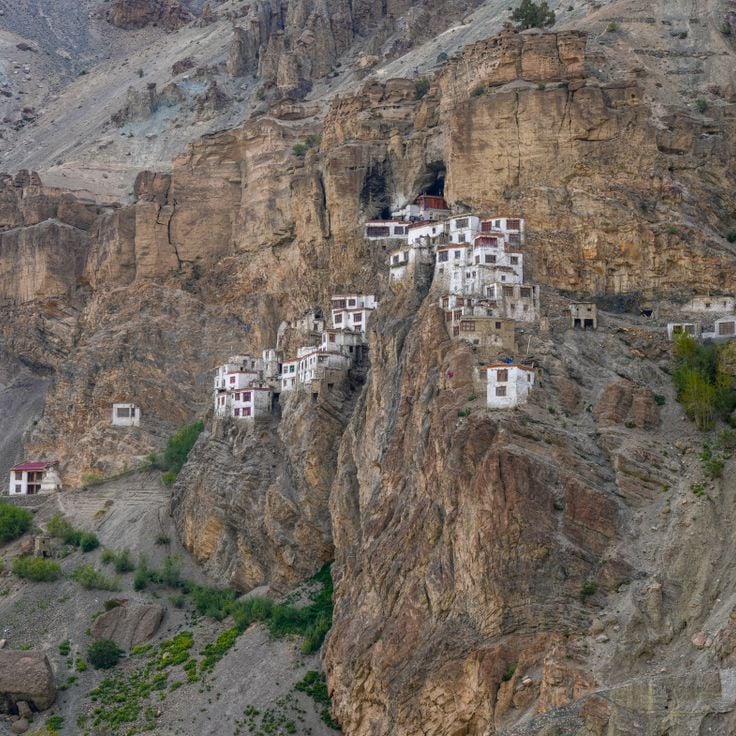
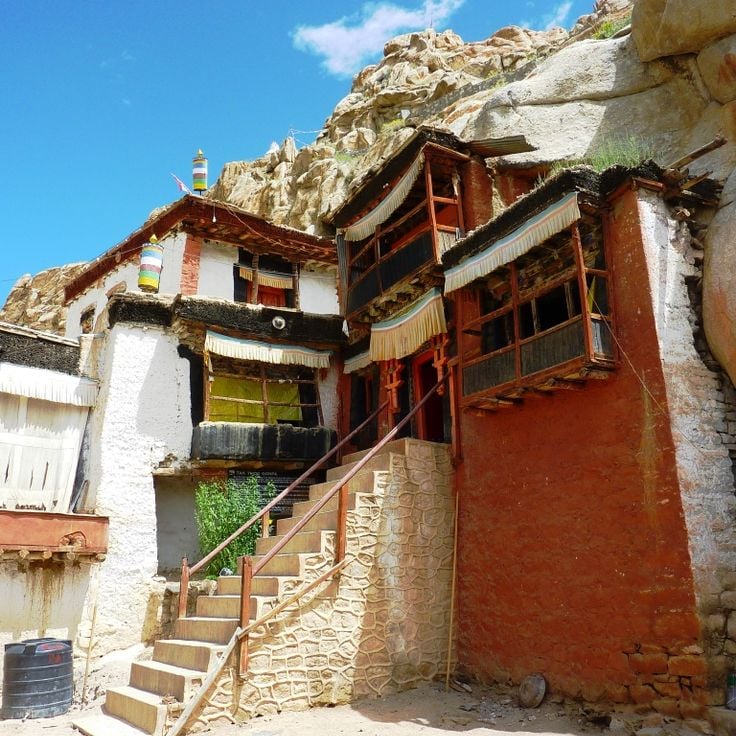
Phuktal Monastery clings to a cliff face in Ladakh and can only be reached on foot. Built into a natural cave, this monastery traces its roots to the 11th century. Around 70 monks live and study here, surrounded by thangka paintings, sacred texts, and old objects tied to Tibetan Buddhist practice. The walk to reach it is long, but the monastery remains a living place of faith and learning.
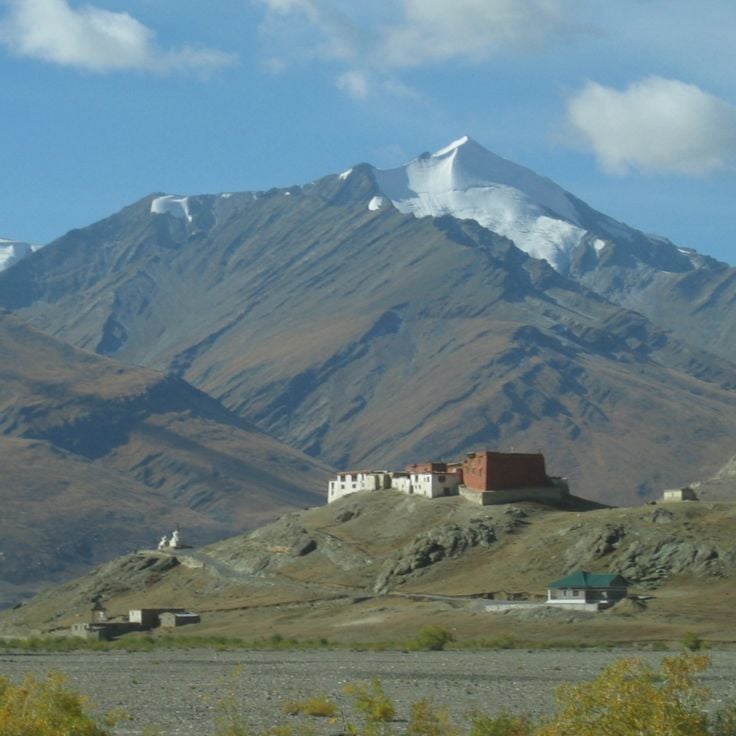
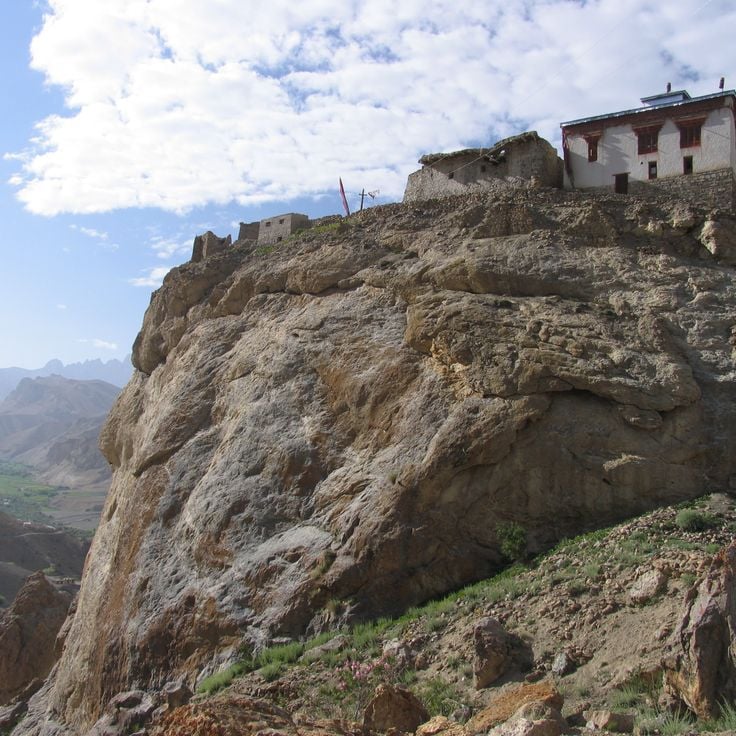
Rangdum Monastery sits on a hill in the Suru region of Ladakh, at around 13,100 feet (4,000 meters) above sea level, with mountains and glaciers all around. It belongs to the Tibetan Buddhist tradition and traces its roots back to the 11th century. Inside its buildings you find paintings, sacred texts, and religious objects. Monks still live and study here today, following the same customs as generations before them.
Diskit Monastery is the oldest monastery in the Nubra Valley and one of the most important centers of Tibetan Buddhism in Ladakh. A statue of Buddha Maitreya, about 100 feet (32 meters) tall, stands watch over the valley. Inside, ancient murals cover the walls, and religious texts have been read and passed down by monks for centuries. The monastery also works as a school where young monks learn the teachings of Tibetan Buddhism.
Alchi Monastery is one of the oldest Buddhist sites in Ladakh, dating back to the 11th century. Walking through its stone structures, you come across colored wall paintings showing Buddhist scenes and deities. This monastery holds sacred texts, works of art, and objects that carry deep meaning for those who follow Tibetan Buddhist traditions. It is a place where ways of life from centuries past are still very much present today.
Matho Monastery sits on a mountain peak in Ladakh and belongs to the Sakya tradition of Tibetan Buddhism. Built in the 15th century, it holds paintings, sacred texts, and ritual objects. Like other monasteries in the region, it is still a place of learning where monks study and pass on Buddhist teachings.
Palpung Monastery is a major center of the Karma Kagyu lineage, set in the mountains of the Tibet Autonomous Region. It holds a large library of Tibetan texts and serves as a school for Buddhist art. Monks here study and teach traditions that go back to the 11th century. A visit gives a real sense of how religious learning and artistic work have continued in this place for generations.
Samye Monastery is considered the first Buddhist monastery in Tibet, built in the 8th century around a mandala layout, with a central temple and four smaller temples surrounding it. The monastery holds old artworks, sacred texts, and objects that carry deep meaning for Tibetan Buddhism. It remains an active place of learning, where monks study and pass on the traditions of their faith.
Mindrolling Monastery is one of the most important Buddhist centers in the Himalayan region. It holds a large collection of religious texts and artworks rooted in traditions going back to the 11th century. Monks continue to study and teach here, making this monastery an active place of faith and learning where old ways of practice are passed on from one generation to the next.
Drigung Til Monastery sits high in the mountains of Tibet and belongs to the Kagyu tradition of Tibetan Buddhism. Since the 12th century, it has been known as a place where a sky burial ceremony is performed, offering the deceased to the heavens. Monks here study old texts, carry out rituals, and pass down teachings that have shaped this tradition for centuries.
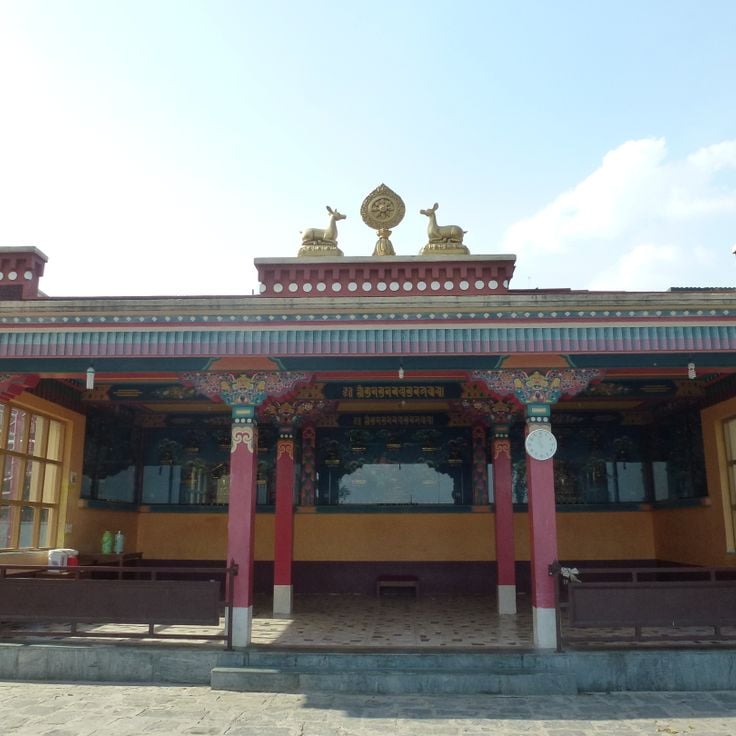
Simbiling Monastery in Nepal is a working center of Buddhist learning and practice in the Himalayan mountains. It holds the traditions of the Sherpa community, with religious art, sacred texts, and objects that trace back to the 11th century. Monks study and teach Tibetan Buddhist traditions here, and a visit gives a real sense of a place where the same ways of life have continued for hundreds of years.
Thyangboche Monastery sits at an elevation of 3867 meters in Nepal and is part of a group of Himalayan monasteries where monks follow and pass on the teachings of Tibetan Buddhism. The buildings hold paintings, sacred texts, and objects made by hand over many generations. Visitors can watch ceremonies, see monks at their daily work, and get a real sense of how faith has shaped life in this part of the mountains for centuries.
Kopan Monastery sits on a hill at the edge of Kathmandu and is one of the active centers of Tibetan Buddhism in Nepal. Monks from Nepal and other countries come here to study Tibetan philosophy, meditation, and the rituals that have shaped Himalayan religious life since the 11th century. The monastery has meditation halls, a library of sacred texts, and living quarters for the community. Walking through the grounds, you get a clear sense of a place where daily life follows the rhythm of prayer, study, and practice.
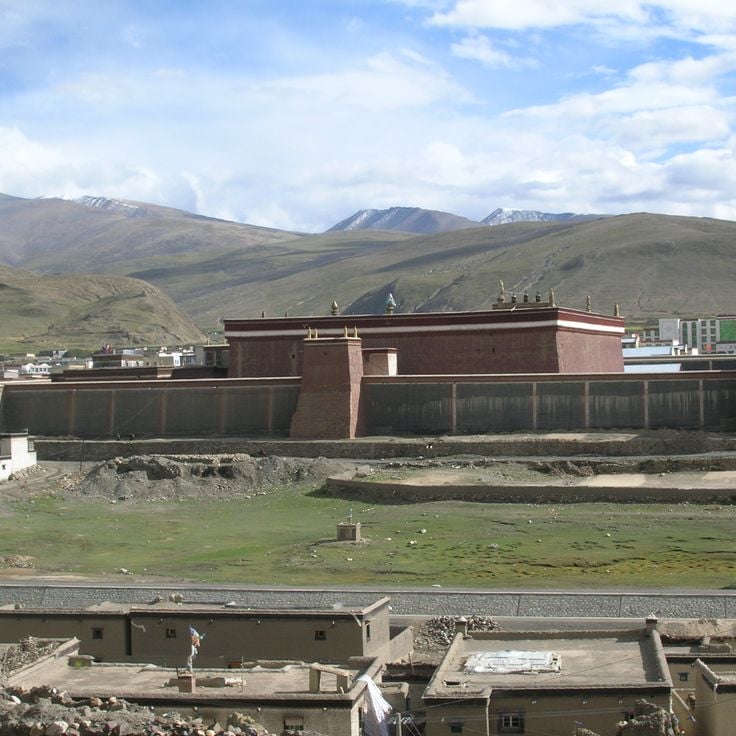
Sakya Monastery in Shigatse was founded in the 11th century and stands as one of Tibet's oldest centers of Buddhist learning. Its thick grey walls hold one of the largest monastic libraries in the region, with around 84,000 scrolls. Inside, medieval religious paintings, sculptures, and ritual objects fill the rooms. Monks here study and teach Tibetan Buddhist traditions daily, making this monastery a living place of faith rather than simply a historical site.
Bardan Monastery sits in the Zanskar valley in Ladakh, where it has stood since the 17th century as a place of Tibetan Buddhist life and learning. Its prayer halls, library, and wall paintings give visitors a sense of how monks have practiced and passed on their faith across generations. The monastery is still active today, with monks studying sacred texts and carrying out daily rituals in the same way their predecessors did centuries ago.
Takthok Monastery is the only Nyingma school monastery in Ladakh. It is built around a natural cave where Guru Rinpoche is said to have meditated in the 8th century. Inside, you will find shrines, old Buddhist texts, and objects that monks have cared for across many generations. Visiting Takthok gives a sense of a living tradition, one that has shaped daily life in this part of the Himalayas for centuries.
Mulbekh Monastery sits in the Kargil district of Ladakh at around 3,500 meters (11,500 feet) above sea level and is one of the oldest Buddhist sites in the area. A Buddha figure about 30 feet (9 meters) tall is carved directly into the rock face and can be seen from the road. Inside, two prayer halls serve monks who study Tibetan Buddhist texts and carry out ceremonies. This monastery has been a living center of faith and learning in these mountains since the 11th century.
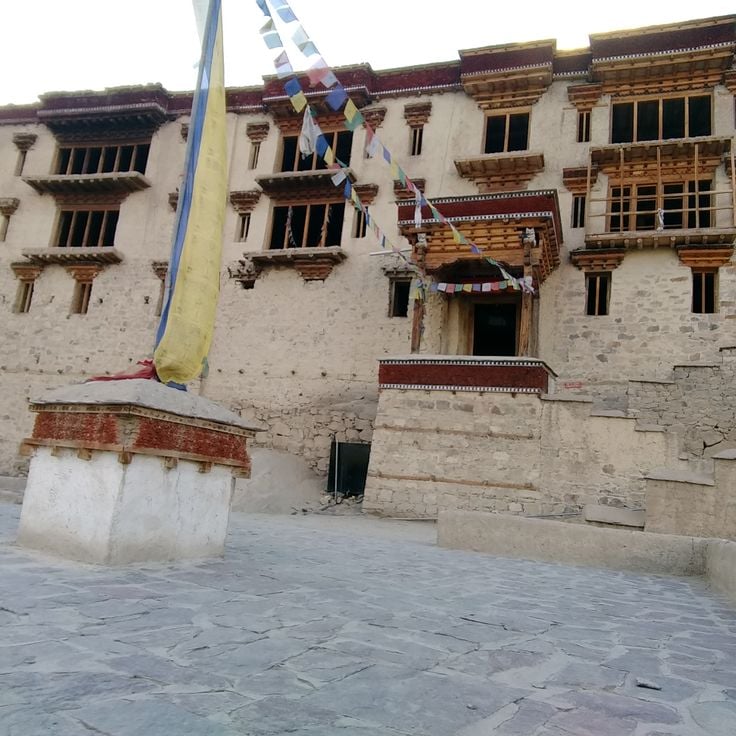
Shey Monastery sits on a rocky ridge in Ladakh and once served as the summer palace of the region's rulers. Built in the 17th century, it holds a tall copper statue of the Buddha inside a multi-story temple. The walls are covered with religious paintings showing scenes from Buddhist teachings. Monks come here to perform ceremonies, and the site remains an active place of prayer and memory for the local community.
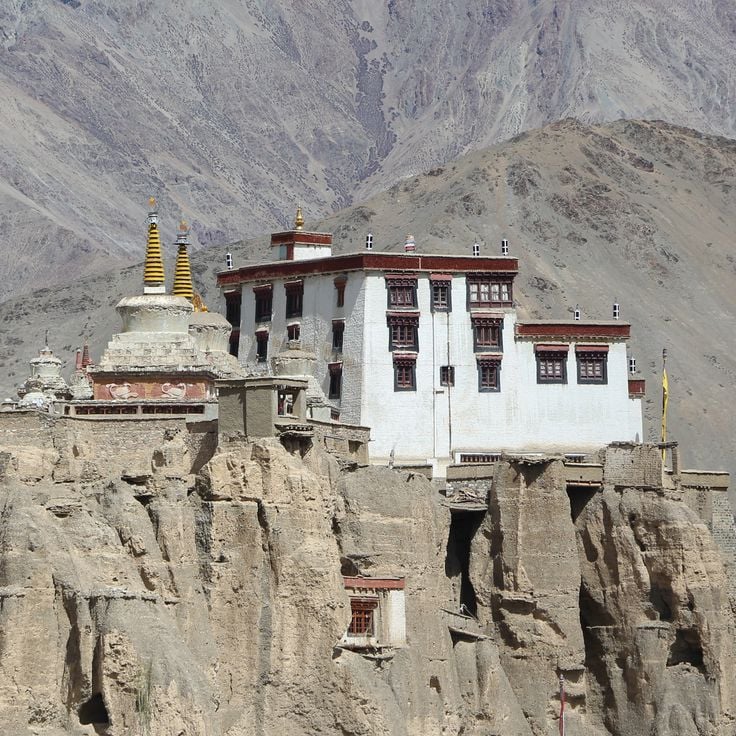
Lamayuru Monastery is one of the oldest Buddhist monasteries in Ladakh, perched on a rocky hill in a bare mountain landscape. Monks have lived and studied here according to the teachings of Tibetan Buddhism since the 11th century. Inside, you will find old texts, thangka paintings, and religious objects that hold deep meaning for the community.
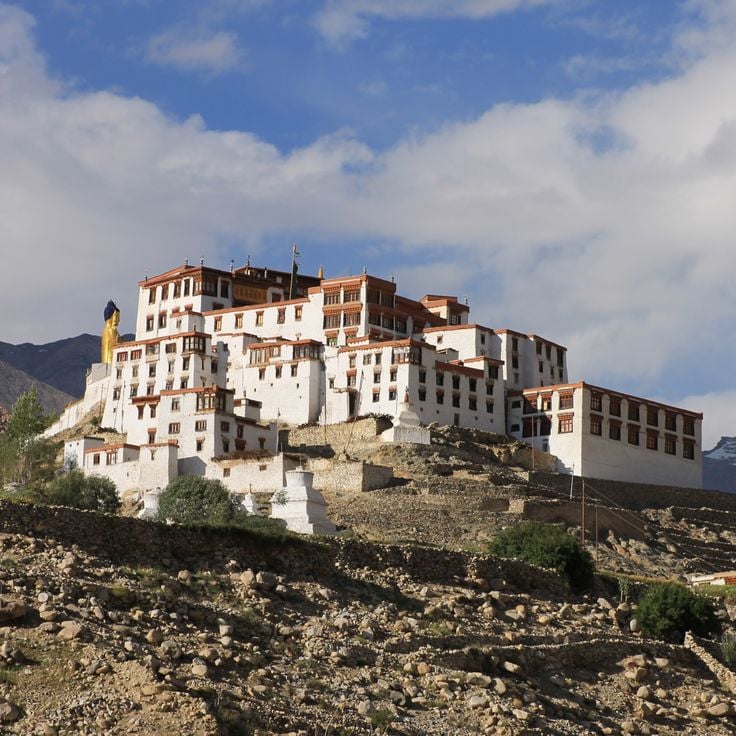
Likir Monastery sits in the hills of Ladakh and dates back to the 15th century. Like many places in this collection, it is a living center of Tibetan Buddhist faith, where monks study, pray, and carry traditions forward by hand. The monastery holds a museum of Tibetan objects and a gilded Buddha statue that rises about 75 feet (23 meters) above the grounds. Walking through it gives a clear sense of how monastic life in the Himalayas has looked for generations.
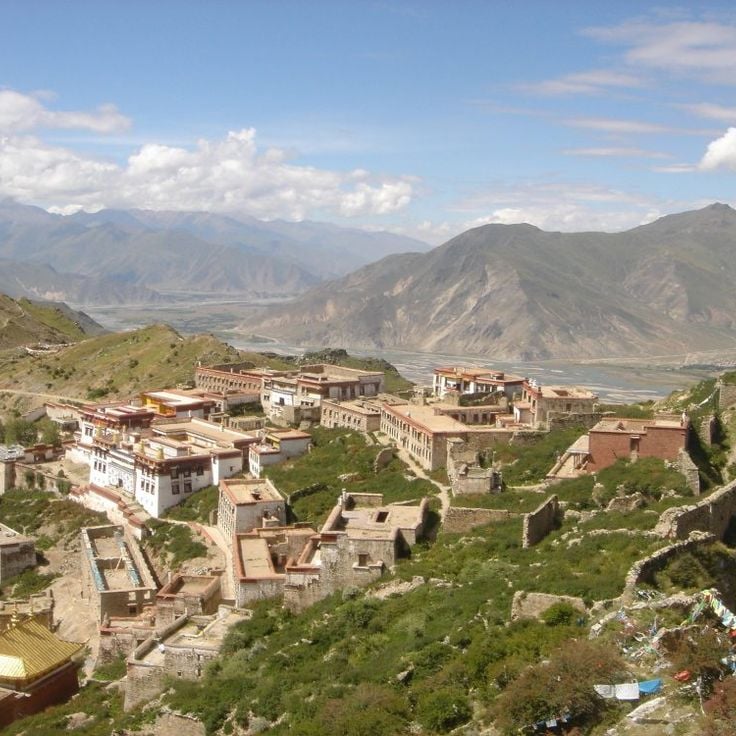
Ganden Monastery sits on a hilltop east of Lhasa and is one of the three great Gelug university monasteries of Tibet. The monastery was destroyed in 1959 and rebuilt in the years that followed. Today, monks study sacred texts, take part in ceremonies, and carry on the teaching traditions of Tibetan Buddhism within its walls, surrounded by art collections and religious objects that date back many centuries.
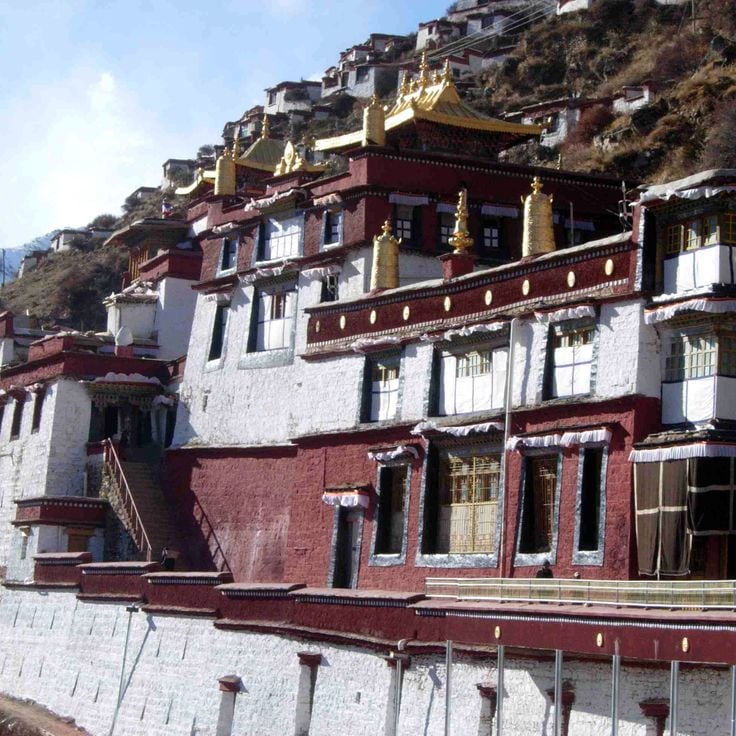
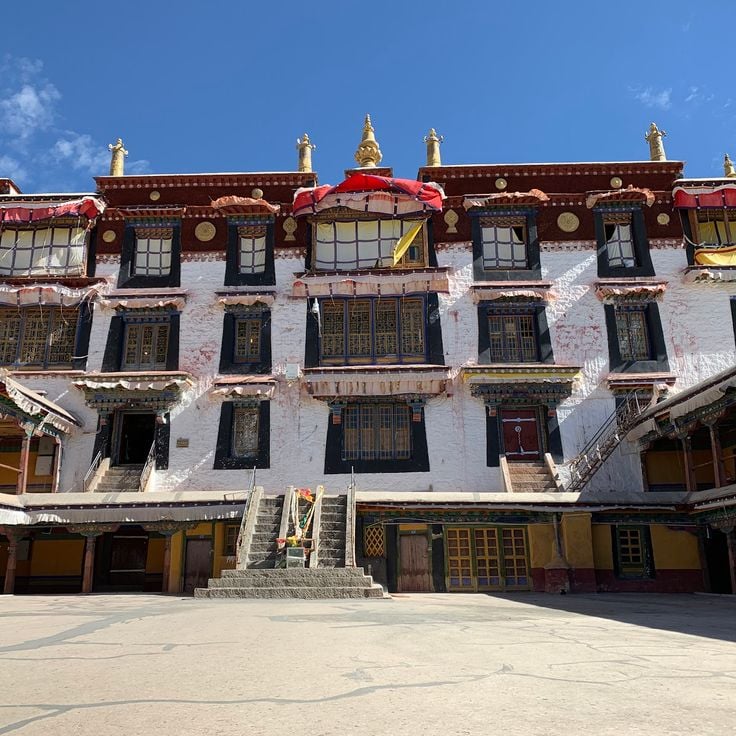
Drepung Monastery sits in the Tibet Autonomous Region and is one of the largest monastic complexes in the Himalayan mountains. Its history goes back to the 15th century. The monastery holds collections of sacred texts, religious objects, and works of art that are deeply rooted in Tibetan Buddhist tradition. Monks live and study here, passing on the teachings of Tibetan Buddhism. Walking through the buildings gives a real sense of how centuries of religious life have shaped every corner of this place.
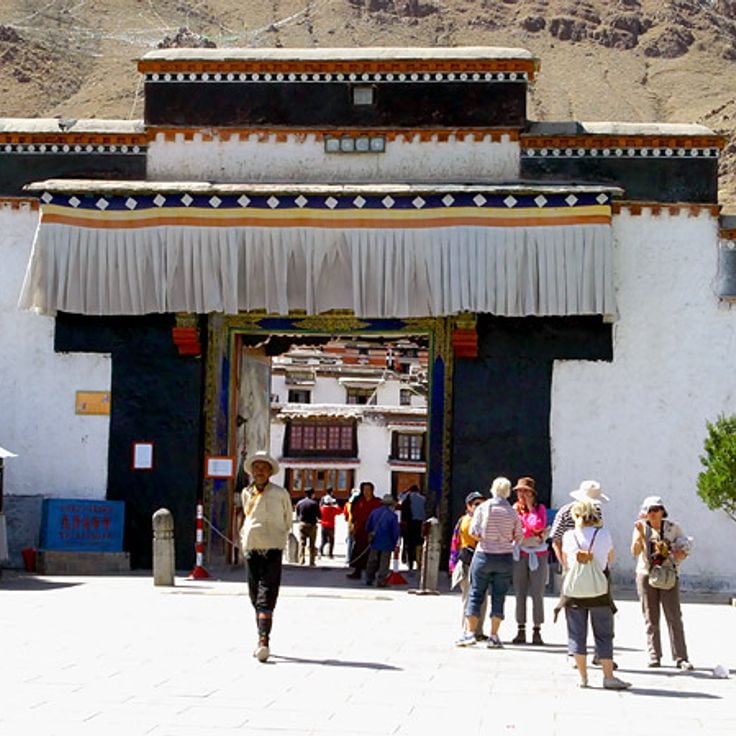
Tashilhunpo Monastery, in the city of Shigatse, is the traditional seat of the Panchen Lamas. Its main hall holds one of the largest gilded statues of Maitreya Buddha in Tibet. The walls are covered with old murals showing scenes from Buddhist life. Monks live and study here following the same rules and texts passed down since the 15th century. This monastery is one of the active centers of Tibetan Buddhism in the Himalayan mountains.
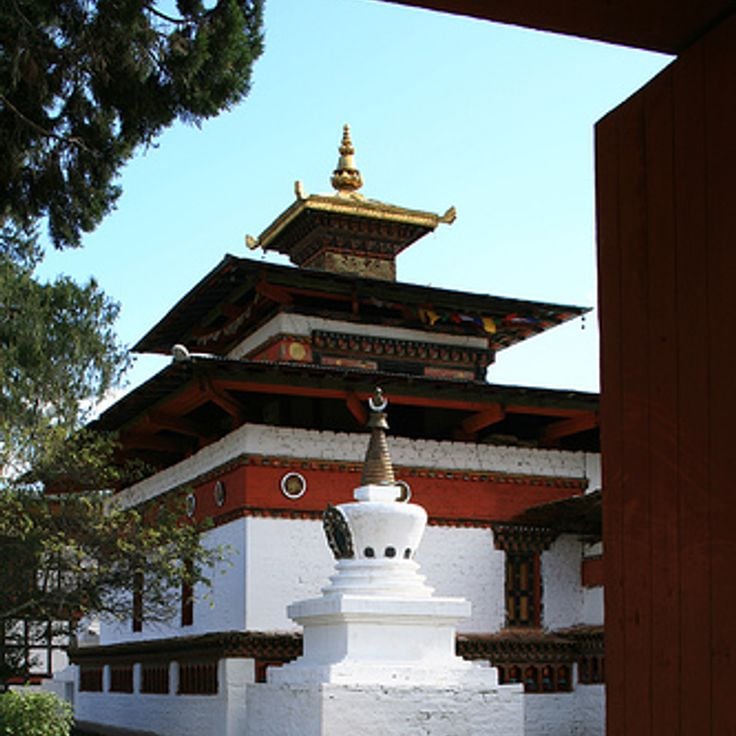
Kyichu Lhakhang is one of the oldest Buddhist temples in Bhutan, dating back to the 7th century. Located in the Paro valley, it holds ancient statues and wall paintings that have been cared for by monks and pilgrims across many generations. The temple follows a Tibetan style of construction and remains an active place of prayer and devotion today.
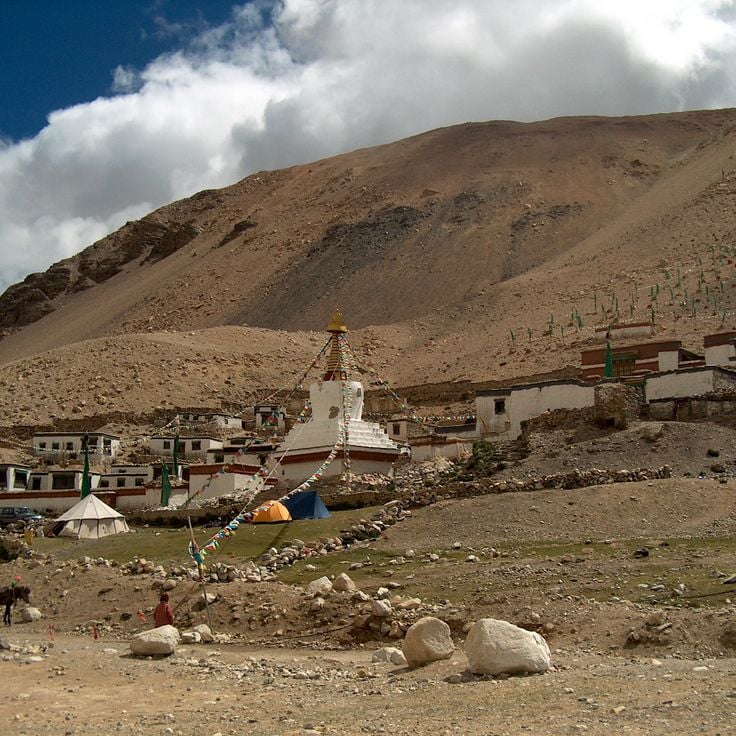
Rongbuk Monastery sits on the north side of Mount Everest, at one of the highest positions of any monastery in the world. It is part of a long tradition of Himalayan Buddhist communities that trace their roots back to the 11th century. The main hall and prayer rooms hold sacred texts and religious objects that carry deep meaning for the monks who live and worship here. A visit to Rongbuk gives a real sense of how Tibetan Buddhist life has continued in these mountains for hundreds of years.
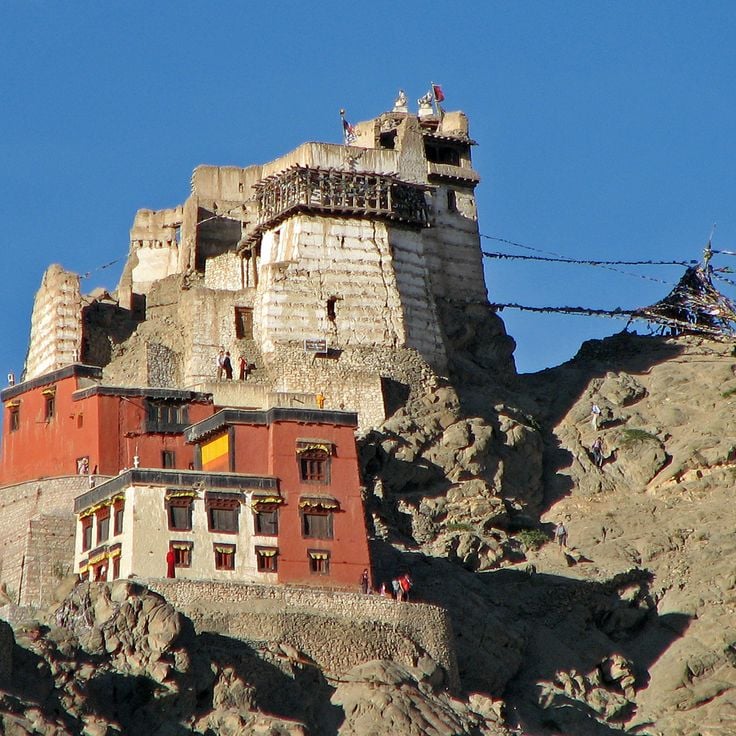
Namgyal Tsemo Gompa is a Buddhist monastery built in the 15th century on a hill above the city of Leh in Ladakh. From this high point, you can see the surrounding mountains and the town below. Inside, the monastery holds paintings, sacred texts, and old objects that have been cared for by monks over many generations. It follows the traditions of Tibetan Buddhism and remains a place where people come to pray and learn.
Rumtek Monastery sits in the hills of Sikkim and stands as one of the main centers of the Karma Kagyü tradition of Tibetan Buddhism. The complex traces its traditions back to the 16th century and holds religious artworks, sacred texts, and a school where monks live and study by rules passed down over generations. A visit here gives a real sense of a community that has shaped its daily life around the same values for hundreds of years.
Tawang Monastery sits high in the mountains of Arunachal Pradesh and is one of the largest Buddhist monasteries in India. Built in the 17th century, this complex brings together dozens of buildings, including a library that holds old texts and manuscripts. Monks live and study here according to the teachings of Tibetan Buddhism, and visitors can witness ceremonies, prayer rituals, and handmade religious art.
Key Monastery sits at around 4,000 meters (13,000 feet) in Himachal Pradesh and is part of a group of Buddhist sites in the Himalayas that have been active since the 11th century. The buildings hold thangkas, old wall paintings, and historical weapons. Like other monasteries in the region, Key Monastery is a place of prayer and learning for the Tibetan Buddhist community, where monks live, teach, and pass on the traditions of their faith.
Hemis Monastery sits in the mountains of Ladakh and is one of the most visited Buddhist monasteries in India. Built in the 17th century, it holds a copper statue of Buddha, a collection of old masks, and large painted hangings. Monks live and study here, following the traditions of Tibetan Buddhism, and the monastery remains an active place of prayer and learning.
Thiksey Monastery is a twelve-story complex built in the 15th century in Ladakh. Its red and white buildings rise above the surrounding landscape and echo the form of the Potala Palace. Like other monasteries in this collection, it holds thangka paintings, sacred texts, and religious objects, and it serves as a school where monks study and pass on Tibetan Buddhist teachings.
Phuktal Monastery clings to a cliff face in Ladakh and can only be reached on foot. Built into a natural cave, this monastery traces its roots to the 11th century. Around 70 monks live and study here, surrounded by thangka paintings, sacred texts, and old objects tied to Tibetan Buddhist practice. The walk to reach it is long, but the monastery remains a living place of faith and learning.
Rangdum Monastery sits on a hill in the Suru region of Ladakh, at around 13,100 feet (4,000 meters) above sea level, with mountains and glaciers all around. It belongs to the Tibetan Buddhist tradition and traces its roots back to the 11th century. Inside its buildings you find paintings, sacred texts, and religious objects. Monks still live and study here today, following the same customs as generations before them.
Diskit Monastery is the oldest monastery in the Nubra Valley and one of the most important centers of Tibetan Buddhism in Ladakh. A statue of Buddha Maitreya, about 100 feet (32 meters) tall, stands watch over the valley. Inside, ancient murals cover the walls, and religious texts have been read and passed down by monks for centuries. The monastery also works as a school where young monks learn the teachings of Tibetan Buddhism.
Alchi Monastery is one of the oldest Buddhist sites in Ladakh, dating back to the 11th century. Walking through its stone structures, you come across colored wall paintings showing Buddhist scenes and deities. This monastery holds sacred texts, works of art, and objects that carry deep meaning for those who follow Tibetan Buddhist traditions. It is a place where ways of life from centuries past are still very much present today.
Matho Monastery sits on a mountain peak in Ladakh and belongs to the Sakya tradition of Tibetan Buddhism. Built in the 15th century, it holds paintings, sacred texts, and ritual objects. Like other monasteries in the region, it is still a place of learning where monks study and pass on Buddhist teachings.
Palpung Monastery is a major center of the Karma Kagyu lineage, set in the mountains of the Tibet Autonomous Region. It holds a large library of Tibetan texts and serves as a school for Buddhist art. Monks here study and teach traditions that go back to the 11th century. A visit gives a real sense of how religious learning and artistic work have continued in this place for generations.
Samye Monastery is considered the first Buddhist monastery in Tibet, built in the 8th century around a mandala layout, with a central temple and four smaller temples surrounding it. The monastery holds old artworks, sacred texts, and objects that carry deep meaning for Tibetan Buddhism. It remains an active place of learning, where monks study and pass on the traditions of their faith.
Mindrolling Monastery is one of the most important Buddhist centers in the Himalayan region. It holds a large collection of religious texts and artworks rooted in traditions going back to the 11th century. Monks continue to study and teach here, making this monastery an active place of faith and learning where old ways of practice are passed on from one generation to the next.
Drigung Til Monastery sits high in the mountains of Tibet and belongs to the Kagyu tradition of Tibetan Buddhism. Since the 12th century, it has been known as a place where a sky burial ceremony is performed, offering the deceased to the heavens. Monks here study old texts, carry out rituals, and pass down teachings that have shaped this tradition for centuries.
Simbiling Monastery in Nepal is a working center of Buddhist learning and practice in the Himalayan mountains. It holds the traditions of the Sherpa community, with religious art, sacred texts, and objects that trace back to the 11th century. Monks study and teach Tibetan Buddhist traditions here, and a visit gives a real sense of a place where the same ways of life have continued for hundreds of years.
Thyangboche Monastery sits at an elevation of 3867 meters in Nepal and is part of a group of Himalayan monasteries where monks follow and pass on the teachings of Tibetan Buddhism. The buildings hold paintings, sacred texts, and objects made by hand over many generations. Visitors can watch ceremonies, see monks at their daily work, and get a real sense of how faith has shaped life in this part of the mountains for centuries.
Kopan Monastery sits on a hill at the edge of Kathmandu and is one of the active centers of Tibetan Buddhism in Nepal. Monks from Nepal and other countries come here to study Tibetan philosophy, meditation, and the rituals that have shaped Himalayan religious life since the 11th century. The monastery has meditation halls, a library of sacred texts, and living quarters for the community. Walking through the grounds, you get a clear sense of a place where daily life follows the rhythm of prayer, study, and practice.
Sakya Monastery in Shigatse was founded in the 11th century and stands as one of Tibet's oldest centers of Buddhist learning. Its thick grey walls hold one of the largest monastic libraries in the region, with around 84,000 scrolls. Inside, medieval religious paintings, sculptures, and ritual objects fill the rooms. Monks here study and teach Tibetan Buddhist traditions daily, making this monastery a living place of faith rather than simply a historical site.
Bardan Monastery sits in the Zanskar valley in Ladakh, where it has stood since the 17th century as a place of Tibetan Buddhist life and learning. Its prayer halls, library, and wall paintings give visitors a sense of how monks have practiced and passed on their faith across generations. The monastery is still active today, with monks studying sacred texts and carrying out daily rituals in the same way their predecessors did centuries ago.
Takthok Monastery is the only Nyingma school monastery in Ladakh. It is built around a natural cave where Guru Rinpoche is said to have meditated in the 8th century. Inside, you will find shrines, old Buddhist texts, and objects that monks have cared for across many generations. Visiting Takthok gives a sense of a living tradition, one that has shaped daily life in this part of the Himalayas for centuries.
Mulbekh Monastery sits in the Kargil district of Ladakh at around 3,500 meters (11,500 feet) above sea level and is one of the oldest Buddhist sites in the area. A Buddha figure about 30 feet (9 meters) tall is carved directly into the rock face and can be seen from the road. Inside, two prayer halls serve monks who study Tibetan Buddhist texts and carry out ceremonies. This monastery has been a living center of faith and learning in these mountains since the 11th century.
Shey Monastery sits on a rocky ridge in Ladakh and once served as the summer palace of the region's rulers. Built in the 17th century, it holds a tall copper statue of the Buddha inside a multi-story temple. The walls are covered with religious paintings showing scenes from Buddhist teachings. Monks come here to perform ceremonies, and the site remains an active place of prayer and memory for the local community.
Lamayuru Monastery is one of the oldest Buddhist monasteries in Ladakh, perched on a rocky hill in a bare mountain landscape. Monks have lived and studied here according to the teachings of Tibetan Buddhism since the 11th century. Inside, you will find old texts, thangka paintings, and religious objects that hold deep meaning for the community.
Likir Monastery sits in the hills of Ladakh and dates back to the 15th century. Like many places in this collection, it is a living center of Tibetan Buddhist faith, where monks study, pray, and carry traditions forward by hand. The monastery holds a museum of Tibetan objects and a gilded Buddha statue that rises about 75 feet (23 meters) above the grounds. Walking through it gives a clear sense of how monastic life in the Himalayas has looked for generations.
Ganden Monastery sits on a hilltop east of Lhasa and is one of the three great Gelug university monasteries of Tibet. The monastery was destroyed in 1959 and rebuilt in the years that followed. Today, monks study sacred texts, take part in ceremonies, and carry on the teaching traditions of Tibetan Buddhism within its walls, surrounded by art collections and religious objects that date back many centuries.
Drepung Monastery sits in the Tibet Autonomous Region and is one of the largest monastic complexes in the Himalayan mountains. Its history goes back to the 15th century. The monastery holds collections of sacred texts, religious objects, and works of art that are deeply rooted in Tibetan Buddhist tradition. Monks live and study here, passing on the teachings of Tibetan Buddhism. Walking through the buildings gives a real sense of how centuries of religious life have shaped every corner of this place.
Tashilhunpo Monastery, in the city of Shigatse, is the traditional seat of the Panchen Lamas. Its main hall holds one of the largest gilded statues of Maitreya Buddha in Tibet. The walls are covered with old murals showing scenes from Buddhist life. Monks live and study here following the same rules and texts passed down since the 15th century. This monastery is one of the active centers of Tibetan Buddhism in the Himalayan mountains.
Kyichu Lhakhang is one of the oldest Buddhist temples in Bhutan, dating back to the 7th century. Located in the Paro valley, it holds ancient statues and wall paintings that have been cared for by monks and pilgrims across many generations. The temple follows a Tibetan style of construction and remains an active place of prayer and devotion today.
Rongbuk Monastery sits on the north side of Mount Everest, at one of the highest positions of any monastery in the world. It is part of a long tradition of Himalayan Buddhist communities that trace their roots back to the 11th century. The main hall and prayer rooms hold sacred texts and religious objects that carry deep meaning for the monks who live and worship here. A visit to Rongbuk gives a real sense of how Tibetan Buddhist life has continued in these mountains for hundreds of years.
Namgyal Tsemo Gompa is a Buddhist monastery built in the 15th century on a hill above the city of Leh in Ladakh. From this high point, you can see the surrounding mountains and the town below. Inside, the monastery holds paintings, sacred texts, and old objects that have been cared for by monks over many generations. It follows the traditions of Tibetan Buddhism and remains a place where people come to pray and learn.
Rumtek Monastery sits in the hills of Sikkim and stands as one of the main centers of the Karma Kagyü tradition of Tibetan Buddhism. The complex traces its traditions back to the 16th century and holds religious artworks, sacred texts, and a school where monks live and study by rules passed down over generations. A visit here gives a real sense of a community that has shaped its daily life around the same values for hundreds of years.
Tawang Monastery sits high in the mountains of Arunachal Pradesh and is one of the largest Buddhist monasteries in India. Built in the 17th century, this complex brings together dozens of buildings, including a library that holds old texts and manuscripts. Monks live and study here according to the teachings of Tibetan Buddhism, and visitors can witness ceremonies, prayer rituals, and handmade religious art.
Key Monastery sits at around 4,000 meters (13,000 feet) in Himachal Pradesh and is part of a group of Buddhist sites in the Himalayas that have been active since the 11th century. The buildings hold thangkas, old wall paintings, and historical weapons. Like other monasteries in the region, Key Monastery is a place of prayer and learning for the Tibetan Buddhist community, where monks live, teach, and pass on the traditions of their faith.
Hemis Monastery sits in the mountains of Ladakh and is one of the most visited Buddhist monasteries in India. Built in the 17th century, it holds a copper statue of Buddha, a collection of old masks, and large painted hangings. Monks live and study here, following the traditions of Tibetan Buddhism, and the monastery remains an active place of prayer and learning.
Thiksey Monastery is a twelve-story complex built in the 15th century in Ladakh. Its red and white buildings rise above the surrounding landscape and echo the form of the Potala Palace. Like other monasteries in this collection, it holds thangka paintings, sacred texts, and religious objects, and it serves as a school where monks study and pass on Tibetan Buddhist teachings.
Phuktal Monastery clings to a cliff face in Ladakh and can only be reached on foot. Built into a natural cave, this monastery traces its roots to the 11th century. Around 70 monks live and study here, surrounded by thangka paintings, sacred texts, and old objects tied to Tibetan Buddhist practice. The walk to reach it is long, but the monastery remains a living place of faith and learning.
Rangdum Monastery sits on a hill in the Suru region of Ladakh, at around 13,100 feet (4,000 meters) above sea level, with mountains and glaciers all around. It belongs to the Tibetan Buddhist tradition and traces its roots back to the 11th century. Inside its buildings you find paintings, sacred texts, and religious objects. Monks still live and study here today, following the same customs as generations before them.
Diskit Monastery is the oldest monastery in the Nubra Valley and one of the most important centers of Tibetan Buddhism in Ladakh. A statue of Buddha Maitreya, about 100 feet (32 meters) tall, stands watch over the valley. Inside, ancient murals cover the walls, and religious texts have been read and passed down by monks for centuries. The monastery also works as a school where young monks learn the teachings of Tibetan Buddhism.
Alchi Monastery is one of the oldest Buddhist sites in Ladakh, dating back to the 11th century. Walking through its stone structures, you come across colored wall paintings showing Buddhist scenes and deities. This monastery holds sacred texts, works of art, and objects that carry deep meaning for those who follow Tibetan Buddhist traditions. It is a place where ways of life from centuries past are still very much present today.
Matho Monastery sits on a mountain peak in Ladakh and belongs to the Sakya tradition of Tibetan Buddhism. Built in the 15th century, it holds paintings, sacred texts, and ritual objects. Like other monasteries in the region, it is still a place of learning where monks study and pass on Buddhist teachings.
Palpung Monastery is a major center of the Karma Kagyu lineage, set in the mountains of the Tibet Autonomous Region. It holds a large library of Tibetan texts and serves as a school for Buddhist art. Monks here study and teach traditions that go back to the 11th century. A visit gives a real sense of how religious learning and artistic work have continued in this place for generations.
Samye Monastery is considered the first Buddhist monastery in Tibet, built in the 8th century around a mandala layout, with a central temple and four smaller temples surrounding it. The monastery holds old artworks, sacred texts, and objects that carry deep meaning for Tibetan Buddhism. It remains an active place of learning, where monks study and pass on the traditions of their faith.
Mindrolling Monastery is one of the most important Buddhist centers in the Himalayan region. It holds a large collection of religious texts and artworks rooted in traditions going back to the 11th century. Monks continue to study and teach here, making this monastery an active place of faith and learning where old ways of practice are passed on from one generation to the next.
Drigung Til Monastery sits high in the mountains of Tibet and belongs to the Kagyu tradition of Tibetan Buddhism. Since the 12th century, it has been known as a place where a sky burial ceremony is performed, offering the deceased to the heavens. Monks here study old texts, carry out rituals, and pass down teachings that have shaped this tradition for centuries.
Simbiling Monastery in Nepal is a working center of Buddhist learning and practice in the Himalayan mountains. It holds the traditions of the Sherpa community, with religious art, sacred texts, and objects that trace back to the 11th century. Monks study and teach Tibetan Buddhist traditions here, and a visit gives a real sense of a place where the same ways of life have continued for hundreds of years.
Thyangboche Monastery sits at an elevation of 3867 meters in Nepal and is part of a group of Himalayan monasteries where monks follow and pass on the teachings of Tibetan Buddhism. The buildings hold paintings, sacred texts, and objects made by hand over many generations. Visitors can watch ceremonies, see monks at their daily work, and get a real sense of how faith has shaped life in this part of the mountains for centuries.
Kopan Monastery sits on a hill at the edge of Kathmandu and is one of the active centers of Tibetan Buddhism in Nepal. Monks from Nepal and other countries come here to study Tibetan philosophy, meditation, and the rituals that have shaped Himalayan religious life since the 11th century. The monastery has meditation halls, a library of sacred texts, and living quarters for the community. Walking through the grounds, you get a clear sense of a place where daily life follows the rhythm of prayer, study, and practice.
Sakya Monastery in Shigatse was founded in the 11th century and stands as one of Tibet's oldest centers of Buddhist learning. Its thick grey walls hold one of the largest monastic libraries in the region, with around 84,000 scrolls. Inside, medieval religious paintings, sculptures, and ritual objects fill the rooms. Monks here study and teach Tibetan Buddhist traditions daily, making this monastery a living place of faith rather than simply a historical site.
Bardan Monastery sits in the Zanskar valley in Ladakh, where it has stood since the 17th century as a place of Tibetan Buddhist life and learning. Its prayer halls, library, and wall paintings give visitors a sense of how monks have practiced and passed on their faith across generations. The monastery is still active today, with monks studying sacred texts and carrying out daily rituals in the same way their predecessors did centuries ago.
Takthok Monastery is the only Nyingma school monastery in Ladakh. It is built around a natural cave where Guru Rinpoche is said to have meditated in the 8th century. Inside, you will find shrines, old Buddhist texts, and objects that monks have cared for across many generations. Visiting Takthok gives a sense of a living tradition, one that has shaped daily life in this part of the Himalayas for centuries.
Mulbekh Monastery sits in the Kargil district of Ladakh at around 3,500 meters (11,500 feet) above sea level and is one of the oldest Buddhist sites in the area. A Buddha figure about 30 feet (9 meters) tall is carved directly into the rock face and can be seen from the road. Inside, two prayer halls serve monks who study Tibetan Buddhist texts and carry out ceremonies. This monastery has been a living center of faith and learning in these mountains since the 11th century.
Shey Monastery sits on a rocky ridge in Ladakh and once served as the summer palace of the region's rulers. Built in the 17th century, it holds a tall copper statue of the Buddha inside a multi-story temple. The walls are covered with religious paintings showing scenes from Buddhist teachings. Monks come here to perform ceremonies, and the site remains an active place of prayer and memory for the local community.
Lamayuru Monastery is one of the oldest Buddhist monasteries in Ladakh, perched on a rocky hill in a bare mountain landscape. Monks have lived and studied here according to the teachings of Tibetan Buddhism since the 11th century. Inside, you will find old texts, thangka paintings, and religious objects that hold deep meaning for the community.
Likir Monastery sits in the hills of Ladakh and dates back to the 15th century. Like many places in this collection, it is a living center of Tibetan Buddhist faith, where monks study, pray, and carry traditions forward by hand. The monastery holds a museum of Tibetan objects and a gilded Buddha statue that rises about 75 feet (23 meters) above the grounds. Walking through it gives a clear sense of how monastic life in the Himalayas has looked for generations.
Ganden Monastery sits on a hilltop east of Lhasa and is one of the three great Gelug university monasteries of Tibet. The monastery was destroyed in 1959 and rebuilt in the years that followed. Today, monks study sacred texts, take part in ceremonies, and carry on the teaching traditions of Tibetan Buddhism within its walls, surrounded by art collections and religious objects that date back many centuries.
Drepung Monastery sits in the Tibet Autonomous Region and is one of the largest monastic complexes in the Himalayan mountains. Its history goes back to the 15th century. The monastery holds collections of sacred texts, religious objects, and works of art that are deeply rooted in Tibetan Buddhist tradition. Monks live and study here, passing on the teachings of Tibetan Buddhism. Walking through the buildings gives a real sense of how centuries of religious life have shaped every corner of this place.
Tashilhunpo Monastery, in the city of Shigatse, is the traditional seat of the Panchen Lamas. Its main hall holds one of the largest gilded statues of Maitreya Buddha in Tibet. The walls are covered with old murals showing scenes from Buddhist life. Monks live and study here following the same rules and texts passed down since the 15th century. This monastery is one of the active centers of Tibetan Buddhism in the Himalayan mountains.
Kyichu Lhakhang is one of the oldest Buddhist temples in Bhutan, dating back to the 7th century. Located in the Paro valley, it holds ancient statues and wall paintings that have been cared for by monks and pilgrims across many generations. The temple follows a Tibetan style of construction and remains an active place of prayer and devotion today.
Rongbuk Monastery sits on the north side of Mount Everest, at one of the highest positions of any monastery in the world. It is part of a long tradition of Himalayan Buddhist communities that trace their roots back to the 11th century. The main hall and prayer rooms hold sacred texts and religious objects that carry deep meaning for the monks who live and worship here. A visit to Rongbuk gives a real sense of how Tibetan Buddhist life has continued in these mountains for hundreds of years.
Namgyal Tsemo Gompa is a Buddhist monastery built in the 15th century on a hill above the city of Leh in Ladakh. From this high point, you can see the surrounding mountains and the town below. Inside, the monastery holds paintings, sacred texts, and old objects that have been cared for by monks over many generations. It follows the traditions of Tibetan Buddhism and remains a place where people come to pray and learn.
When planning your visit, bring layers of clothing and sturdy shoes, as the high altitude and mountain terrain demand preparation. Many monasteries welcome visitors during morning prayers, which offer the most authentic glimpse into daily monastic life. Respect local customs by removing your shoes when entering sacred spaces and asking permission before photographing monks or rituals.