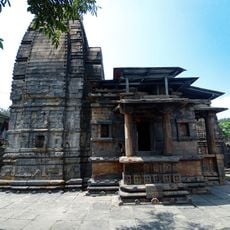
Simbiling Monastery, Buddhist monastery near Taklakot, China
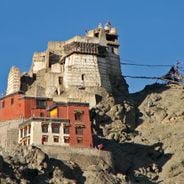
Simbiling Monastery, also called Shepeling Dzong, stands on a ridge above Taklakot and the Karnali River, next to the fort of Tegla Kar. The ruined complex held over 100 rooms, a regional administrator's fort and a smaller Sakya monastery. Below it lies a ridge of cave dwellings, and the Gelug temple Tsegu Gompa, reached by ladders, sits beneath the site.
The fortress site dates to the 12th century, when it was the administrative seat of the rulers (dpon po) of Purang; it later became the main Gelugpa monastery of Purang, with a smaller Sakyapa monastery in the complex. In 1841 General Zorawar Singh garrisoned Shepeling Dzong during the Dogra campaign in western Tibet. Chinese artillery flattened the complex in 1967, and rebuilding began in 2003 under Trugo Lama Lobsang Samten.
The monastery's Tibetan name, bshad phel gling, means "place where teaching flourishes." It was the main Gelugpa monastery of Purang and the seat of the local rulers (dpon po). A smaller Sakya monastery stood within the same complex, and the site is also called Shepeling Dzong after its fort.
Access throughout the site involves using stairs and ladders to navigate between different elevation levels. Visitors should prepare for mountainous terrain and altitude as movement between areas requires physical effort.
Tsegu Gompa, the "Nine-Story Monastery" below the ruined dzong, may have begun as a Bon establishment before passing to the Gelug sect. Its terraced levels are reached by ladders, and it is the one part of the complex that survived the 1967 destruction.
The community of curious travelers
AroundUs brings together thousands of curated places, local tips, and hidden gems, enriched daily by 93,421 contributors worldwide.