Trisul, Mountain massif in Chamoli district, Uttarakhand, India
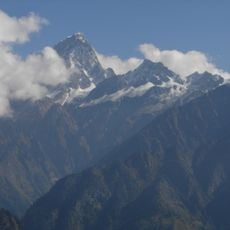
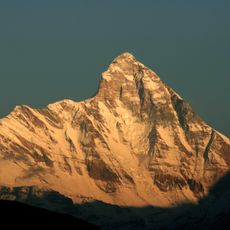
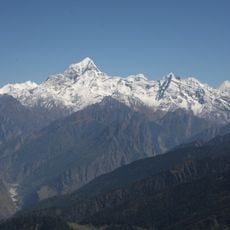
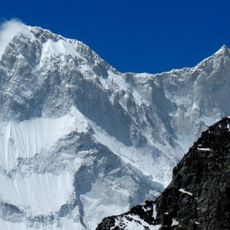
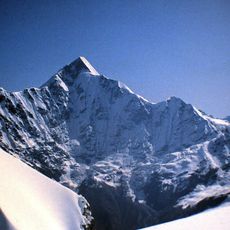
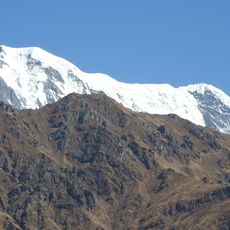
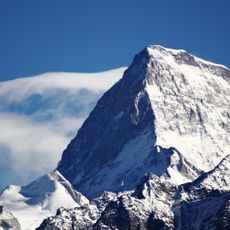
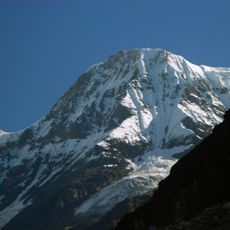
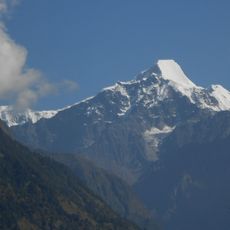
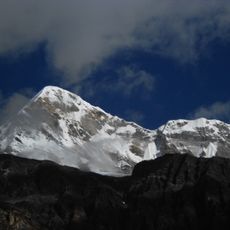
Trisul is a massif of three summits in the Chamoli district (Garhwal) of Uttarakhand, India, forming a north-south ridge. Trisul I, at the northern end, reaches 7,120 metres; Trisul II and Trisul III lie to the south. The group forms the southwest corner of the ring of peaks around the Nanda Devi Sanctuary, about 15 kilometres west-southwest of Nanda Devi.
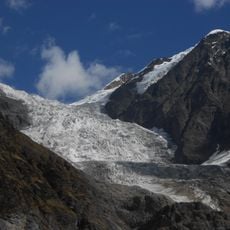
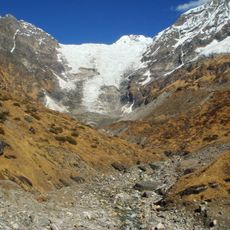
T. G. Longstaff reconnoitred Trisul in September 1905, then returned in 1907 with Charles Granville Bruce, Arnold L. Mumm, Alpine guides Moritz Inderbinnen and the brothers Henri and Alexis Brocherel, and Gurkhas including Karbir Burathoki. They climbed through the Rishiganga valley to the Trisul Glacier and reached the summit on 12 June 1907, the first peak above 7,000 m to be climbed. The ascent used supplementary oxygen, a first in a major climb.
The name Trisul, or Trishul, comes from the Sanskrit word trishula, the trident wielded by the god Shiva, and refers to the three summits lined up along the ridge. From Kausani and Bedini Bugyal the three points read as a trident; from Ranikhet and Kausani, to the south, the north-south ridge looks compressed.
Access to the mountain involves traveling through multiple locations including Almora, Kausani, and Gwaldam before reaching higher camps near the peak. Visitors should plan for proper acclimatization and allow sufficient time to adjust to the different altitudes along the route.
Trisul I's 1907 ascent by T. G. Longstaff, Charles Granville Bruce and Arnold L. Mumm was the first time supplementary oxygen was used on a major climb. The summit, reached on 12 June, was probably the highest yet climbed, a record kept until Pauhunri in 1911.
The community of curious travelers
AroundUs brings together thousands of curated places, local tips, and hidden gems, enriched daily by 92,777 contributors worldwide.