Valley of Flowers National Park, National park in Chamoli district, Uttarakhand, India
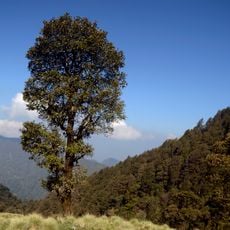
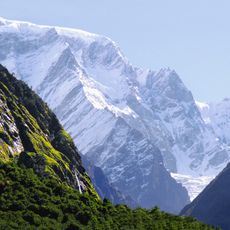
The Valley of Flowers is a high-altitude meadow in Uttarakhand, sitting at around 3,600 meters and home to several hundred flower species. The area spreads across steep slopes and open fields that turn into a sea of purple, yellow, and red blooms during the monsoon.
A British mountaineer came across the valley in 1931 during an expedition and later published a report that drew international attention. The Indian government declared the area a national park in 1982 to protect the delicate flora from overgrazing and tourism.
The valley lies in the Pushpawati river valley, in the upper reaches of the Bhyundar Ganga; its lower stretch near Govindghat is called Bhyundar Valley. A Hindi account records a legend that Hanuman came here searching for the sanjeevani herb. In September the Brahmakamal blooms.
Visiting requires a multi-day trek that starts in Pulna and passes through Ghangaria, a village that serves as base camp. The best time is between July and September, when the blooms reach their peak and the trails are passable.
The valley was inscribed as a UNESCO World Heritage site in 1988, not 1982, as part of Nanda Devi National Park; in 2000 it was added as a second core zone of the Nanda Devi Biosphere Reserve. Botanist Joan Margaret Legge of Kew died here in 1939 after slipping on a rocky slope while collecting flowers, and her sister erected a memorial near the spot.
The community of curious travelers
AroundUs brings together thousands of curated places, local tips, and hidden gems, enriched daily by 92,079 contributors worldwide.