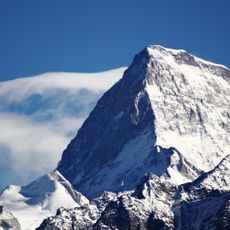
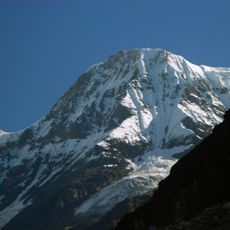
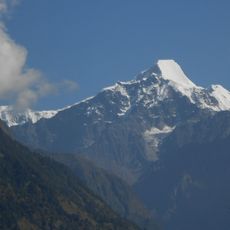
Tirsuli, Mountain summit in Pithoragarh district, India.
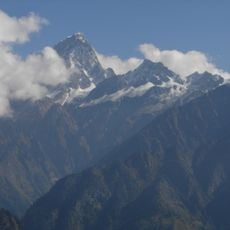
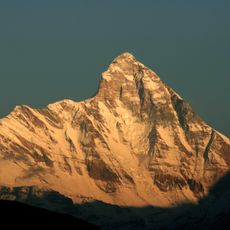
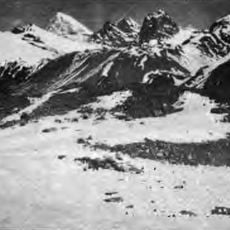
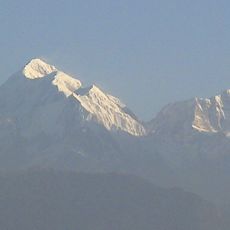
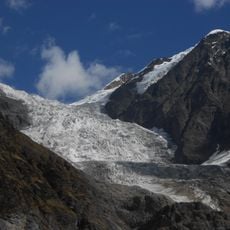
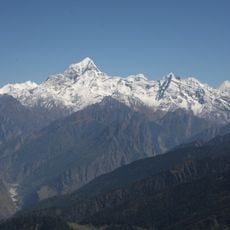
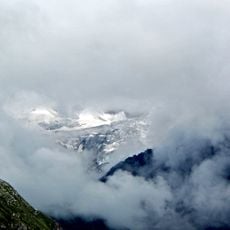
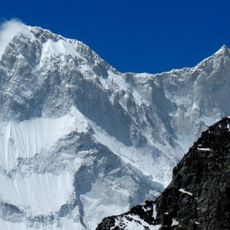
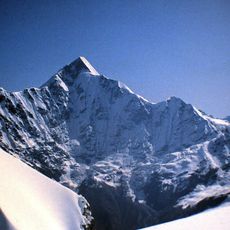
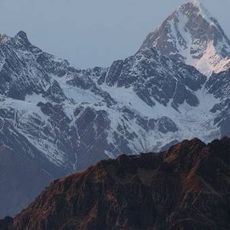
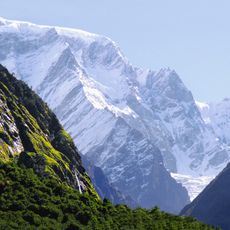
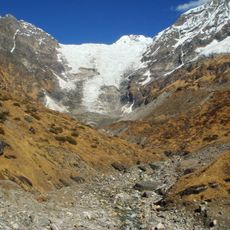
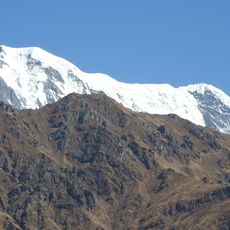
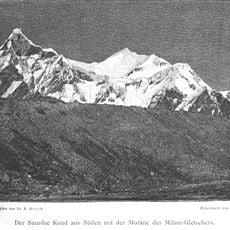
Tirsuli is a 7,074 meter summit in Uttarakhand that forms the northeast wall of Nanda Devi sanctuary alongside Hardeol, Dunagiri, and Changabang peaks. The terrain features steep mountainsides and glaciers that define the approach to this remote high peak.
In 1939 a Polish expedition attempting Nanda Devi East tried Tirsuli; a night avalanche buried Camp 3 at about 6,150 m, killing leader Adam Karpinski and Stefan Bernadzikiewicz. Indian teams failed in 1964 (Mohan Singh Kohli) and 1965 (K. P. Sharma, turning back near 5,500 m). On 9 October 1966 a Himalayan Association of Calcutta team led by Chanchal Kumar Mitra summited via the east face and south-east ridge from Camp 5 at about 6,660 m; Nirapada Mallik, Shyamal Chakrabarty, Nima Tashi and Dorji Sherpa reached the top.
Tirsuli rises at the northern end of the Johar Valley, above the Ghori Ganga, and is often confused with Trisul, a separate peak on the southwest side of the Nanda Devi Sanctuary. The name is shared with the trident of Hindu tradition, but the sources give no account of how the peak received it.
Munsiyari serves as the main base for expeditions, reachable by bus and taxi from nearby towns like Kathgodam. Climbing requires serious preparation and acclimatization time, so plan well in advance and hire experienced local guides.
Tirsuli is often confused with Trisul, a separate peak on the southwest side of the Nanda Devi Sanctuary. The 1939 Polish expedition that attempted Tirsuli was the same team that had just succeeded on Nanda Devi East; its leader Adam Karpinski and climber Stefan Bernadzikiewicz died when an ice-snow avalanche buried Camp 3 at about 6,150 m on the night of 18/19 July 1939.
The community of curious travelers
AroundUs brings together thousands of curated places, local tips, and hidden gems, enriched daily by 92,737 contributors worldwide.