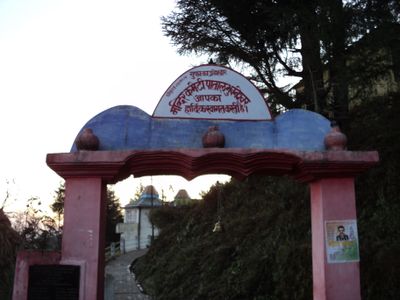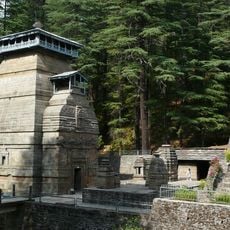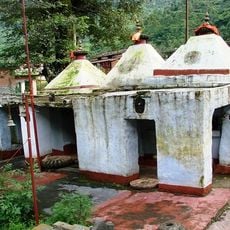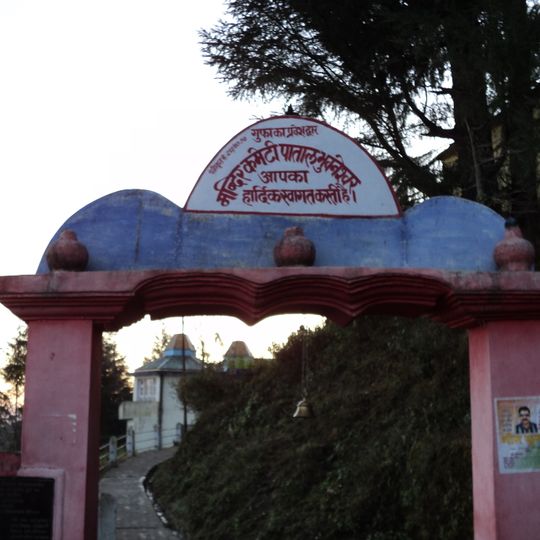
Patal Bhuvaneshwar, Hindu cave temple in Pithoragarh district, India.
Patal Bhuvaneshwar is a limestone cave temple reached through a narrow tunnel-like opening; inside, a series of caves within caves descends about 90 feet and runs some 160 metres, fully lit by electric light. Water-formed stalactites and stalagmites in varied hues line the chambers, and a brass bell hangs at the entrance gate.
According to tradition, King Rituparna of the Surya dynasty discovered the cave in the Treta Yuga, and it was later closed for ages. In the Kali Yuga, Adi Shankaracharya reached it around 1191 AD, the start of its recorded pilgrimage history; the Hindi source places this around 822 AD and credits him with installing a copper Shiva lingam. The Bhandari priest family has performed rites here since his time, over more than 20 generations.
The cave is named Patal Bhuvaneshwar, meaning the underworld abode of Shiva, and its rock formations are read as figures from Hindu myth: a Sheshnag holding the earth, Brahma's swan on the walls, and an elephant with a thousand legs. A havan kund inside is said to be where Janamejaya performed the snake sacrifice. The Bhandari priest family has served here for more than twenty generations, since Adi Shankaracharya's time.
Exploration happens in guided groups since the cave is dark and complex, and most visitors need help navigating the passages. Wear sturdy shoes and bring a jacket, as the floor is uneven and the underground temperature stays consistently cool.
Inside the cave is a Shiva lingam said to grow continuously; it now stands about 1.50 feet tall, with a reachable length of three feet. Devotees hold that when it touches the cave roof, the world will end. The Bhandari priest family has served here for more than 20 generations.
The community of curious travelers
AroundUs brings together thousands of curated places, local tips, and hidden gems, enriched daily by 92,697 contributors worldwide.