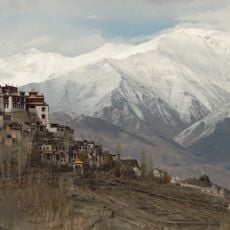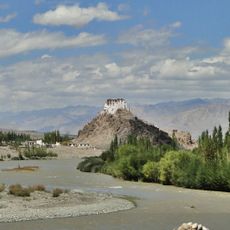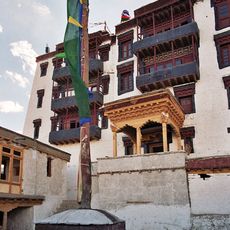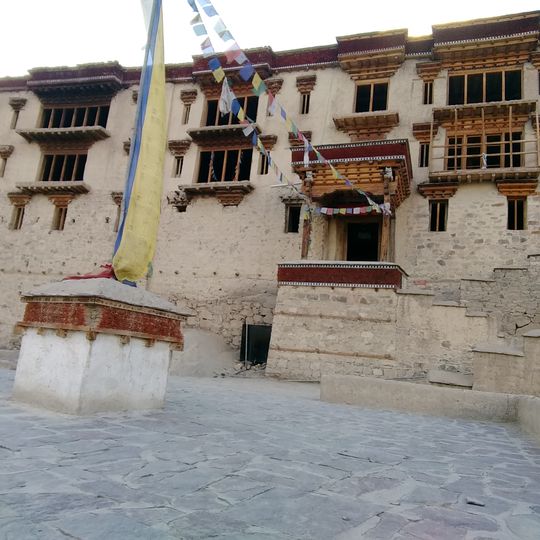
Shey Monastery, Buddhist monastery in Leh district, India
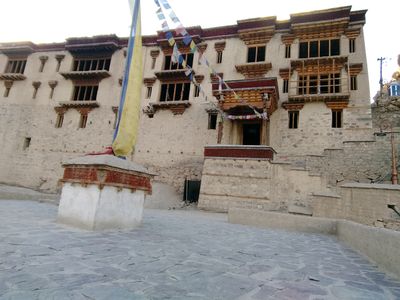
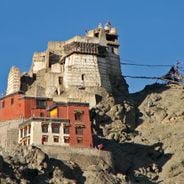
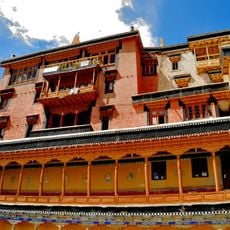
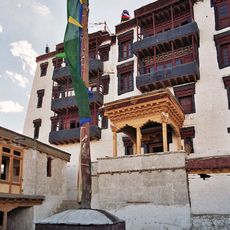
Shey Monastery is a complex combining palace sections and religious structures in Leh district. At its core stands a large Buddha statue made of copper and gold, spanning three levels within the building.
The palace sections of this site date back to the 10th century under King Lhachen Palgyigon, while the monastery structures visible today were built in 1655. The different construction periods show how the complex evolved over centuries.
The site holds two annual celebrations tied to the farming seasons: one during sowing and another at harvest time. These festivals continue to shape the rhythm of local life in the region.
Access to this place requires special permission, so visitors should arrange ahead of time. A hotel located in the surrounding gardens offers accommodation for those wishing to stay nearby.
The 12-metre Buddha was cast in pieces at Zanstin in Leh, where 'zans' means copper and 'til' means hammer. Copper from the Lingshet mines and other Zanskar villages was hammered into plates on nearby rocks, then carried to Shey for assembly; about 5 kg of gold gilded the surface. A Nepalese sculptor, Sanga Zargar Wanduk, is credited with the work.
The community of curious travelers
AroundUs brings together thousands of curated places, local tips, and hidden gems, enriched daily by 92,664 contributors worldwide.