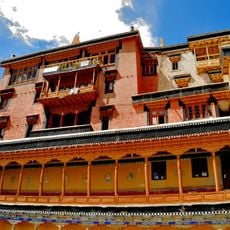
Rizong Monastery, Buddhist monastery in Leh district, India.
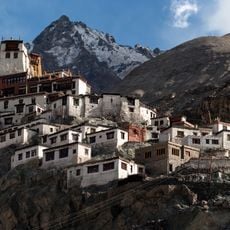
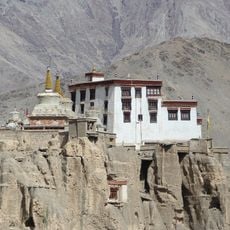
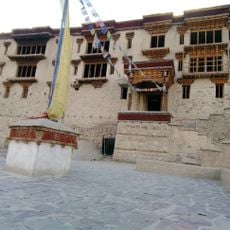
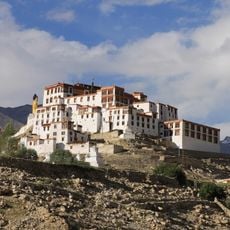
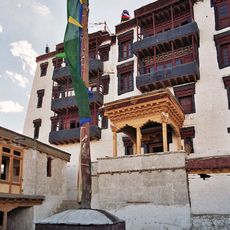
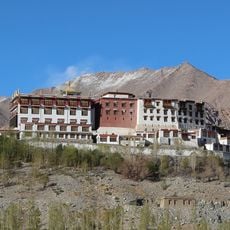
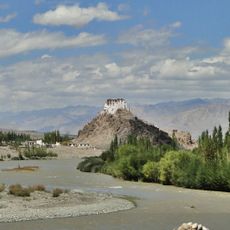
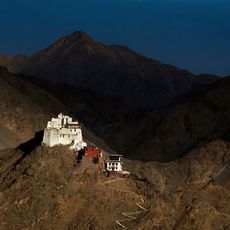
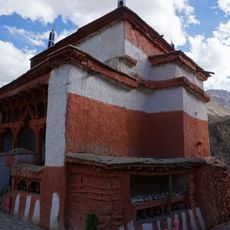
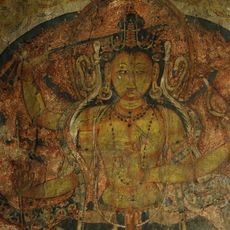
Rizong Monastery, also called Yuma Changchubling, stands at the top of a rocky side valley on the north bank of the Indus, west of Alchi. Its three large chambers hold two halls with Buddha idols and a third housing a stupa; the central relic shrine, or Sku-Gdung, contains the founder's relics and is surrounded by frescoes of Dharma-rajas and other deities.
Lama Tsultim Nima first set up a hermitage at rDzong-lung in the 18th century, where monks lived in mud huts under strict Vinaya rules. As disciples multiplied, he moved the community to Ri-rdzong, a site with water and fuel, and built the present monastery in 1831 with donations and voluntary village labour. The Ladakhi king gave rich donations and the queen made a pilgrimage there.
The name Rizong comes from the Tibetan ri rdzong, "mountain fort-monastery". Because it upholds the Vinaya in the strictest sense, the lamas here perform no masked dances and few elaborate rites. The community is divided into lamas, chomos (nuns of the dependent nunnery) and lay people, each with defined duties.
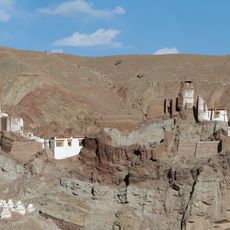
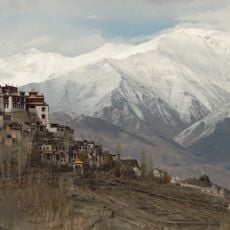
Rizong lies up a rocky side valley on the north bank of the Indus, west of Alchi on the road toward Lamayuru; from that road a track turns north and climbs to the monastery. The Jelichun nunnery stands about 2 km away, a short walk from the gompa. The site is reached by vehicle from Leh via the Srinagar-Leh highway, and the last stretch is rough going.
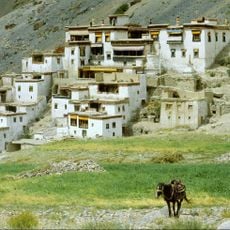
The nunnery, called Chulichan or Chomoling, lies about 2 km from the monastery and houses roughly 20 nuns under Rizong's authority. Its board assigns the nuns tasks for the monastery, and many older nuns work all day in the fields, pressing apricot oil, spinning wool and milking cows, while younger educated nuns devote themselves to philosophy and meditation.
The community of curious travelers
AroundUs brings together thousands of curated places, local tips, and hidden gems, enriched daily by 92,724 contributors worldwide.