Leh Palace, Royal palace in Leh, India
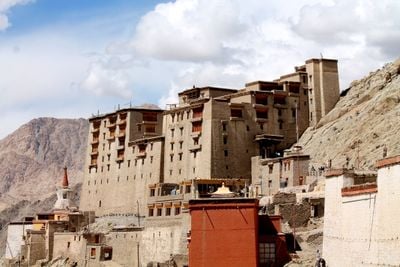
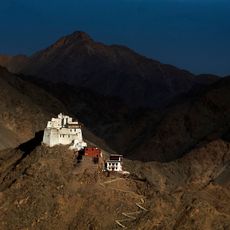
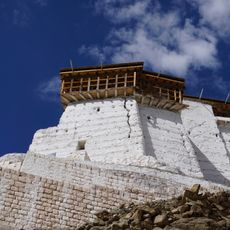
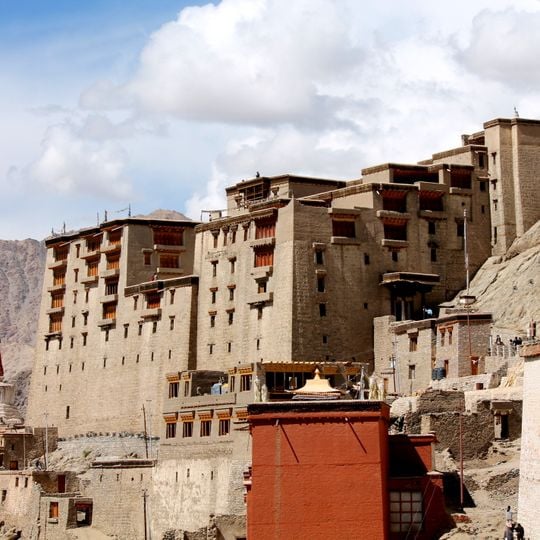
Leh Palace is a nine-story stone structure built in the 1600s that sits at the base of Tsemo ridge, combining thick walls with traditional Tibetan architecture throughout. The building features dense masonry interlaced with wooden beams, narrow stairways, and vaulted rooms arranged across multiple levels.
King Sengge Namgyal ordered its construction around 1600 when Leh was a major trading post on the Silk Road. The building served as the royal seat until military invasions in the 1800s transformed the region and weakened royal authority.
This structure served as the seat of royal authority and reflects how power was expressed through both architecture and spiritual practice. The rooms display how rulers connected their governance with Buddhist beliefs and traditions.
The palace can be explored during daylight hours with each level reachable on foot, though the staircases are narrow and steep. Good footwear and patience with climbing are important, as the ascent can be tiring and the air thins at higher elevations.
The fourth floor houses a temple with an image of the thousand-armed deity Tara, a figure with her own devotional following in the region. The temple shows how royal architecture and Buddhist spirituality were closely woven together.
The community of curious travelers
AroundUs brings together thousands of curated places, local tips, and hidden gems, enriched daily by 91,358 contributors worldwide.