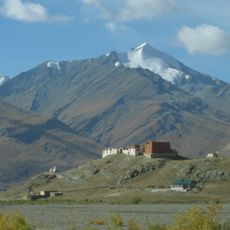
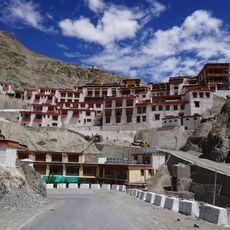
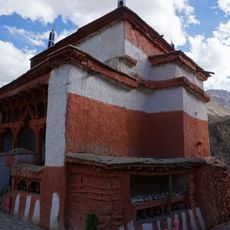
Mulbekh Monastery, Tibetan Buddhist monastery in Kargil district, India.
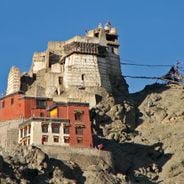
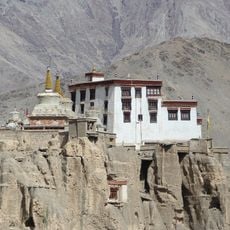
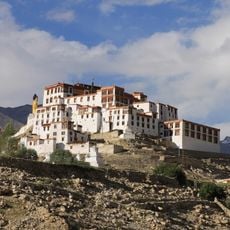
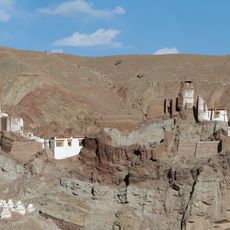
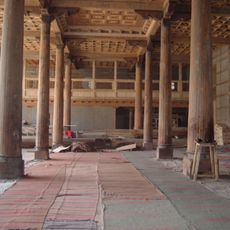
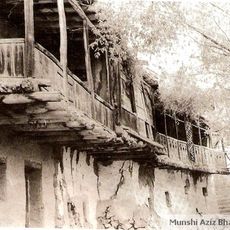
Mulbekh Monastery is a pair of gompas on a crag about 200 m above the Kargil-Leh highway: Serdung Gompa of the Drukpa lineage and Rgaldan-se Gompa of the Gelugpa lineage, the latter founded by Tungba Lzawa (Agu Tungba) and renovated in 2016. The oldest section, the Nyima Lhakhang, was built about 800 years ago by students of Lotsawa Rinchen Zangpo. A steep footpath winds up from behind the former palace of Rajah Kalon of Mulbekh.
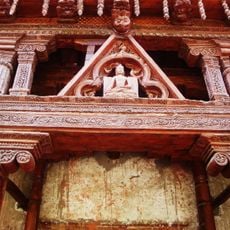
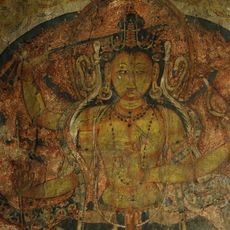
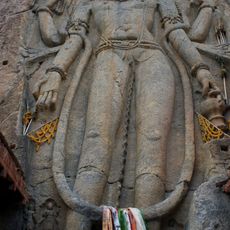
The Nyima Lhakhang, the oldest section, was built about 800 years ago by students of the Tibetan scholar Lotsawa Rinchen Zangpo. The Serdung Gompa belongs to the Drukpa lineage, while the Rgaldan-se Gompa of the Gelugpa lineage was founded by Tungba Lzawa, also called Agu Tungba, and renovated in 2016. The nearby cliff statue of Maitreya is dated by modern scholars to around the 8th century.
The name Chamba comes from the local word for Maitreya, the Buddha to come. The Kharosthi edict of King Lde, carved around 1400 CE, ordered the people of Mulbekh to stop sacrificing goats; a second inscription on the same rock replies that the order was too hard to keep, asking what the local deity would say if the goat were withheld.
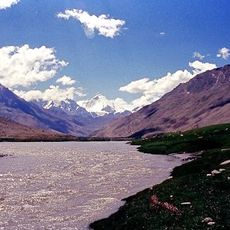
Visitors must climb a steep footpath branching from the Leh-Kargil highway, requiring moderate physical effort to reach the site. The optimal visiting window is June through September when mountain weather conditions stabilize and make access feasible.
The Kharosthi edict on the rock beside the Chamba statue was carved for King Bhum Ide (Tsongkapa), ruler of western Ladakh around 1400 CE, ordering the people of Mulbekh to stop sacrificing goats. A second inscription on the same rock records that the villagers found the order too hard to keep, asking what their local deity would say if the goat were withheld.
The community of curious travelers
AroundUs brings together thousands of curated places, local tips, and hidden gems, enriched daily by 92,781 contributors worldwide.