Chaqchan Mosque, Historic mosque in Khaplu, Pakistan
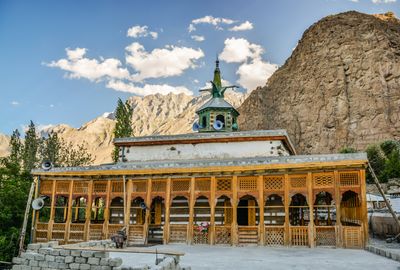
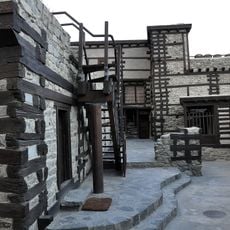
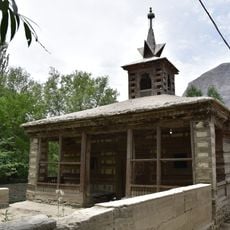
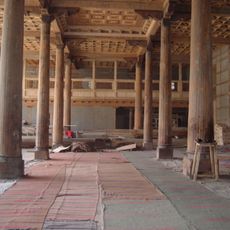
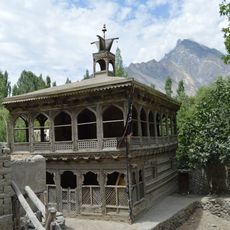
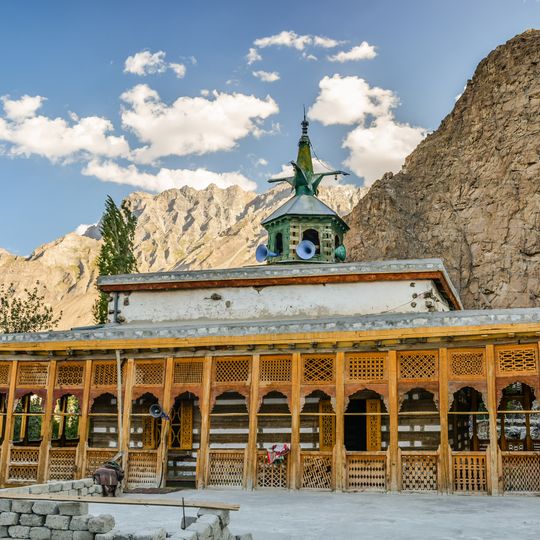
Chaqchan Mosque is a two-story stone and timber building in Khaplu, in the Gilgit-Baltistan region of northern Pakistan. It sits on sloping ground with a semi-basement level, an open courtyard, and a small turret rising from the roof.
The mosque dates to around 1370, a period when communities in the upper Indus valley began converting from Buddhism to Islam, largely through the influence of the scholar Mir Syed Hamdani. It is one of the earliest surviving structures from that turning point in the region.
The carved wooden columns and clay-filled timber walls of this mosque reflect a building tradition rarely seen elsewhere in the region. Visitors can observe how local craftsmen combined Tibetan, Persian, and Central Asian forms into a single style during the prayer hall and its decorated niche.
The mosque sits in the old part of Khaplu and can be reached on foot from the town center, though the ground is uneven and some steps are steep. Roads to Khaplu can become difficult in winter, so a visit during the warmer months makes getting there much easier.
The prayer niche inside, the mihrab, is made entirely of carved wood rather than tile or plaster, which is unusual for mosques in this part of the world. The wooden lattice panels on the facade were cut from timber found in the surrounding forests rather than brought from distant areas.
The community of curious travelers
AroundUs brings together thousands of curated places, local tips, and hidden gems, enriched daily by 90,777 contributors worldwide.