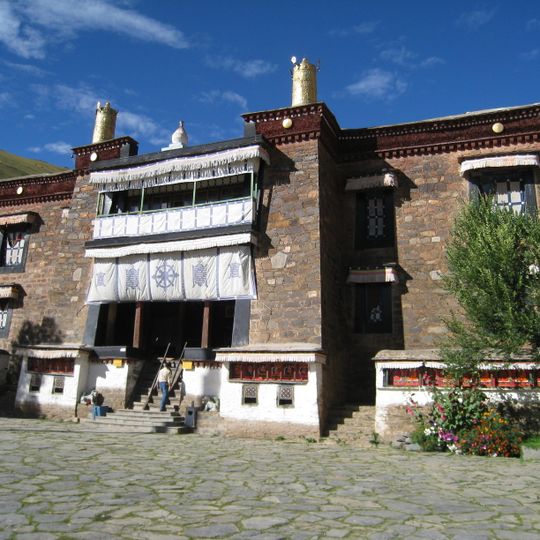
Mindroling Monastery, Buddhist monastery in Zhanang County, Tibet, China
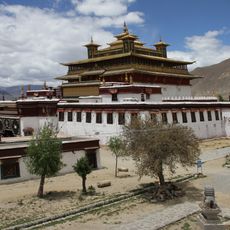
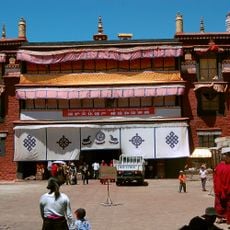
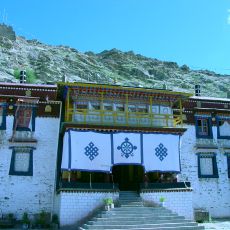
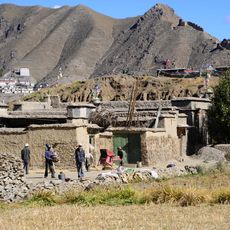
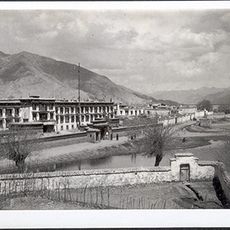
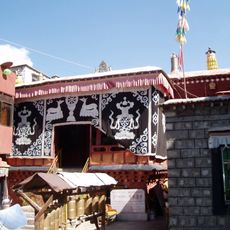
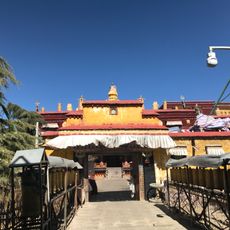
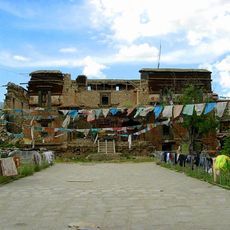
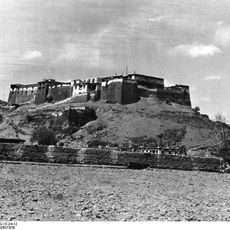
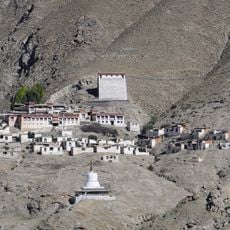
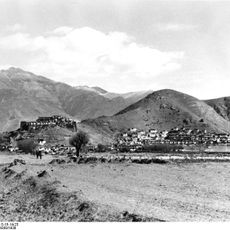
Mindroling Monastery stands on the east bank of the Zhanang River, enclosed by a polygonal wall and covering about 100,000 square metres. Its main building, the Zulakang, faces east and rises three storeys: a large assembly hall with twenty square pillars on the ground floor, five small chapels around a light well on the second, and two chapels on the third, including the Lama Lhakhang with portraits of Nyingma lamas. The walls carry multi-headed, multi-armed protector deities.
Mindrolling was founded in 1676 by the Nyingma tertön Terdak Lingpa, whose lineage is known as the Nyo. In 1718 Dzungar Mongol troops damaged it heavily; it was rebuilt under the Seventh Dalai Lama by Terdak Lingpa's son Dungsay Rinchen-namgyel and daughter Jetsunma Mingyur Paldron. Its monastic university then trained Nyingma scholars for nearly 300 years. After 1959 it was damaged again and is still being reconstructed.
The monastery is known for Tibetan calligraphy, Tibetan medicine and the making of Tibetan incense, and its scholars traditionally calculated and corrected the Tibetan lunar calendar. The main hall's walls carry paintings of multi-headed, multi-armed protective deities, a hallmark of Nyingma monastic art.
Mindroling lies on the south bank of the Tsangpo, about 43 km east of Lhasa airport, reached by road from Zhanang. The main temple faces east, so morning light falls on its facade. The complex covers roughly 100,000 square metres within a polygonal wall, and the three-storey Zulakang hall is entered from the east side.
The monastery's name means "Sublime Island of Ripening Liberation" in Tibetan, and it belongs to the Nyo lineage of Terdak Lingpa. Its monks traditionally studied thirteen major sutra and tantra texts, and the monastery once had over one hundred satellite establishments.
The community of curious travelers
AroundUs brings together thousands of curated places, local tips, and hidden gems, enriched daily by 93,895 contributors worldwide.