Sanga Monastery, Buddhist temple in Dêqên, China
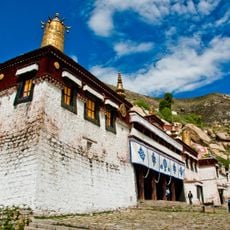
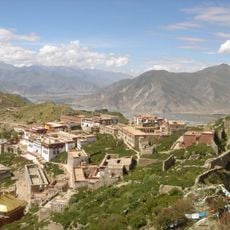
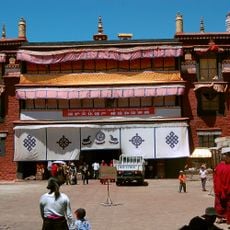
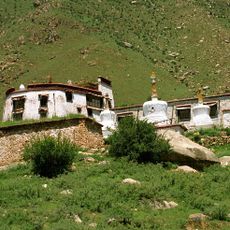
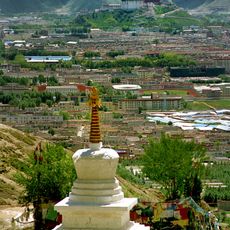
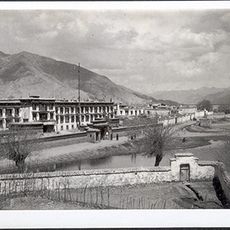
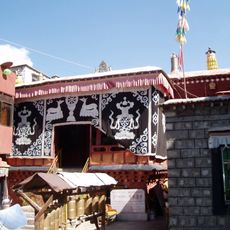
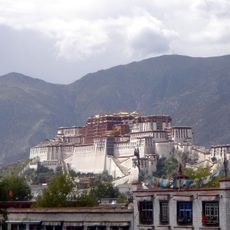
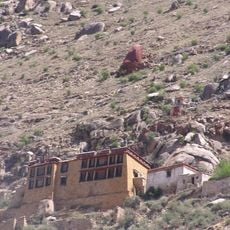
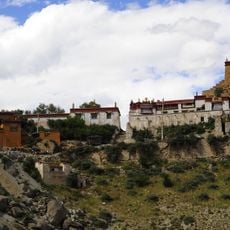
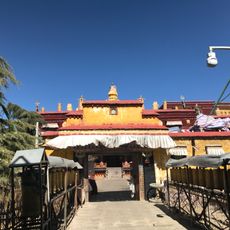
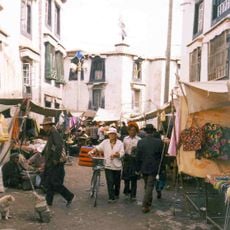
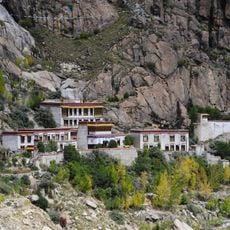
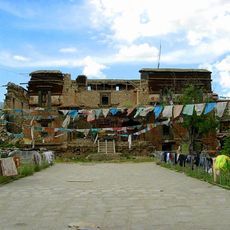
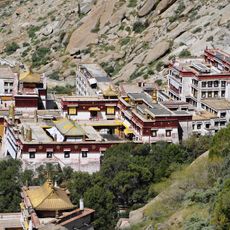
Sanga Monastery is a Gelug Tibetan Buddhist monastery in the old town centre of Dagzê, Dagzê County, Lhasa, Tibet. Its grounds cover about 15 acres (6.1 ha), with a building area of 2,343 square metres (25,220 sq ft). The Lhasa River is visible from the rear of the monastery, and the ruins of Dagtse Dzong, also called Dechen Dzong, stand diagonally above it on the hillside.
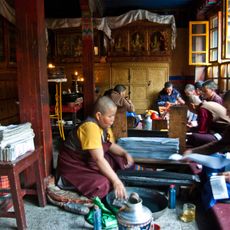
Je Tsongkhapa founded Sanga Monastery in 1419 as a Gelug institution under Ganden Monastery's jurisdiction. It once housed a hundred monks. During the Cultural Revolution it lost many artifacts and buildings were destroyed; it reopened after repairs in November 1986, and by 2012 over thirty monks lived there.
A Tibetan proverb says that worshipping at Ganden without visiting Sanga is incomplete, so pilgrims often combine the two. The monastery belongs to the Gelug order and is administered from Ganden. Inside, the main image is a six-armed protector deity, Chaturbhuja Mahakala, before which monks of the some thirty-strong community still perform rituals.
Sanga Monastery stands in the centre of Dagzê's old town, about 20 km from Lhasa, so it is reached by road rather than a mountain path. The grounds cover roughly 15 acres, with the building at 2,343 square metres; the Lhasa River is visible from the rear of the monastery. The ruins of Dagtse Dzong, also called Dechen Dzong, lie diagonally above on the hillside.
The monastery keeps a greenhouse, and a public bathhouse opened for the monks in September 2012, funded with about 100,000 yuan from the county authorities; a canteen and water supply were completed the same year. The bathhouse ended a long-standing difficulty the monks had washing.
The community of curious travelers
AroundUs brings together thousands of curated places, local tips, and hidden gems, enriched daily by 92,885 contributors worldwide.