Palpung Monastery, Tibetan Buddhist monastery in Dêgê, China
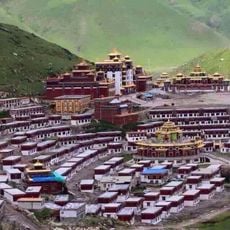
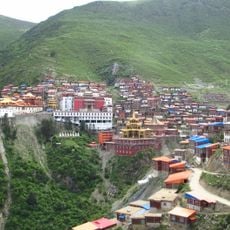
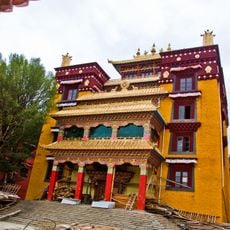
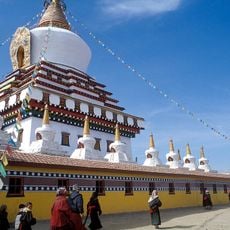
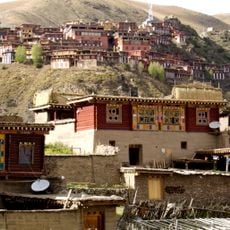
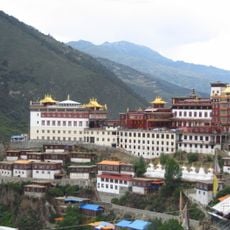
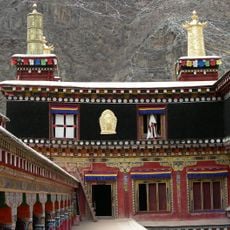
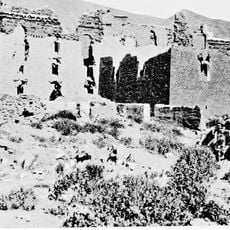
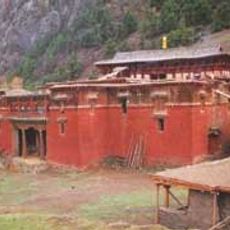
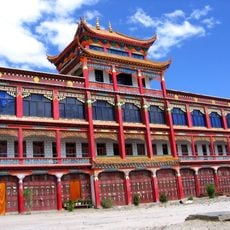
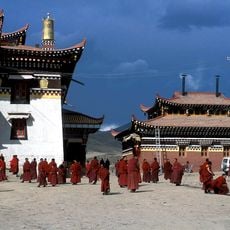
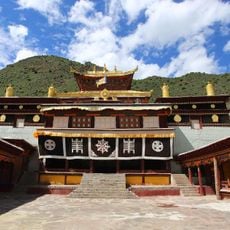
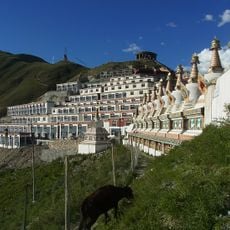
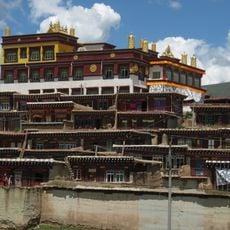
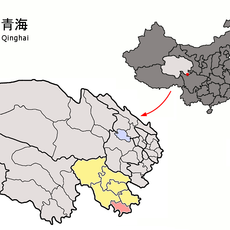
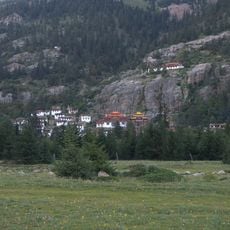
Palpung Monastery stands on the slope of Ösel La in Babang Township, Dêgê County, western Sichuan. Its central block is a massive dark red structure with seven round golden medallions along the facade, topped by a golden roof with upturned corners and three small golden ornaments. Lower red wings with flat roofs extend to either side, and smaller white and red buildings with dark flat roofs stand below and in front.
Palpung originated in the 12th century and became the seat of the Tai Situpa incarnations in Kham. The present monastery was founded in 1727 by the 8th Tai Situpa, Situ Panchen, with support from Temba Tsering, the Dharma King of Derge. It grew into a major centre of learning on the eastern Tibetan plateau, and its main temple was named a national cultural heritage site in 2013.
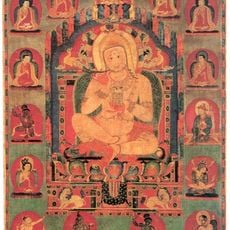
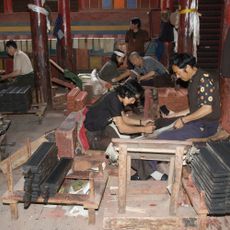
The name Palpung means "glorious union of study and practice". The monastery is the mother monastery of the Karma Kagyu in Kham and became the centre of the Rimé movement. Its workshops are known for Karma Gadri thangka painting, founded by Situ Rinpoche; painters use mineral, metal and plant pigments, and some reds come from wild plants dried on the slopes of Ösel La mountain.
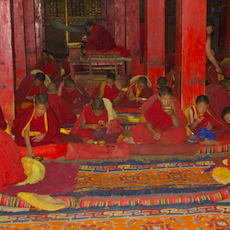
Palpung stands on the slope of Ösel La in Babang Township, Dêgê County, western Sichuan, reached by road from Dêgê. The main temple, rebuilt from the late 1980s, is the focus of a visit; the monastery houses about 800 monks. Allow time for the climb between the terraced levels.
Palpung once held a library of more than 324,000 texts and a collection of over 10,150 thangkas, and its Situ Rinpoche founded the Karma Gadri painting style. Local painters ground mineral, metal and plant pigments, some reds from dried wild plants of the Osé La slope, and moistened brushes with saliva so the paint held fast to the canvas.
The community of curious travelers
AroundUs brings together thousands of curated places, local tips, and hidden gems, enriched daily by 92,798 contributors worldwide.