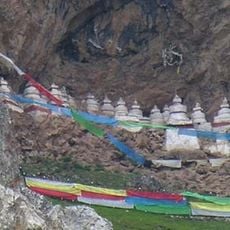
Riwoche Monastery, Tibetan Buddhist monastery in Kham, Tibet
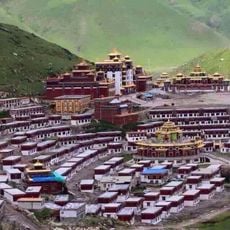
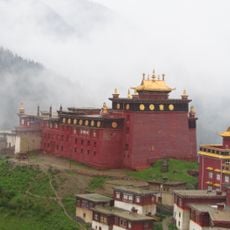
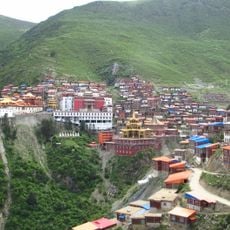
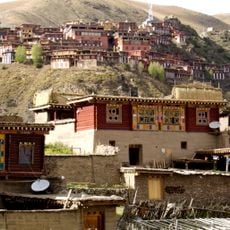
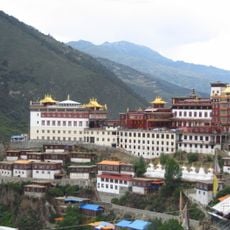
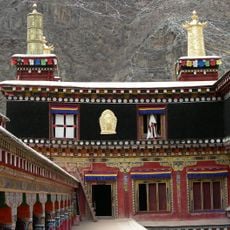
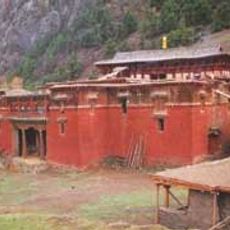
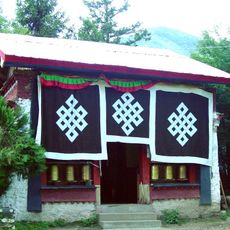
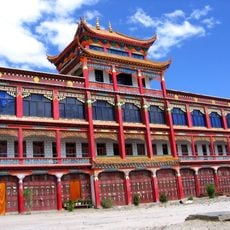
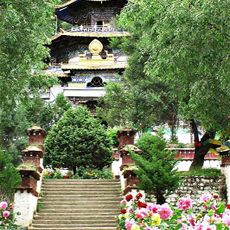
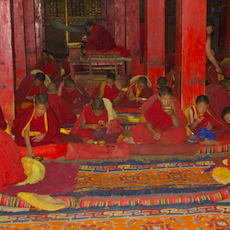
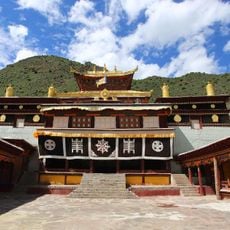
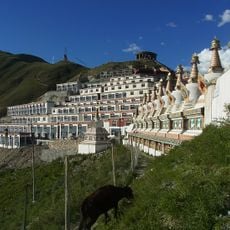
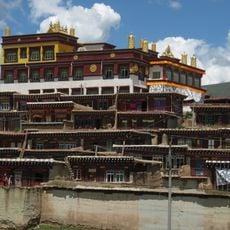
Riwoche Monastery, also called Tsukla Khang Tragyelma, is a Taklung Kagyu monastery in a valley of the Dzi River at about 3,400 metres. Its three-storey main temple, restored since 1985, is supported by huge tree trunks painted in black, red and white vertical stripes. The monastery now houses 305 monks.
The monastery was founded in 1276 by Sangye On after he relocated to the Kham region, initially establishing it as a branch of Taklung Monastery in central Tibet. This connection shaped its monastic character and role as a religious institution in the area.
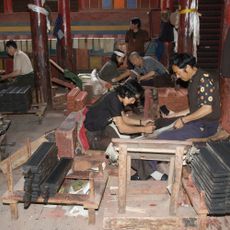
The monastery serves as a pilgrimage site for Buddhist devotees from surrounding areas who visit especially during religious festivals to pay respects at the sacred statues. Monastic daily routines and prayer ceremonies structure the rhythm of life within its walls.
The monastery is accessible from Riwoche town via shared minibuses or taxis that regularly depart from the town center. Visitors should note that opening times depend on monastic activities and some areas may not be open to visitors.
The 14th-century cloth painting Jnanatapa, unearthed in recent years, depicts Onpo Lama Rinpoche and the spiritual lineage of Riwoche Monastery. The monastery once had as many as 2,000 monks, according to Go Lotsawa's Blue Annals, and today 305 monks reside there.
The community of curious travelers
AroundUs brings together thousands of curated places, local tips, and hidden gems, enriched daily by 93,571 contributors worldwide.