Dzogchen Monastery, Buddhist temple in Dêgê, China
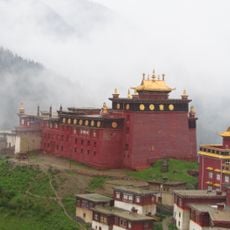
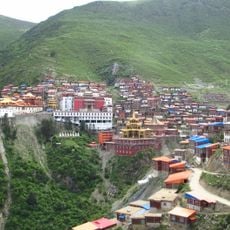
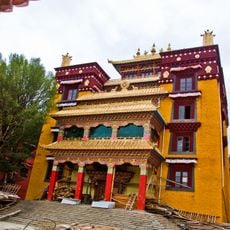
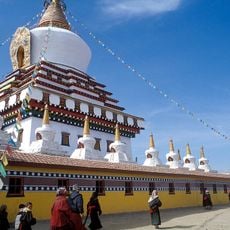
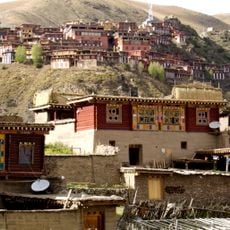
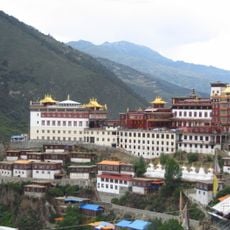
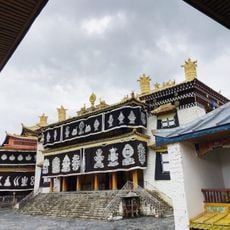
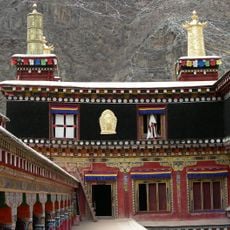
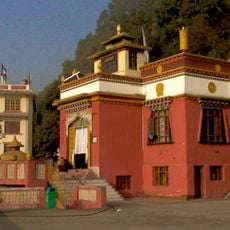
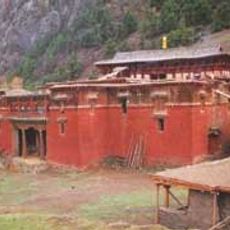
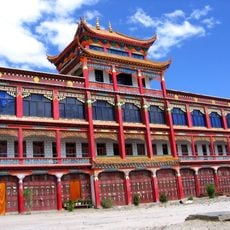
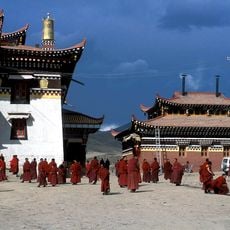
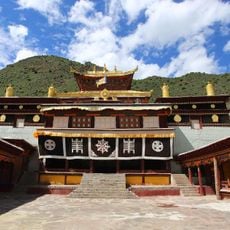
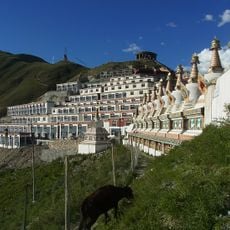
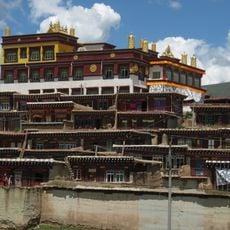
Dzogchen Monastery is a Nyingma complex built in tiers on a hillside in Dêgê County. At the top stands a tall white and red assembly hall with a golden roof ornament, flanked by lower red buildings with golden roofs. Below, rows of long red-and-white residential blocks step down the slope, and at the lower center sits a circular red temple with a multi-tiered golden roof.
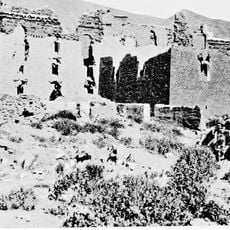
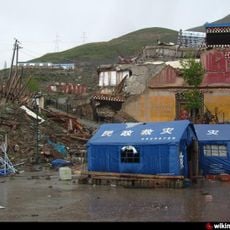
Pema Rigdzin, the first Dzogchen Rinpoche (1625–1697), founded the monastery in 1684. An earthquake nearly destroyed it in 1842, after which Gyelsé Zhenpen Tayé established the Sri Singha Shedra. The main temple burned in 1936 and the whole complex was destroyed in 1959; reconstruction began in the early 1980s.
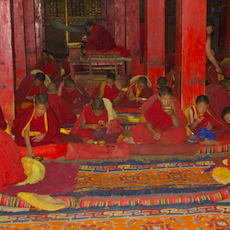
The monastery is the main holder of the Konchok Chidu cycle of the Jangter, or Northern Treasure, a terma cycle revealed by the tertön Jatson Nyingpo. It was also one of the best-known centres of sacred ritual dance, commonly called lama dancing, performed through the year.
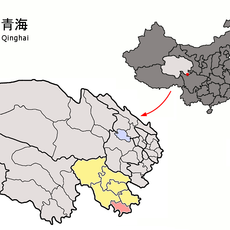
The monastery lies in the Dzogchen valley in Dêgê County, Garzê Prefecture, Sichuan, at roughly 32.12° N, 98.86° E. Buildings climb the hillside in tiers, so allow time for walking between the assembly hall at the top and the circular temple lower down. Reconstruction has continued since the early 1980s, so some structures may be closed.
The monastery is the main holder of the Konchok Chidu cycle of the Jangter, or Northern Treasure, a terma cycle revealed by the tertön Jatson Nyingpo. It was also one of the most famous centres of sacred ritual dance, commonly called lama dancing.
The community of curious travelers
AroundUs brings together thousands of curated places, local tips, and hidden gems, enriched daily by 93,148 contributors worldwide.