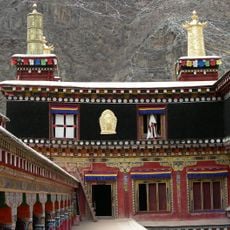
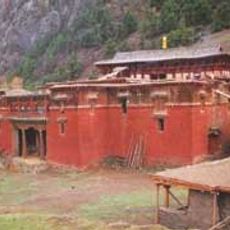
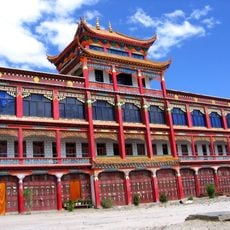
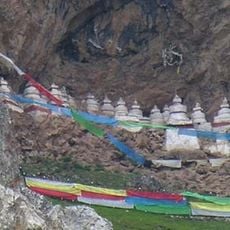
Galden Jampaling Monastery, Tibetan Buddhist monastery in Chengguan Chamdo, China
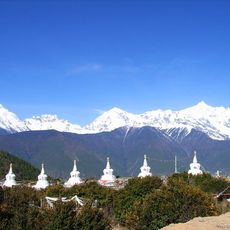
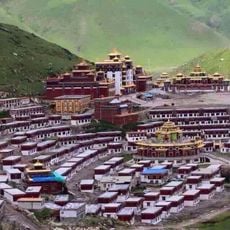
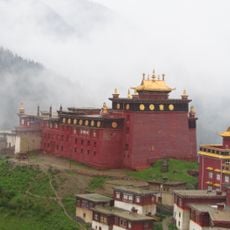
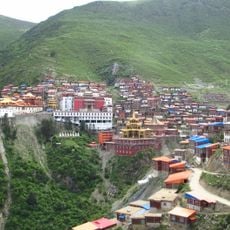
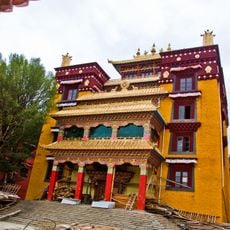
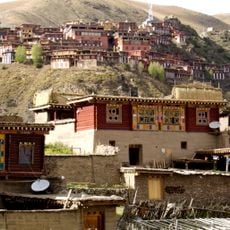
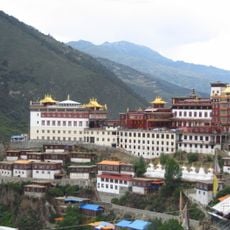
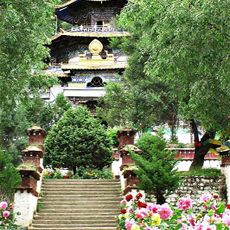
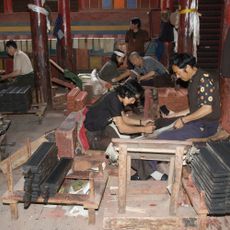
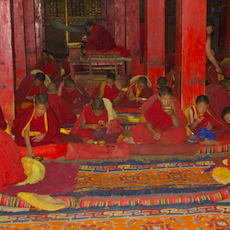
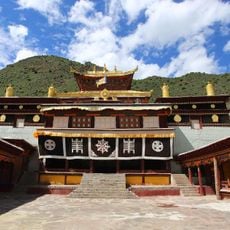
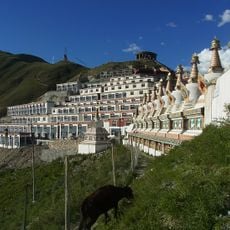
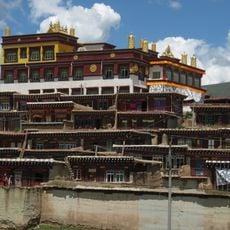
Galden Jampaling Monastery, also called Chamdo Jampaling, stands on four terraces of Malashan hill in Chengguan, Chamdo. Its main assembly hall is surrounded by protector chapels, two Tara temples, debate courtyards, nine colleges (tratsang), the residences of the Pabala, Shewala and Jare lamas, a printing house and eight auspicious stupas. The restored main hall has a gilded hip roof with a wheel and deer, and murals by the Maysa school painter Gyayong Namgyal.
The monastery was founded in 1437 by a student of the influential teacher Tsongkhapa and became a spiritual center that supported numerous smaller sanctuaries across the region. Over the centuries, it shaped Buddhist life in Chamdo significantly.
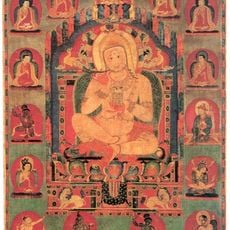
The monastery's name, Jampaling, means "Maitreya's Island" in Tibetan, after the Maitreya Buddha statue that was its first main image. Its monks developed the Chamdo Tibetan opera, a distinct regional form based on the monastery's own religious dances, and perform the axe dance and the "Zhuo" dance. The butter lamp festival on the 15th day of the first Tibetan month and the Maitreya procession on the 15th of the second month are among its liveliest annual events.
Access from Changqing Street square involves an upward walk, so wear sturdy shoes and allow time for the climb to reach the site. Taxi services are reasonably priced and offer a practical alternative if you prefer not to walk the slope.
The monastery's name means "Maitreya Monastery" in Tibetan, after the Buddha Maitreya it was originally built to honour. Its Chinese name, Jushan Mile Si ("Maitreya of Complete Goodness"), was bestowed by the Kangxi Emperor in 1719, and a plaque reading "Zhuli Si" was added by the Qianlong Emperor in 1791.
The community of curious travelers
AroundUs brings together thousands of curated places, local tips, and hidden gems, enriched daily by 92,900 contributors worldwide.